The European organic blueberry season is now gradually picking up speed. Ahead of the approaching start of the season in Romania, the team from Bivano GmbH, the organic fruit and vegetable division of the Böhmer Gruppe, visited the various production areas in the Eastern European republic to clarify the final details and find out about the situation on the ground. "During our visits to the plantations and packing houses, we talked to the producers about harvest estimates and quality expectations, but also repeatedly addressed issues such as recruitment and how to communicate the added value of organic produce to consumers in such a way that organic production can become established in the long term," summarizes Carsten Gogoll, COO of the Mönchengladbach-based company.
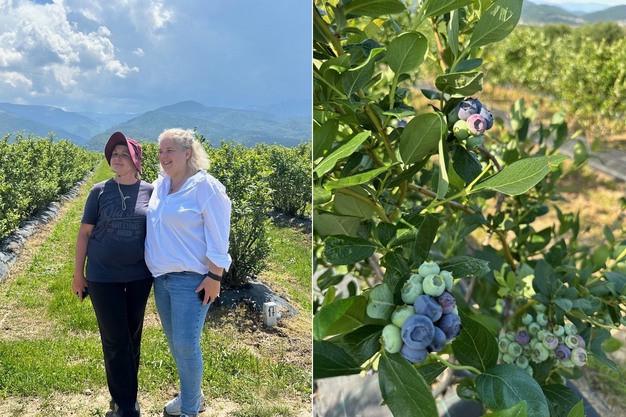 © Bivano GmbH
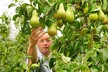
Nora Lehmann with a producer at the foot of the Carpathian Mountains
Organic blueberry production involves many hours of manual labor, often in intense heat and accompanied by numerous insects. Weed control, grass cutting, manual harvesting—all without chemical aids. At the same time, pressure from climate change is growing: late frosts, hail, heat waves, new fungal diseases, and pests present new challenges for both producers and distributors every year. Gogoll: "Organic farming creates added value for people, animals, and nature! But this added value should also be appreciated and fairly rewarded along the entire supply chain."
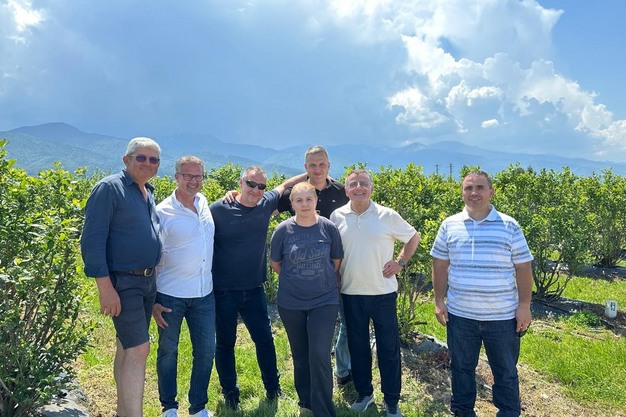 © Bivano GmbH
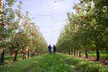
Carsten Gogoll (2nd from left) and Konstantin Petridis (2nd from right) from Bivano together with their Romanian producer partners
Harvest peak in calendar weeks 28-31
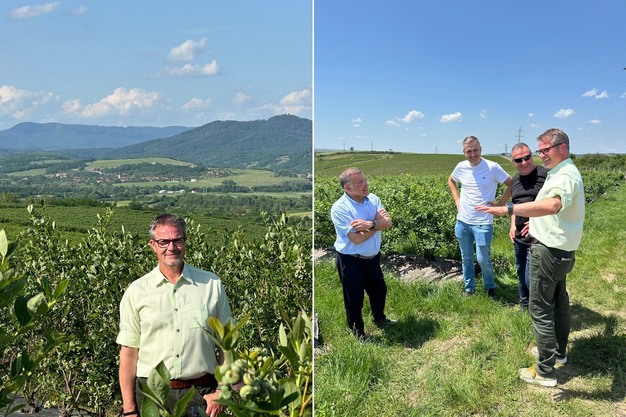
"The organic plantations we visited in the various regions blend seamlessly into the topography of the natural forests. The blueberries grow in a natural environment that is ideal for this crop. It is this type of organic farming that we want to promote to make an important contribution to enjoyable nutrition that is as close to nature as possible. During our visit, we found good fruit set and expect the first significant quantities to arrive as early as week 25, with peak harvest in weeks 28-31," Gogoll continues.
 © Bivano GmbH
The origin of organic blueberries is not the sole focus of food retailers. According to Gogoll, the range of varieties is becoming increasingly important for listings.
Romanian organic blueberry cultivation on the rise
Bivano GmbH has been cooperating with Romanian producer partners for six years. Gogoll: "In addition to German organic blueberries, foreign organic produce is firmly established in the food retail sector, as demand generally exceeds supply in Germany. Romanian organic blueberries are usually available much earlier than produce from Germany, the Netherlands, and Poland, making them the first alternative in the transition phase from Southern to Western and Eastern Europe, especially since there are still no significant quantities of organic produce from other Balkan countries."
"Targeted EU organic support measures have led to a significant increase in the area under organic blueberry cultivation in Romania, particularly in the last two years," Gogoll outlines. Cultivation is spread across the entire country, with harvesting beginning in the southwest and ending in the north of Romania. "As many of the organic farms are still relatively young, mainly modern varieties are grown. The Fall Creek® varieties dominate among our organic producers."
For more information:
Carsten Gogoll
Bivano GmbH
Marie-Bernays-Ring 39
41199 Mönchengladbach
[email protected]
www.bivano.de