



The scenario that emerges from the comparison of the marketing years 2023, 2024, and part of 2025 for early carrots of Sicilian origin, grown in the south-eastern part of the island, is a complex one. The climatic impact seems to be the most influential factor in the European commercial and trade dynamics.
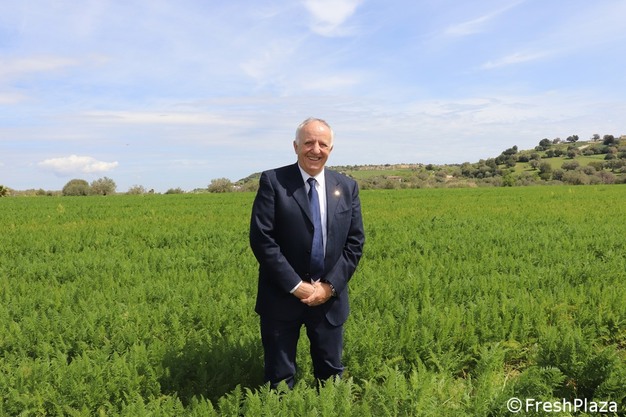 © FreshplazaMassismo Pavan
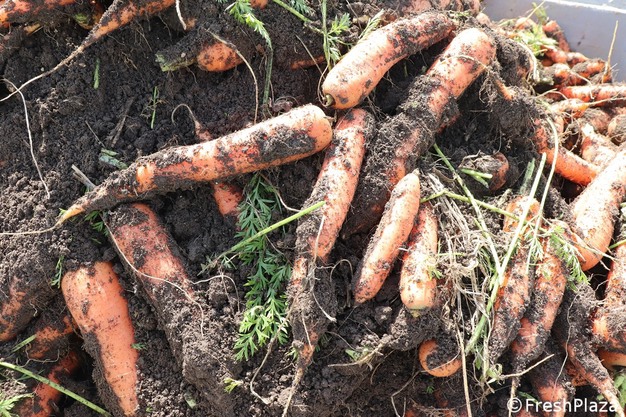
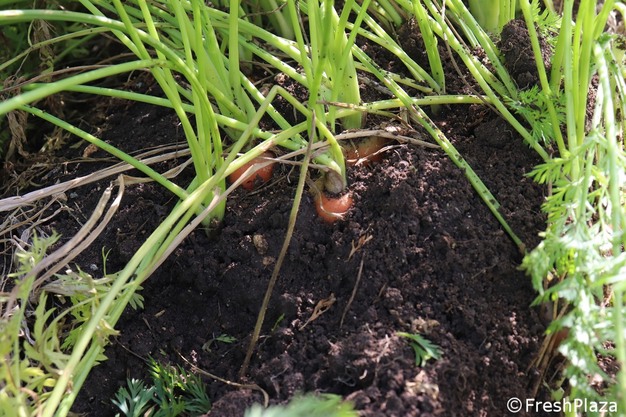
The following overview of the situation is provided by Massimo Pavan, an experienced agricultural manager: "The production season for the early carrots from this region begins in January and ends around the first half of May," he adds. "This time window is crucial because it takes advantage of the favorable climatic conditions of the region to meet the demand for an early product, both on national and international markets. The Sicilian early carrot is known for its freshness, crispness, and exceptional taste, which distinguish it from other carrots."
 © Gaetano Piccione | FreshPlaza.com
"To understand what is happening this year, we need to broaden the scope of analysis," the agricultural manager continues. "The year 2024 marked a particularly successful season for the export of our early carrot, reaching a peak of 60% of total production. This commercial upsurge can be attributed to the adverse weather conditions that affected the main European production areas, such as Germany, France, and Belgium, during the summer of 2023. The summer period is critical in these regions as it overlaps with the planting season. The severe drought that affected this area led to lower than usual yields, creating a greater demand for early carrots from Sicily to compensate for the shortfall in domestic production."
 © Gaetano Piccione | FreshPlaza.com
"In 2025, the situation was drastically reversed," says the expert. "The previous summer, i.e., 2024, was one of ideal climatic conditions in central European countries. This favorable scenario led not only to high yields but also to an increase in cultivated areas compared to the previous year, precisely to avoid what happened in 2023/24. The combination of high yields and expanded production areas generated a surplus of carrots on the central European markets, some of which were refrigerated around December and gradually phased out by late spring. As a result, the demand for Sicilian early carrots from abroad decreased significantly in 2025."
What factors are preventing the PGI carrot from making a breakthrough?
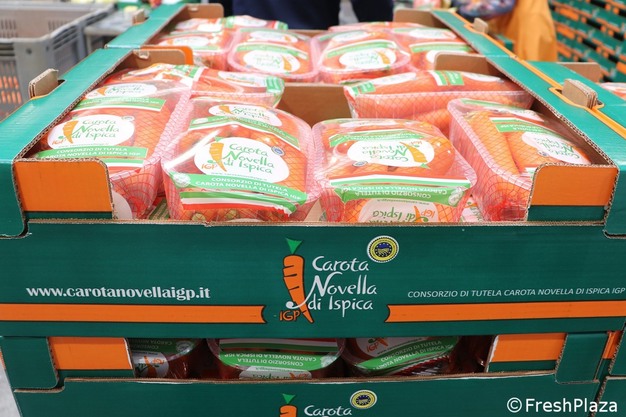
According to the interviewee, the 2025 Sicilian production campaign was characterized by exceptional quality. "However, production suffered a loss of between 10 and 15 percent of the cultivated area due to the heavy rains in January. This precipitation was particularly impactful on plots located at lower altitudes, leading to a partial loss of harvested product. The total area planted with early carrots in southeastern Sicily in 2025 is about 1,600 hectares. Of this area, approximately 10% is cultivated in accordance with the PGI (Protected Geographical Indication) trademark specification. The PGI-certified crop represents a distinctive characteristic and underlines the local link with the land and specific agricultural practices. However, the certified product is still struggling to be exported because it is not well-known abroad. This limitation in international recognition curtails the commercial potential of certified Sicilian early carrots. As a result, most of the branded products are only in demand in Italy, but even on the domestic market, supermarkets often do not adequately recognize and value the PGI carrot."
 © Gaetano Piccione | FreshPlaza.com
According to Massimo Pavan's analysis, "A greater commitment on the part of domestic retailers towards the PGI label could be an important stimulus for domestic production, which is highly controlled from a nutritional point of view. Italian products are regarded as the most virtuous in terms of food safety by the RASFF (Rapid Alert System for Food and Feed). In this context, enhancing the PGI could ensure fair recognition for producers and offer consumers a quality and safe product."
"The average price of a kilogram of Sicilian early carrots in 2024 was approximately €0.30," he adds. "However, it is too early to provide an accurate average for 2025, as this can only be calculated at the end of the commercial season."
"Speaking of foreign products," concludes the entrepreneur, "in recent years we have noticed that as soon as the price of carrots increases even a little, there is a reaction in Italy to import carrots from other countries, such as Portugal, Spain, Israel, Turkey, Serbia, and Egypt. These crops are repackaged in Italy after arriving in packages of 1000 kg and are sold on the Italian market. The challenge we face is that no market or supermarket sells products marked with their true origin, which suggests the need for stricter controls on importers to track these products. The misrepresentation of imported products as Italian is not only a form of food fraud, it also harms our producers, whose orders experience a reduction in prices due to the influx of products from other countries entering Italy at times of high market demand."
This article was previously published in Primeur May 2025. Click here for the link to the entire edition
For more information
Massimo Pavan
Consortium Carota Novella di Ispica IGP
Via B. Spadaro, 97
97014 Ispica (RG) - Italië
[email protected]
www.carotanovellaigp.it


