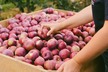
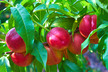
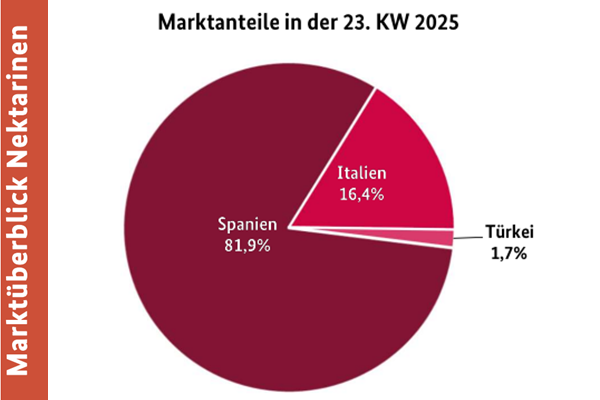
Spanish fruit dominated both the nectarine and peach markets, followed by Italian shipments in terms of importance. In the nectarine segment, there were also a few Turkish offers of yellow and white flesh. The first Spanish Platerinas arrived, joining the Paraguayos of the same origin.
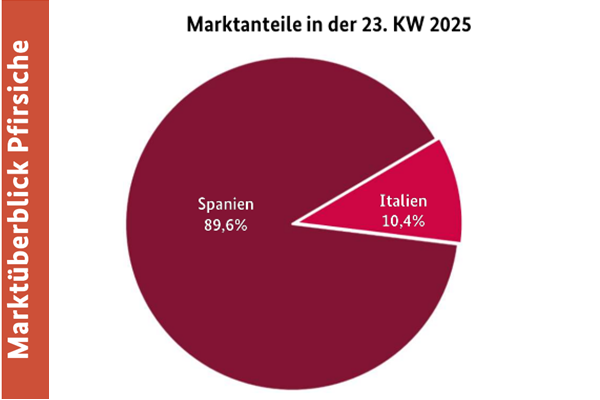 © BLE
© BLE
Overall availability increased noticeably, with deliveries from Spain in particular rising significantly. Demand was unable to keep pace across the board. Surpluses were inevitable. To reduce these, retailers had to lower their previous demands. In some places, the discounts were quite substantial. Returns from the food retail trade further exacerbated the situation in Hamburg.
 © BLE
© BLE
In Berlin, Spanish products did not consistently impress in terms of their organoleptic properties: they were too small, and their taste was not yet perfect. Large items were rare in the capital and generated a favorable response. The first French loads are expected to arrive in Hamburg in week 24.
Click here for the full market and price report.
Peaches and nectarines
Overall availability increased noticeably, with deliveries from Spain in particular rising significantly. Demand was unable to keep pace, and surpluses were inevitable.
Apples
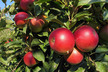
Domestic supplies dominated over Italian ones, but the presence of European produce was significantly limited. Demand was quite robust. Provided that the fruit was still of good quality, distributors were able to confirm their prices from week 22.
Table grapes
Availability was sufficient to meet demand. Demand was not particularly strong. As a result, most prices tended downward.
Strawberries
German loads clearly dominated the market: open-grown produce was sometimes too small and not always entirely appealing in terms of taste. Loads from protected cultivation were more convincing in terms of color, aroma, and size.
Cherries
Spanish shipments predominated and intensified once again. German deliveries also increased significantly. Turkish imports also gained momentum. Supplies from Greece and Italy tended to round off the range.
Apricots
The range consisted of Spanish, Italian, French, and Turkish loads. Availability was slightly sufficient to satisfy demand.
Lemons
Spanish deliveries clearly dominated the scene, supplemented by South African imports. The first Peruvian Eureka lemons also arrived.
Bananas
Supply and demand were fairly balanced. Prices, therefore, changed only rarely.
Cauliflower
German shipments clearly dominated. Demand was quite good, but could be met without any problems.
Lettuce
Domestic lettuce was the main source of supply, followed by Belgian and Dutch loads. Prices tended to fall due to the large quantities available.
Cucumbers
Cucumbers came from Germany, Belgium, and the Netherlands. Due to extensive availability, traders were often forced to lower their previous asking prices.
Tomatoes
As in previous weeks, Belgian and Dutch deliveries dominated the market. Supply increased and was sufficient to meet demand. The demand was quite favorable.
Bell peppers
Dutch red and yellow peppers often became pricier, while green peppers, which had been in high demand in the previous week, often became cheaper.
Asparagus
Domestic spears dominated the market and gained further momentum. Availability increased slightly once again. Demand remained favorable. In some places, it could not be fully met, causing prices to rise.
Source: BLE