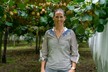
In the shadow of one of Japan's worst disasters, young farmer Takuya Haraguchi is helping to restore both land and perception by growing kiwifruit. His farm is located in Okuma, a rural town once part of the exclusion zone surrounding the Fukushima Daiichi nuclear plant, which suffered a catastrophic meltdown following the 2011 earthquake and tsunami.
Now 25, Haraguchi is one of several newcomers to the region working to bring life back to the area through agriculture. His focus: cultivating kiwi fruit on land once considered too dangerous to inhabit. "Everyone knows about the nuclear accident," he said, "but not many people know how this area is moving forward. By growing kiwis here, I want people to take an interest in and learn what Fukushima is really like today."
Fukushima has long been known for its fruit, especially peaches and pears, but public trust in its produce plummeted after the disaster. Years of decontamination, including stripping topsoil from farmland, have now rendered many areas safe for farming again, with radiation levels in line with international food safety standards. In fact, produce such as Fukushima peaches has even found its way into premium outlets like Harrods in London.
Haraguchi, who originally studied software engineering, was drawn to Okuma after attending a student event in 2021. Inspired by the rich flavour of locally grown kiwis and the vision of older farmers trying to rebuild the community, he launched his venture, ReFruits, with a business partner. They now manage 2.5 hectares (six acres) of land and aim to harvest their first kiwi crop next year.
Starting from "zero," as Haraguchi puts it, has given them the freedom to innovate and experiment with modern farming techniques in a region eager for renewal. Though parts of Okuma remain restricted, the town has reopened to residents since 2019, and more than 1,000 of the 1,500 current residents are newcomers, supported by government subsidies for housing and small business development.
Radiation levels in the area are closely monitored, and while they remain slightly higher than other regions, tests confirm the soil and fruit are within accepted safety standards. Nonetheless, independent groups like Mothers' Radiation Lab Fukushima continue to conduct their own tests to ensure transparency and support informed consumer choices.
Haraguchi is committed to that same principle. He has begun travelling internationally to share his experience, not only to build market trust but to represent a new chapter for Fukushima. "We don't need to force our products on people who are uneasy," he said. "We need to sell our products to people who understand." Through kiwi cultivation, Haraguchi and others are proving that even in places marked by disaster, it is possible to plant new beginnings.
Source: Digital Journal