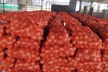
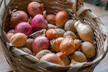
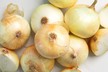
Due to losses and quality problems caused by the spring rains, the onion season has started with notably high prices. "A huge amount of rainfall has been recorded in Andalusia in spring, and this has caused plenty of issues with the leaves. This has, in turn, resulted in quality problems, but also in smaller sizes, so production volumes are expected to have dropped," says David Casanoves from Agriseeds.
"Another factor that has taken a toll on the season is that the rains in February and March also had an impact on the sowing, so all the production that will come after the harvest in Andalusia will also be affected to a certain extent by the spring rains," he says.
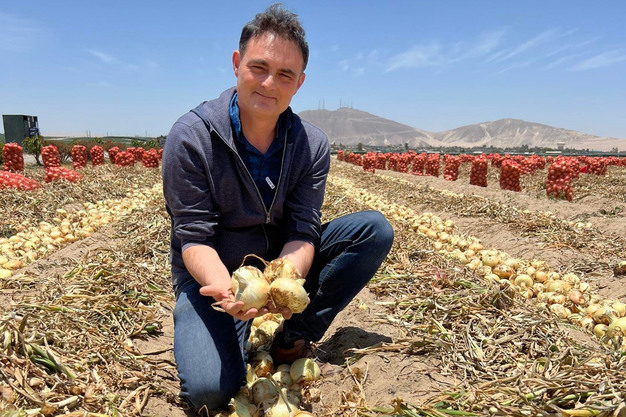 © Agriseeds
"So, this year we are having a very different season compared to the previous one. While in 2024 we started off with very low prices that remained stable throughout the year, this year we have started with expensive onions, and this situation will probably continue until the domestic production peaks in August/September. At that point, onions will be harvested in La Mancha and prices will adjust based on the supply," says David.
"Faced with this situation, some operators have chosen to start sourcing cheaper onions. Right now, Egypt and Turkey can provide cheaper onions at source than Spain," he says.
"We are all seeking profitability, and Egypt can indeed deliver onions already sorted, packaged, and ready for consumption for 50 cents per kilo, while with the current prices, the same onion already packaged can perhaps cost 80 cents. But both domestic producers and, of course, consumers, who are a fundamental part of this business, need to be taken into account," he stresses.
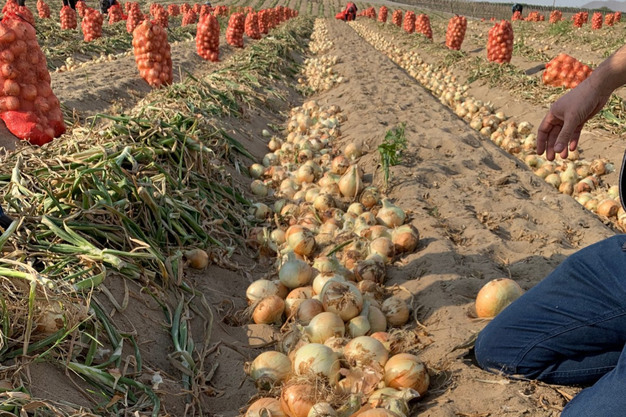 © Agriseeds
"We cannot forget that without end consumers there is no business, and that the problem is not the import itself, which is actually necessary at many times of the year for the vast majority of products. Problems arise when consumers are not properly informed, and worse still, when they are unable to choose between one thing and another. Consumers should always be given a choice," says David Casanoves.
"Today, Peru remains the leading source for sweet onion imports"
"In fact, there seems to be a trend consolidating in the retail, and that is that, when February arrives, many clients cut their domestic onion supply and switch to imports, as the quality of Spanish onions decreases, although this depends on the year and the specific circumstances," says the expert.
"In those three months during which onions are imported into Spain, the product is bought from various sources, including New Zealand, South Africa, or Chile, but there is one country that has been consolidating its position every year, taking advantage of the end of its season to deliver produce to our retailers. We are talking about Peru."
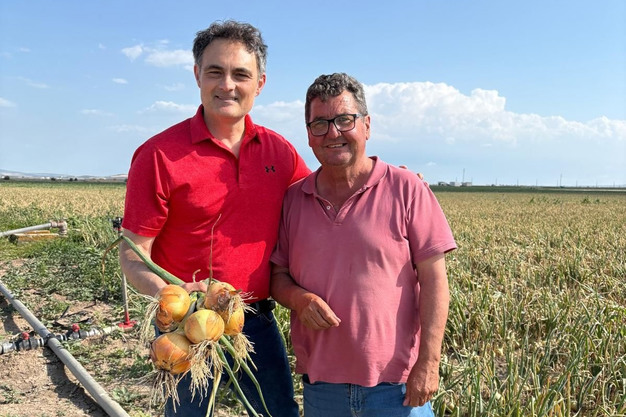 © Agriseeds
"The country has specialized in onions and has been producing sweet onions for export for 30 years using traditional techniques. Its favorable climate has allowed it to extend its sales period from July to March," says David. "And they are currently not exporting just sweet onions, with their characteristic flattened shape, but also regular, round, firm, light-skinned onions, gaining ground over other more consolidated suppliers. Its earliness in the market gives it a very interesting competitive advantage, as it is the first to arrive in Europe with new, good quality onions during the months of January and February."
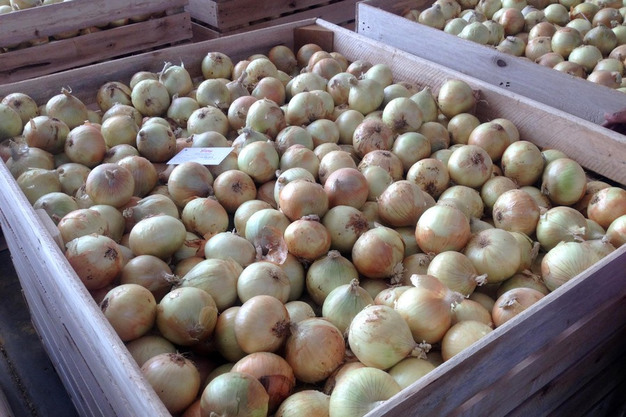 © Agriseeds
"As far as the development of the sweet onion market in particular is concerned, Peru has been a pioneer and has become the main supplier to the U.S. and later to Europe. Other countries have tried to replicate it, such as Senegal, which is gradually increasing its export volumes, and Egypt may soon follow suit. However, at the moment, any other country is light years away from the quality that Peru is achieving with its sweet onions, and this is why it's still the leading import source, with presence in the market for nine months," says David.
 © AgriseedsFor more information:
Agriseeds Ibérica S.L.
Av. Cortes Valencianas, 28-1ºB
46015 Valencia, Spain
Tel.: +34 961 204 342
[email protected]
https://agriseeds.es/