In the late 1990s and early 2000s, Kazakhstan experienced a drastic decline in orchard and vineyard areas, reaching a critical point in the country's horticultural sector. In an interview with the agrarian magazine Agrarny Sector, PhD in Agricultural Sciences Serghey Oleichenko discussed the current prospects for Kazakhstan's horticulture industry.
Transition to "Euro-Model" horticulture
Following the launch of a state support program, there was a notable increase in orchard plantings. However, the program's effectiveness was limited due to poor oversight and unwise choices in varietal selection and planting areas.
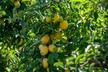
In contrast, some farmers began adopting the "Euro-model" of intensive horticulture, using European varieties and modern techniques. Initially, seedlings were imported from countries like Turkey, Serbia, and Poland. Over time, leading nurseries from Western Europe, such as Mazzoni and Nishler (Italy), Carolus (Belgium), and Van Montfort (Netherlands), became major suppliers.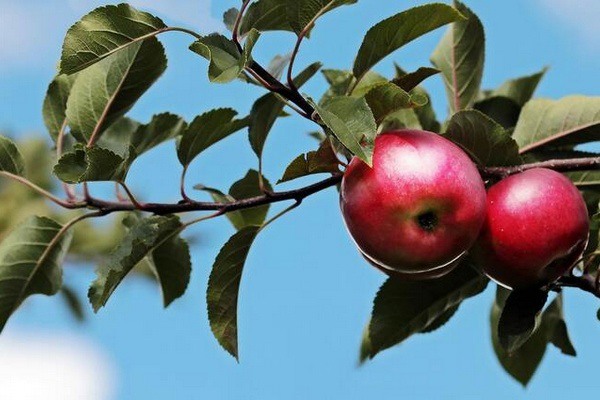 © Ministerie van Landbouw, Visserij, Voedselzekerheid en Natuur
Despite these efforts, many orchards underperformed or failed altogether. Key reasons included poor site selection, incompatible soils and climates, diseases, and low-quality planting material. The commonly used dwarf rootstock M9 also proved ill-suited to Kazakhstan's harsh continental climate and alkaline soils.
A new direction: Local adaptation
To address these challenges, the scientific community is proposing a new approach centered on locally adaptive seedlings based on the native Sivers apple. These seedlings are expected to offer greater resilience, improved health, and cost efficiency.
Experimental work began in 2023 at the Issyk Dendrological Park to develop these seedlings. By 2024, a sufficient quantity of seeds will be harvested. Some were sown directly in the field, while others were planted in greenhouses to produce rootstocks with closed root systems. By spring 2025, the aim is to produce 3,500 seedlings, increasing to 10,000 by 2027. These will be planted on 13 hectares of demonstration orchards. Farmers in the Almaty region are already anticipating the availability of these seedlings, and industrial-scale production is planned by 2028. The locally adapted seedlings are expected to outperform Turkish, Italian, and Dutch imports in quality.
Expanding the model: Pears and stone fruits
Similar strategies are being developed for pears, plums, and apricots. Regional adaptation is a priority, with particular attention on Aktau as a promising area for horticultural development. With its subtropical climate, Aktau is suitable for stone fruits, nut trees, and unprotected grapevines. However, improvements in soil fertility and irrigation will be essential to fully realize this potential. Experts believe this program offers more promise than efforts to revive the Aport apple variety.
Outlook for the industry
Revitalizing Kazakhstan's horticulture requires blending traditional local knowledge, such as the use of Sivers apple rootstock, with advanced agricultural technologies and breeding methods. Scientific institutions are actively working to develop adaptive, resilient rootstocks and cultivars.
Additionally, the industry needs better infrastructure, improved oversight of subsidies, and careful consideration of local environmental conditions. With a comprehensive approach combining modern practices and local adaptation, Kazakhstan has the potential to build a sustainable and competitive horticultural sector.
For more information:
Ministerie van Landbouw, Visserij, Voedselzekerheid en Natuur
Tel: +31 (0)70 379 8911
Email: [email protected]
www.agroberichtenbuitenland.nl