The melon and watermelon season got underway in the second half of April in Almeria, in line with the usual schedules, despite irregular weather conditions.
"This spring we've had persistent rainfall and below-average temperatures, especially in March and April. Although these conditions have generated uncertainty in some growing areas, the results in the field have been satisfactory," says Imanol Almudí, CEO of Grupo Agroponiente.
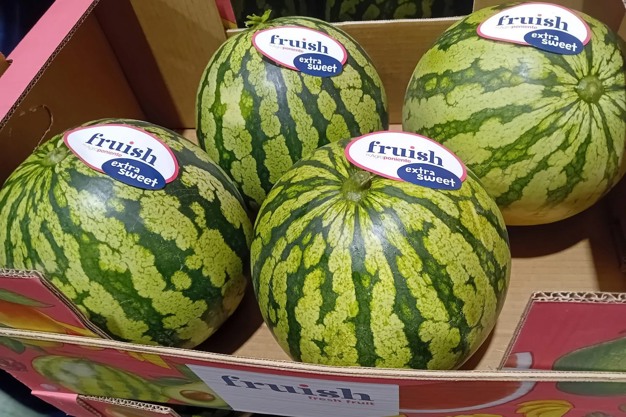
"Although the sizes of the earliest crops have been a little smaller than expected, they have recovered quickly and balance has been restored, at least as far as sizes are concerned," he says. "Thanks to our wide grower base, a robust logistics system, and rigorous technical planning, we are delivering the sizes and quality required by the most demanding markets. Our ability to adapt to changing weather conditions is one of the strengths that sets us apart."
This year, Agroponiente's forecasts point to significant growth compared to the previous season, with prospects to obtain 60.4 million kilos of watermelon, compared to 50 million last year, and around 11.8 million kilos of melon, compared to 6.6 million kilos in 2024.
"This increase is no coincidence; it is the result of a strategy aimed at consolidating our position as leading suppliers to European retailers in terms of volume, quality, and service. We are a company focused on leading in key categories, and this quantitative leap is a reflection of the trust that our customers place in us," says Imanol Almudí.
According to the company's CEO, demand is starting to become strong thanks to favorable weather conditions at the destination, especially for watermelons, with peaks that will even put some pressure on the supply at source.
"However, what's really important is not only the market's strength, but also our capacity to respond efficiently and reliably to the demands of large operators. At Agroponiente, we have been steadily increasing our volumes for three consecutive years, but always with a focus on operational excellence in every aspect, from agronomic planning to logistics, as well as quality control. This capacity to respond quickly and flexibly is what has allowed us to become a strategic partner for the main European chains," says Almudí.
In the coming weeks, the marketing of these products is expected to peak. This is also the period in which the bulk of the season's volumes will be distributed. "This is a decisive period both from a commercial and an operational standpoint. We are prepared to deal with this intensity without quality or service being compromised. Coordination between fields, warehouses, and the sales team will be key to guarantee that every order arrives on time and in the best possible condition," says Almudí.
Agroponiente exports more than 70% of the watermelon it produces, with key destinations such as Germany, France, the United Kingdom, the Netherlands, Sweden, and Norway. In the case of melons, the domestic market is more important, especially for Piel de Sapo melons. Galia, Cantaloup, and, above all, yellow melon, are highly appreciated in the European market.
The main challenge for the production and marketing of melon and watermelon is currently twofold, according to Agroponiente's CEO: to continue growing and to continue to deliver. "Growth must be sustainable, both in terms of production and service, and this requires investment, planning, and the use of technology. Moreover, we must remain committed to quality, freshness, and traceability in each delivery."
"Also, the international market is increasingly demanding in terms of environmental regulations, water footprint, sustainable packaging, waste reduction... We have taken on this challenge as an opportunity, aligning our operations with the sustainability values that have already allowed us to obtain the demanding B Corp certification," he says.
In summer, Agroponiente continues to consolidate its position as the leading watermelon exporter, but it is also firmly committed to complementary products, such as melon, late peppers, and long-cycle zucchini. "This diversification is allowing us to ensure continuity in the sales flow, to respond quickly to our clients' demands, and to strengthen our presence in key categories for the European retail," says Imanol Almudí.
In the domestic market, it can offer greater value thanks to its supply in open ground areas, especially in strategic locations in the Almeria and Granada mountains. "This geographical distribution gives us greater flexibility as producers and allows us to adjust our supply to different summer sales windows, with a special focus on local products with a high organoleptic value," says Agroponiente's CEO. For more information:
Grupo Agroponiente
[email protected]
agroponiente.com