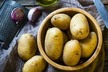
The project addresses the need for crops with stable yields amid environmental stress, focusing on developing elite potato genotypes with enhanced resilience. In the long term, this research may extend to other crops.
"Potato varieties resistant to drought would reduce crop variation and enhance food supply preparedness," states Erik Andreasson, professor of plant protection and project coordinator at SLU in Alnarp.
Researchers have identified a gene, Parakletos, impacting potato resistance. By editing this gene using gene scissors, increased resistance to abiotic stress, like drought, and biotic stress, such as disease, has been observed in the lab. Field trials are currently testing this technology under varying conditions.
"It's about a change in the genome that gives the potato broad resistance. Now we're testing whether what we've seen in the lab also works in the field," explains Erik Andreasson.
The project, running from 2024 to 2029, involves collaboration with Lantmännen, SolEdits, Sveriges kärkelseproducenter, Potatisodlarna, Orkla, and Hushållningssällskapet. Initially, 20 potato varieties were selected, and now narrowed to five candidates for further development.
With a focus on plant signaling systems and potato leaf mold, Erik Andreasson contributes to the larger SLU Grogrund initiative aimed at future-proofing Swedish food production.
Source: Argenpapa