Behind the success of Morocco's relatively new blueberry and avocado industries lies the decline of the strawberry sector, which is becoming less attractive to growers. Acharki Abdeslam, director of the Interprofessional Federation of Soft Fruit in Morocco (Interproberries Morocco), is unequivocal: "I am very pessimistic about the future of the strawberry industry in Morocco, despite it being part of our legacy."
 © Interproberries
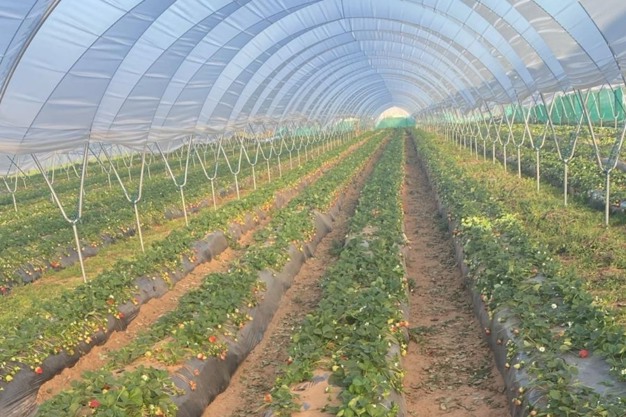
The growers' representative describes a declining interest from growers: "The strawberry acreage in Morocco has fallen from 3,700 hectares in 2022 to 2,300 hectares in 2025. The area decreases from one season to the next, and I don't think we'll be able to maintain our target of 4,000 hectares by 2030, which is the subject of the program contract with the Ministry of Agriculture. There are many reasons for this situation, but they can be summed up as a drop in profitability and the attractiveness of other sectors such as raspberries, blueberries, and avocados."
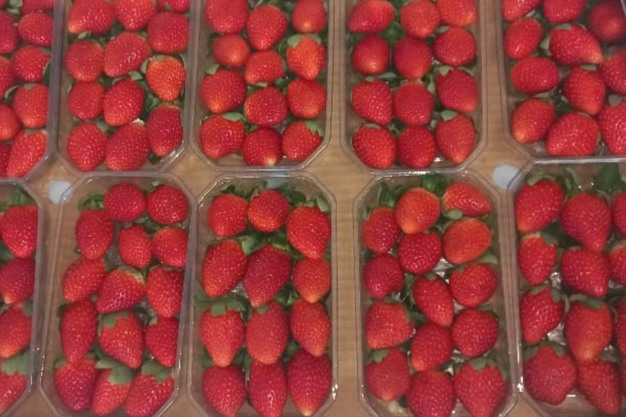
The main reason for this situation is the intense international competition in the strawberry market, dominated by Egypt. Acharki says, "Moroccan strawberries are 10% to 15% more expensive than Egyptian strawberries. The Egyptian strategy can be justified by lower production costs and the priority given to drawing hard currency into the economy. This strategy also has its limits, as it is not sustainable, and our Egyptian colleagues will sooner or later have to align themselves with market prices. But in the meantime, Egyptian competition has already pushed Moroccan growers towards higher value crops."
 © Interproberries
"On top of that, the season is very short: the Moroccan fresh strawberry campaign runs until March 31. After this date, Moroccan exporters must pay customs duties on their exports to Europe, a protection for European domestic production, so we turn to frozen strawberries. We therefore only have a small window for fresh strawberries in Europe", Acharki continues.
On the production front, too, things are complicated, according to the growers' representative: "We're seeing a deterioration in the quality of strawberry plants of the main varieties adopted in Morocco, and their exposure to disease. These plants are 97% of Spanish origin, so it's difficult to replace them. In terms of labor, too, it's increasingly difficult to find workers for harvesting strawberries, which are harder to harvest than other fruits."
 © Interproberries
If the sector is still holding up, it's mainly thanks to its small-scale growers and family farms. Acharki says, "Family farms account for 75% of strawberry acreage in Morocco. The decline in Moroccan acreage and volumes enables them to obtain better prices. Adverse climate in Spain or rising production costs in Egypt also add an opportunity parameter from time to time, enabling growers and exporters to obtain good prices."
"We don't know what to do to save the industry, and we're still thinking about it; on the other hand, other berries are producing fantastic results. Blueberries, for example, are now exported to 56 countries, in large volumes with advantageous commercial terms, and the imminent opening of major markets such as China and Japan. Perhaps it's only natural that strawberries can't keep up with these performances."
For more information:
Acharki Abdeslam
Interproberries
Tel: +212661872969
Email: [email protected]