New fruit varieties used to only reach fruit growers after passing strict and neutral cultivation tests conducted by research institutes. The cultivation risk for the fruit grower remained manageable, since valuable information was developed neutrally. Since the introduction of club varieties or so-called managed varieties, this successful relationship has changed radically. "New varieties are now bought by licensees, tree nurseries are commissioned to propagate them, a large advertising potential is generated, and the fruit grower is supposed to plant them. In most cases, the research institutes are only involved in the testing at a later stage. The fruit grower is then often left alone with the cultivation risks, and that can be very costly. Furthermore, the cornerstone for many direct marketing companies – the end customer – is usually left out in the system of club concepts," explains the management of Exklusive Hofsorten GmbH (EHS).
 © Exklusive Hofsorten GmbH
The purpose of EHS is to jointly bundle the interests of direct-marketing fruit-growing businesses in an international network. "Because new marketing or club concepts hardly give direct marketing fruit-growing businesses access to the cultivation of new interesting apple varieties," reports fruit-growing expert Herbert Knuppen, who, together with Georg Boekels and Roland Schmitz-Hübsch, is in charge of EHS. "Our search for new varieties or new breeding numbers is not based on the interests of individual licensees or marketing concepts, but we orient ourselves directly to the wishes and opinions of consumers through tasting results at direct marketers. More specifically, we are primarily concerned with taste, juiciness, and crunchiness."
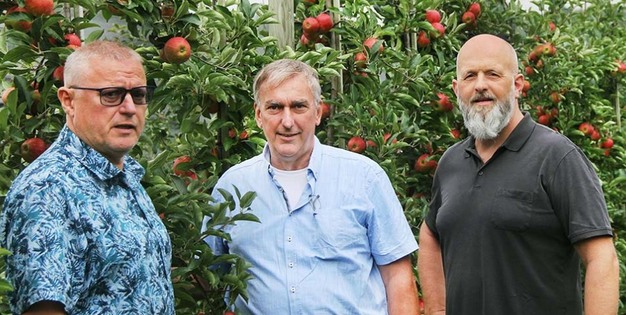 © Exklusive Hofsorten GmbHEHS managing directors Herbert Knuppen, Georg Boekels, and Roland Schmitz-Hübsch discussing varieties (from left to right). The EHS management emphasizes that every direct marketer can participate in the network.
Taste and repeat sales as decisive parameters
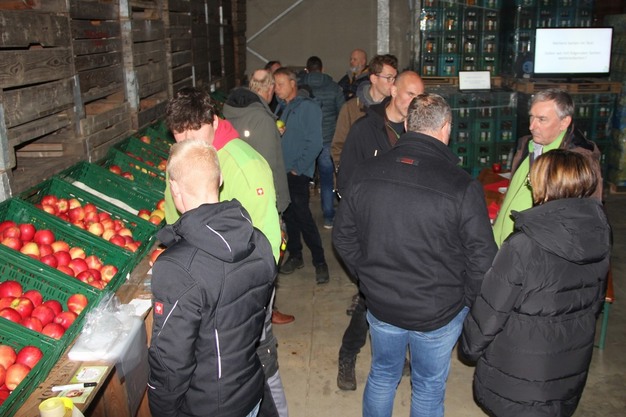
For direct marketers, the end customer is the main focus: with this in mind, extensive and intensive variety tastings are carried out with them. They then decide which varieties to continue with. Knuppen: "Based on these results, we can quickly see how high the market potential of a new variety is. Thanks to our many tests and tastings with consumers, we have already discarded many interesting new varieties during cultivation because consumers did not like the taste! Taste and repeat sales are crucial parameters for us."
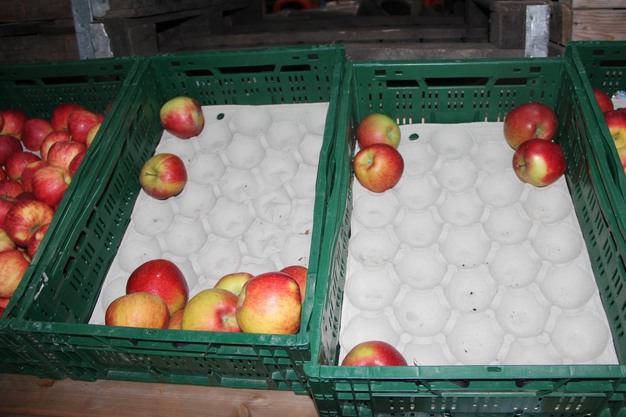
One of the results of the initiative is that the respective plant managers can test new varieties locally under their conditions and cultivation methods. According to Knuppen, the on-site tests quickly reveal what would be of interest to their end customers. "A win-win situation for our members! Other effects include the creation of a network through the pooling of cultivation information and the development of storage recommendations, which also enables our members to exchange specialist information in other areas."
 © Exklusive Hofsorten GmbH
Paper tiger or jewel for direct marketing?
So far, 13 new varieties have been tested by EHS member companies for their cultivation value. "And that under our cultivation and market conditions. This is how we determine which variety can be a paper tiger or a gem for direct marketing. Many new varieties only show their true value when they are grown or marketed. This variety testing for EHS members costs money, and we want to do it sustainably and independently of the tree nurseries," emphasizes Knuppen in conclusion.
For more information:
Herbert Knuppen
Exklusive Hofsorten GmbH
Herbert Knuppen
Tel: +49 (0) 172 82 88 671
An der Josefhöhe 39
53117 Bonn
[email protected]
www.exklusivehofsorten.de