"Demand for pears is not particularly strong at the moment. There is a considerable gap between the price in the bin and the prices achieved on the daily market. At the moment, we are selling with the handbrake on—sorting more yields little to no extra return," observes Mark Vernooij of Urfruit. "The market will need to stabilize over time. This could happen in two ways: either graded pear prices will rise by €0.25–€0.30 per kg, or the ambitious bin prices will have to be adjusted slightly downward."
"Many growers and traders are hoping for a repeat of the scenario from two years ago. However, whether that will actually happen remains uncertain. Almost every trader—including ourselves—has largely hedged before the end of the season. The surprise factor needed for prices to skyrocket seems to be absent for now," Mark continues. "Retail programs are ongoing, but volumes are not particularly impressive. According to AMI, volumes sold in January were notably high, but this does not directly reflect our own sales. In fact, we sold less in January than during the same period last year, and we're hearing the same from many fellow exporters."

"We've already sold a large portion of our own crop, with prices remaining healthy throughout the season. The question we asked ourselves was: is the risk worth waiting for that last 10 cents per kg, half of which goes to the tax office? There's a real danger of holding on too long and eventually 'forgetting to sell'—which would be a real shame," says Mark.
"Quality remains a key concern. We apply strict quality controls from the outset, as a batch with disappointing quality can quickly become unprofitable at today's high prices and strict delivery conditions. Thanks to this strict selection process, we've generally been able to maintain high quality, and more customers are increasingly willing to pay a premium for it."
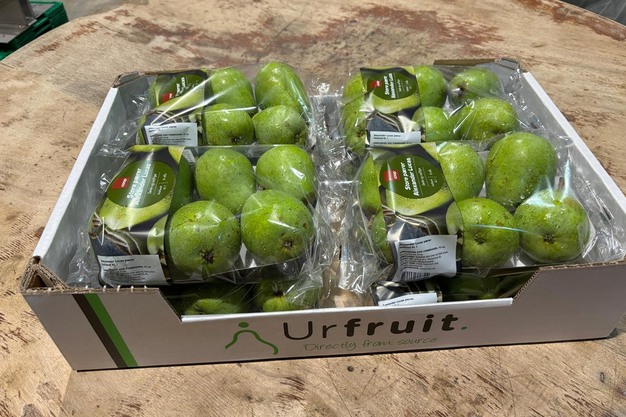
"The European pear stock as of 1 February is almost the same as last year, but the distribution is noticeably different. According to WAPA figures, stocks in the Netherlands and Belgium are significantly lower, while France, Italy, and the UK have larger stocks. Italy, in particular, stands out for its higher absolute volume," the pear exporter concludes.
 For more information:
Mark Vernooij
Urfruit
Marketing 45
6921 RE Duiven
+31 (0)575 472 473
[email protected]
www.urfruit.nl