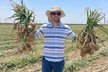
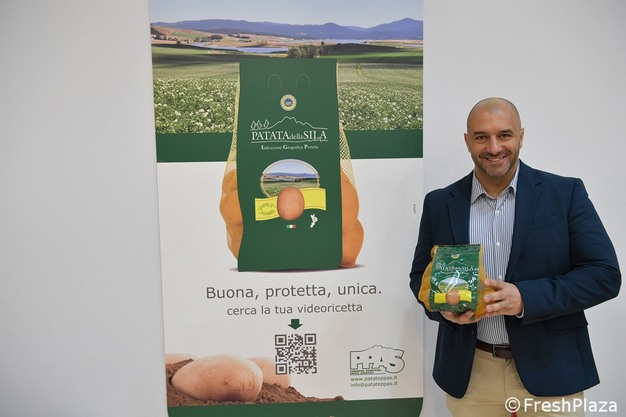
The campaign of Patata della Sila Igp is coming to an end over one month in advance, just like last year. "Sowing was around one month late and, therefore, harvesting started in late September, meaning the produce was commercialized late," reports Albino Carli, director of Consorzio Produttori Patate Associati-PPAS.
"It's been a short campaign, but the figures are good. Destocking is proceeding well despite the higher quotations than last year. We are pleased with the fact that consumers appreciate these potatoes regardless of the price. They are selling well."
But there is one negative note. "In addition to the delay in sales, the delayed production determined a drop in yields per hectare. As a consequence, quantities were 25-30% lower. Just like last year, the campaign will end earlier than expected. We think we can reach mid-April, while a standard campaign usually ends in mid-May."
The delay accumulated due to the rain during sowing and, later, due to the high temperatures with extreme peaks in July, led us to expect a drop in volumes. "The winter season was weird with little snow, very few chill hours and little rain. It is snowing at the moment and we are hoping it will continue to snow, or at least rain, over the next few weeks so as to fill the aquifers, otherwise we will have problems caused by a lack of water during the next campaign. It is anyway too early to talk about it, considering that April and May 2023 were very rainy."
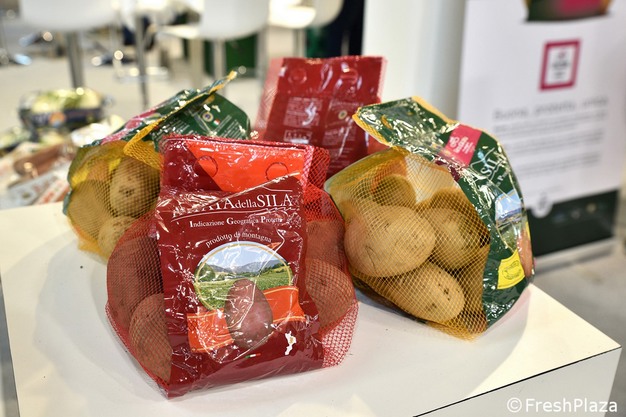
The potato sector in general
There are two sides of the same coin. "When it comes to the balance between supply and demand, settlements will remain fair, as there is less produce available. As for the Italian system in general, fewer areas are destined to potato cultivation and yields are decreasing due to various problems."
"This year we are being heavily affected by the lack of seed availability as well. The main suppliers of seed potatoes from northern Europe registered a drop in quality caused by the weather, which led to lower seed availability. The price of what is available is almost double that of last year. As a consequence, the investment per hectare has gone from €2,000 to €4.000/hectare or more, when it comes to seeds alone. In order to have a higher margin, growers have to make a considerable commercial effort in order to promote the produce." Carli stresses that, considering this situation, the price of potatoes will continue to be high next year as well, still with lower volumes.
The director of PPAS also highlights another aspect. "The sector is understanding that potato cultivation is the prerogative of professional companies, which have the opportunity to invest and innovate. Investments involve e.g. new irrigation methods to save water and agronomic practices that respect the environment. It is extremely risky to grow tubers today, which reduces the people willing to be part of this sector. Operators who are not as professional tend to reduce their crops because they are very expensive and to focus on less profitable crops which are easier to manage."
According to Carli, this is also true for the foreign produce. "While, up until a few years ago, potatoes from other origins reached our markets at very low and competitive prices, they do not anymore. This means the Italian produce feels less pressure."
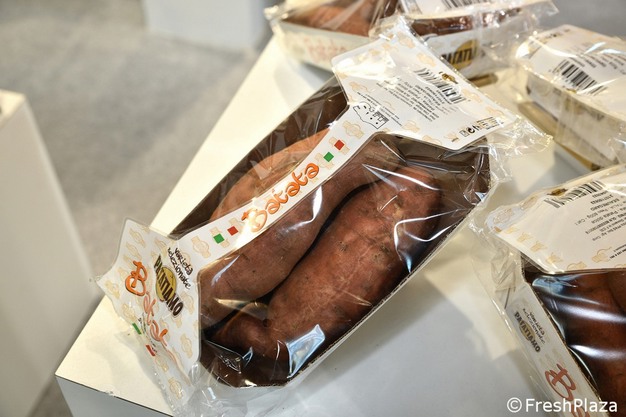
Sweet potatoes
"The project continues and, this year, we will invest on the same crops as last year. Sweet potatoes are doing well, but they are also making us understand that we must improve crop management and work on quality during storage."
For further information: Consorzio produttori patate associati Soc. Coop. Agricola
C/da Garga 4 - S.S. 107 km 83.400
87055 San Giovanni in Fiore (CS) - Italy
[email protected]
www.patateppas.it