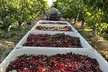
The more than 77,000 hectares planted and the diversity of its production, from regions with a tropical to temperate climate, from no-cold to areas with high cold hours, make China the largest blueberry producing country in the world and the one with the greatest projection.
The reality of the blueberry industry in China is a mystery to many, not only because of the closed information world that characterizes that country, but because much of the information provided or published about the Chinese blueberry industry is wrong.
Blueberries Consulting spoke with Huan Zhang, consultant and founder of Twinkle Start Berry, a specialist in berry crops, mainly linked to the cultivation of blueberries in China and a follower of the industry’s behavior in various regions of the world. It is a Chinese industry player “committed to bridging the gap between international and Chinese agricultural companies in terms of culture, language, technique and professionalism”
What are the production volumes of the Chinese blueberry industry in the last season?
– In 2022, China produced 525.310 MT of blueberries on 77.641 hectares of land.
What varieties of blueberry plants are the most important to grow in China?
– The varieties Southern highbush would be L25 and F6, while the varieties Northern highbush, that would be Duke and Draper. With more breeding companies entering China, especially Fall Creek’s Sekoya, they are going to change the game in many regions. I am very sad to say that many varieties propagated and grown in China do not have the correct licenses from their owners.
How many hectares are planted with blueberries in China?
– 77,641 ha, making it the largest blueberry producing country in the world. The blueberry is planted in regions with a tropical to temperate climate, from no cold to late cold hours.
What are the most important regions in terms of area or volumes of blueberry production in China?
– If we talk about a region, Yunnan province definitely takes the position. It is famous for its low or no cold blueberries. It can produce from November to June/July, with volume concentrated in February, March, April and May. It produces out of season in China, providing fresh, high-quality fruit where there are fewer options for consumers. This region tripled its surface area in the last 5 years (from 3.700 to 9.300 hectares), and I believe that 9.300 hectares is a conservative number, since in 2022 there is significant growth in its production area that will significantly increase these figures.
For more information: east-fruit.com