The garlic harvest and storage campaign has already been completed in the Spanish region of Castile-La Mancha. Right now, there's only purple garlic left in some plots in the northern part of Spain, which will be harvested shortly.
An analysis carried out by ANCPA has shown that in this 2023 season, the acreage has been reduced by around 15% compared to the previous campaign, according to the association's records, and that the final production has been further reduced due to adverse weather conditions.
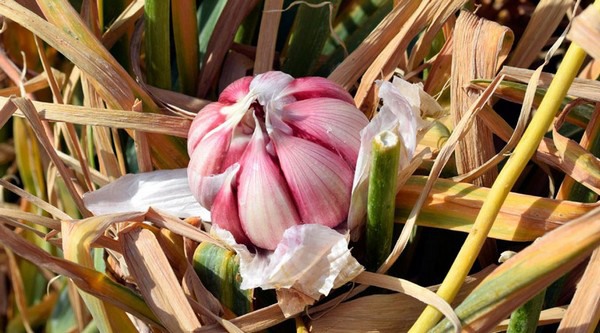
This season has been marked by the impact of drought in most growing regions, with Andalusia being particularly affected. In April, extremely high temperatures and very little rainfall led to a sharp reduction of yields in the early crops. In contrast, persistent rains took a toll in May and June and affected the development of later crops, such as purple garlic, which were also hit by various phytosanitary issues at the end of the campaign. This resulted in smaller calibers and hence lower yields. This reduction of the yields is estimated at 30-40% compared to a normal season.
In 2023, the quality of the early varieties has been low, with plenty of discards. As for purple garlic, the quality is similar to last season, but the yields have been significantly reduced due to the smaller calibers.
These low yields have caused production costs per hectare to shoot up again, taking also into account the 37% increase in overall production costs this season due to the higher costs of energy, inputs, or salaries. The cost of producing 1 kg of garlic has therefore increased by over 45% compared to the previous season.
Regarding the international market, the demand is very slow, with lower than expected sales due to competition from traditional operators, such as China, and new operators, such as Egypt and Turkey. In one of the main traditional markets for Spanish garlic, Brazil, the local production has increased significantly, so the demand for Spanish garlic has been drastically reduced. Fortunately, the quality of the Chinese production this year is low and their garlic is being offered for slightly higher prices than in previous seasons.
The early Spring and purple garlic campaign is likely to be very different, because Spring garlic yields are acceptable this year, but with a slightly lower quality, while late or purple garlic has not suffered in terms of quality, but in terms of yields and calibers.
The ANPCA is currently the largest European association of garlic producers and marketers, covering 13,087 hectares in 2023, and with more than 220 million kilos marketed last season. This is more than 80% of the total marketed in Spain, and 65% of the total in Europe. It currently has 69 associated marketing companies and almost 1,800 garlic producers.
 For more information:
ANPCA
www.anpca.es