Murcia's Institute for Agricultural and Environmental Research and Development (IMIDA), has presented farmers and technicians with new stone fruit varieties -such as peach, donut peaches, and plum, among others- that have high taste quality and are better adapted to climate change.
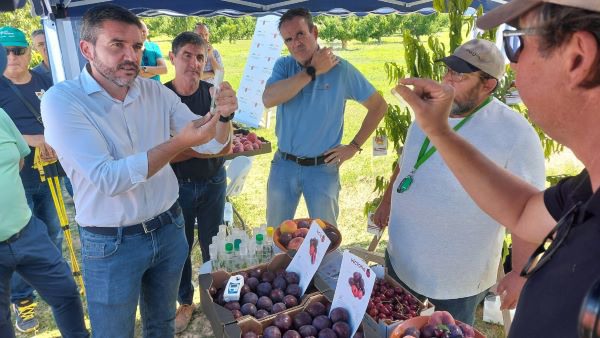
"IMIDA continues to promote and develop various genetic improvement programs of different crops in order to obtain new varieties for the productive sector that are better adapted to the new current climatic conditions. These varieties are being made available to farmers to optimize and diversify production," stated the acting Minister of Water, Agriculture, Livestock, and Fisheries, Antonio Luengo, during a visit to the FrutImida experimental farm, in the Hoya del Campo (Abarán).
He assured that "these new varieties allow farmers to produce earlier or later so that they can access the markets under advantageous conditions, that is, at times where there is no production, such as the stone fruit, which in the Region of Murcia is an international reference in its production and commercialization."

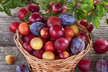
Among the new varieties presented are the donut peaches of the Siroco series, the yellow meat nectarines Bora, the yellow peaches of the Levante series, the consolidated Alisio, as well as the Lucia and Victoria plums, both of which have red meat. All these stone fruits are early production crops that have very good yields, a high-quality taste, good calibers, and that have a long enough post-harvest life to satisfy the demands of the marketers.
IMIDA's Department of Fruit Genetic Improvement, led by Jose Cos, has evaluated agronomically more than 50,000 peach intervarietal crosses since its inception. It has registered 21 varieties of these varieties as they are commercially interesting and have optimal characteristics of climatic adaptation and great taste. These varieties are already in production to meet the qualities demanded by citizens and marketers around the world.
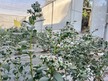
This work is carried out in laboratories and in different experimental farms, such as the one located in Yéchar where more than 300 varieties of peach trees from all over the world are planted for study and research.
For more information: www.imida.es