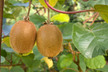
Since mid-August, kiwi berries have been diligently picked in Styria. The berry fruit, which was unknown until a few years ago, has been able to develop into a seasonal niche product in Austrian food retailing in just a few years. In an interview, Johannes Pankarter, one of the earliest kiwi berry producers, takes stock of this year's harvest.
The omens for this year's campaign were initially particularly good, says Pankarter, looking back. "In the spring, we could manage exceptionally well, without anti-freeze irrigation. However, some of the droughts that followed had a serious impact on our kiwi berries. Without these, we certainly would have had a top yield. Although we can't quantify the exact losses at this time, I would say it is more of a regular crop."
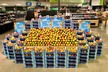
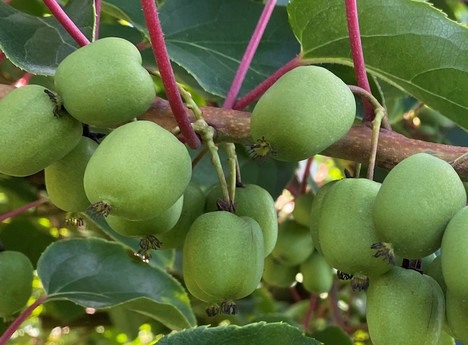 © Kronprinz Fruchthandels GmbH Kiwi berries have very high water requirements compared to other soft fruit crops. At the POS, its is marketed primarily in 125-gram trays.
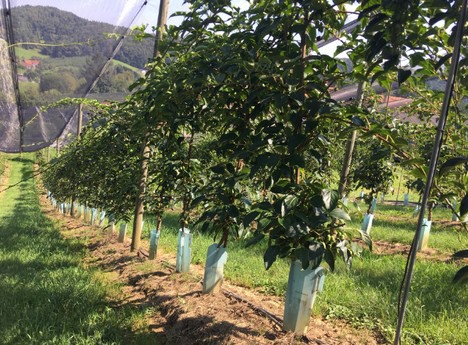
In about two weeks, this year's kiwi berry harvest is expected to end, Pankarter continues. "Thanks to state-of-the-art storage capacity and good, storable varieties, we can market our fruit for about a month after the harvest is finished." In order to have good product in sufficient quantities for both the first and second half of the season, Pankarter grows several varieties in his 3.5-acre plantation. "There's a lot of movement in the variety spectrum, not least because several factors, such as appearance, shelf life, flavor as well as yield, need to be considered."
Although the kiwi berry has been able to hold its own as a seasonal element within Austrian food retail, Pankarter still sees room for improvement, certainly when it comes to the marketing window. "I consider increased seasonal earliness to be difficult, as we have already included several early varieties in our program. Nevertheless, to be able to serve our customers earlier, we are starting with Portuguese goods a few weeks before the beginning of the domestic harvest."
Marketing-wise, it has been a challenging season for domestic kiwi berries so far, Pankarter further said. "Domestic soft fruit is in abundant supply this year, and we are seeing sales drivers, meaning the larger volume berries, such as raspberries and blueberries, becoming more active in the trade. In this respect, the berry market is highly competitive and shelf space is rather limited, especially for a niche item such as kiwi berries. So the main task in the coming years will be to bring the kiwi berry closer to the consumer and to make the fruit more well-known."
For more information:
Johannes Pankarter
Kronprinz Fruchthandels GmbH
Wolfgruben 5
8211 Ilztal, Österreich
T: +43 3112 21 666
F: +43 3112 21 666 21
[email protected]
www.kronprinz.cc