Spain is the world's largest producer of black truffles (Tuber melanosporum) and the cultivation of this highly appreciated fungus, whose price far exceeds that of any other mushroom, vegetable or fruit, continues to expand in the country. Aragon is the leading region in Spain in terms of production, although, as explained by mushroom expert Elena Pulido, owner of the mycorrhizal plant nursery El Origen de la Trufa, their production, both natural and in plantations, is carried out in many parts of the country.
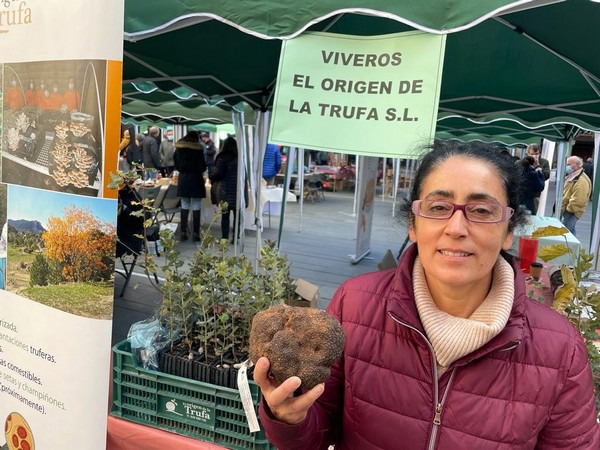
Elena Pulido.
"Black truffle needs certain environmental and edaphological conditions, as well as limestone soils, in order to develop, but the improvement of agronomic techniques has made it possible to correct soil conditions and to cultivate it in many areas. In addition to Aragon, truffles are produced in the Spanish regions of Castile-La Mancha, Castile-León, the Region of Valencia and Andalusia. Moreover, several areas of Granada and Almería have increasingly more plantations of mycorrhizal trees."
"Trufficulture in Spain has only been developing for the last 30 years and, although it is true that there have been some large-scale plantings, things have not always been done properly. That's precisely why the Sarrión area is going into decline at the nursery level. I don't know whether it was due to malpractice, laziness or greed, but some worked with species like the Tuber brumale, a truffle very similar to the Tuber melanosporum and very difficult to differentiate, as well as with species of foreign Chinese truffles that compete with the black truffle and which can spread as if they were invasive species, even if they are not considered one. There is only one thing to keep in mind: if it is difficult to eliminate plant species that grow in plain sight, imagine how difficult it can be to eliminate something that grows under the ground," says Elena.
Besides, the truffle cultivation sector is currently dealing with a problem that has become a big issue in the Teruel area: the presence of the truffle beetle (Leiodes cinnamomeus) pest. As it usually happens with all monocultures, the pests that remained in ecological balance with the productions when these were not concentrated develop with greater force. In fact, in more distant plantations in Almeria and Granada this problem does not exist."
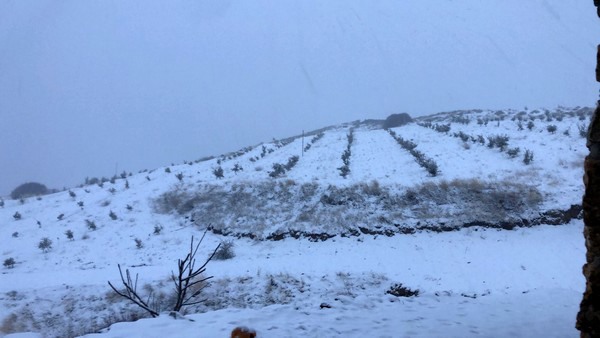
Truffle plantation in Almería, already for 4 years in production, at an altitude of 1,900 m.
Certified seeds and quality inoculums
Truffle cultivation is a very interesting alternative for many Spanish agricultural producers. The fungus thrives in semi-arid or mountainous inland regions, and will generate considerable financial benefits for its producers (the price of a kilo of black truffle can exceed 1,000 Euro) while also being valuable for the ecosystem.
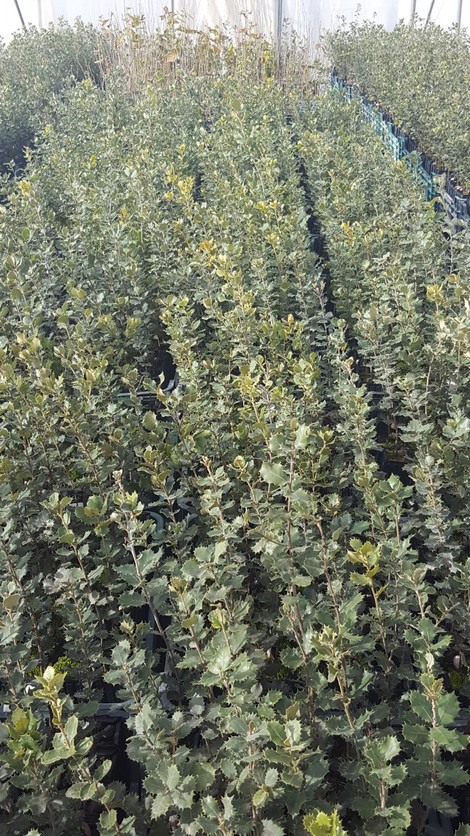
Truffle is a fungus that establishes symbiotic relationships with the roots of several Mediterranean tree species, strengthening the plants and protecting the native peninsular forests. In fact, mycorrhizal tree plantings, which are carried out in irrigated plots in early spring, are done with these species. The quality of both the seeds used and the inoculum employed will determine the results obtained with the truffle production.
"At El Origen de la Trufa we work with certified seeds of holm oak, gall oak, kermes oak and hazel; four species with which black truffle becomes associated and which can adapt to different production areas. We work in a highly traditional way, and although we have exported a little to France, we are currently strongly focused on Spain, given the existing problem in the Sarrión area," says Elena Pulido. "We are currently in the middle of the plant supply season."
"We mycorrhizate plants with different truffle species at the request of the customers. In addition to Tuber melanosporum, we also work with the summer truffle (Tuber aestivum), the desert truffle or turma (Terfezia claveryi) and the autumn truffle (Tuber uncinatum). I have already received orders for this specific truffle, which is harvested in autumn, and which enjoys interesting market conditions before the black truffle harvest kicks off in mid-November."
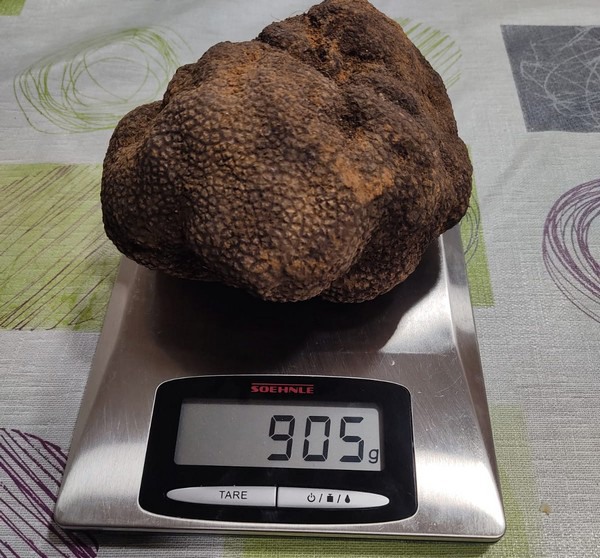
Truffle collected from plants and nidi-truff substrate from El Origen de la Trufa.
The Andalusian origin of truffles
Perhaps the fact that black truffle is commonly called the Périgord truffle may lead some to think that this fungus is of French origin. "But nothing could be further from the truth," says Elena.
"During the glaciations, which covered all of Europe with ice, there remained a stronghold of forests in Andalusia, and in those there were also black truffles. It is thought that as the ice retreated and the trees of the Quercus genus, including oaks, started spreading northward, recolonizing the land, so did the truffles."
"In fact, genetic studies show that all the truffles in the world may have their origin in the truffles of the Andalusian oaks," says the truffle expert, "which means that the truffles of Andalusia have immense value as a genetic bank."
Their cultivation and consumption are expanding in Spain, even though just a few decades ago, the prized black truffle was completely unknown in its own land of origin. "In the Spanish post-war period, even up to the 1970's and 80's, some were coming from France, and later also from Aragon to Andalusia, to the provinces of Granada and Jaén, and they were taking huge volumes of truffles away with them, while the farmers of that time didn't know that they had this treasure underground."
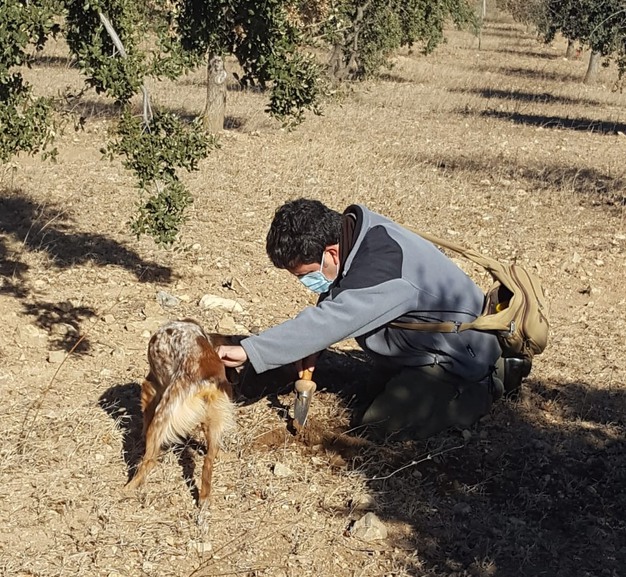
Baldomero Moreno Arroyo, author of the book "Tesoros de nuestros montes, trufas de Andalucía" (the first one that listed the species of hypogeous fungi of Spain) and his doggie Gaia.
 For more information:
Elena Pulido
El Origen de la Trufa
Tel.: +34957238340 / +34629590132
[email protected]
https://elorigendelatrufa.com