The consumption of mushrooms is booming, not only that of traditional ones, which are present all year round on the shelves, but also that of wild mushrooms, seasonal and highly demanded each year during their harvesting season. However, the mushroom kingdom is made up of hundreds of thousands of species and there is a wide diversity of edible mushrooms, each with different flavors, colors, textures and nuances, as well as medicinal properties. The Cordoba-based company Setacor wants to bring these closer to consumers.
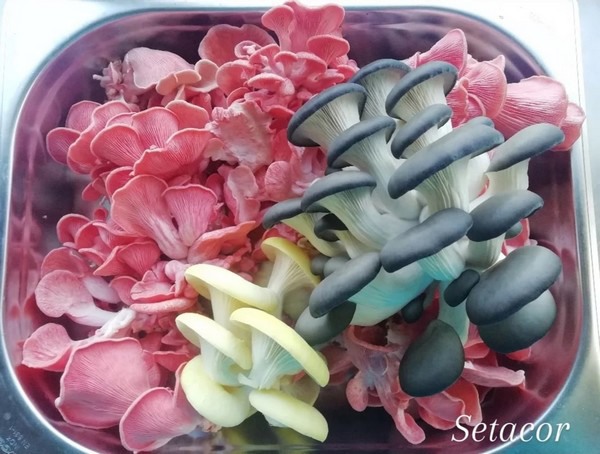
"With Setacor, I have wanted to innovate in the mushroom sector from the very start, offering a different range of gourmet mushrooms with species such as lion's mane, pink mushroom, lemon mushroom or poplar mushroom," says María Rosas Alcántara, founder of this company, located in the municipality of Villafranca de Córdoba. "In fact, I have been a pioneer in the cultivation of pink mushrooms in Spain."
"The idea for this project was born 20 years ago. Even today, there are still very few growers of these species in Spain, so in 2002, I decided to travel to Germany to receive training in their cultivation, learning from the country's producers and taking advantage of my knowledge as a botanical biologist," says María, who has also been involved in some commendable and extensive international humanitarian cooperation work in Africa. "In addition to innovation as regards cultivated species, I have also innovated with the productive techniques."
"In 2011, I acquired a small olive grove with the intention of combining the cultivation of olive trees and mushrooms, and I have managed to produce some of the species on a substrate made from the leaves of my own olive trees. Once the mycelium is exhausted in this substrate, it is returned to the field in the form of compost that nourishes the olive grove." This technique is an example of a sustainable cycle with a very positive environmental impact. "In an area of only 2.5 hectares, I manage to capture up to 2,000 kilos of CO₂."
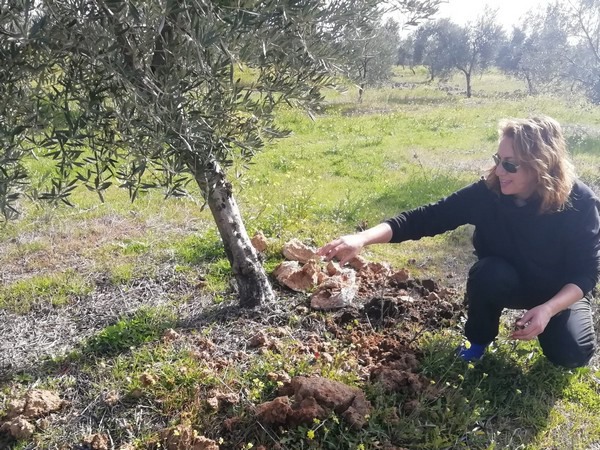
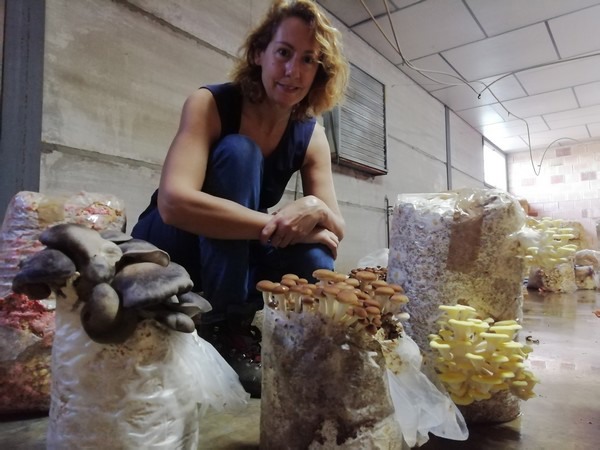
María Rosas Alcántara.
In addition to the lion's mane (Hericium erinaceus), pink mushroom (Pleurotus djamor), lemon mushroom (Pleurotus citrinopileatus) and poplar mushroom (Agrocibe aegerita), which are tropical species whose production will be available in about two months, Setacor grows enoki (Flammulina velutipes), thistle mushroom (Pleurotus eryngii), gray mushroom (Pleurotus ostreatus) and shiitake (Lentinula edodes), which is currently in season.
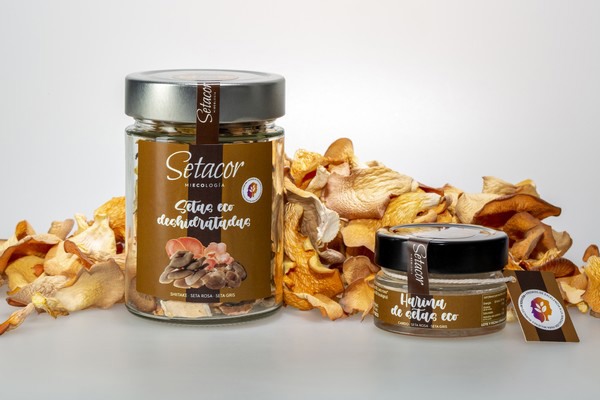
"The marketing of our gourmet mushrooms targets organic stores and consumer groups, and they can also be purchased directly through the company's website, where we have trays and tasting boxes of fresh mushrooms available. The latter contain different species, depending on the production season, and are customizable. We also have dehydrated mushrooms and mushroom flour."
Setacor, which has already received several awards, with the latest one being the Award for Excellence in Innovation for women in rural areas, granted in 2020 by the Ministry of Agriculture, wants to take its production to the European markets.
"In northern Europe, there is a more extended mycological culture and higher mushroom consumption, so, hand in hand with the Andalusian public company for foreign promotion, Extenda, we are immersed in a plan to study the possibilities for export," says Maria Rosas. "We have already seen interest from Belgium in our canned mushrooms."
 For more information:
María Rosas Alcántara
Setacor
Tel.: +34 670 015 421
[email protected]
www.setacor.com