Marc Lodewijks is advocating the next step toward sustainability in the plastics sector. Marc is the owner/director of Pack11, a Dutch company specializing in topseal film. "The topic is sustainability is gaining great momentum and our sector's expected to take its responsibility. In this regard, the first step is to switch to using as much mono-material as possible," he begins.
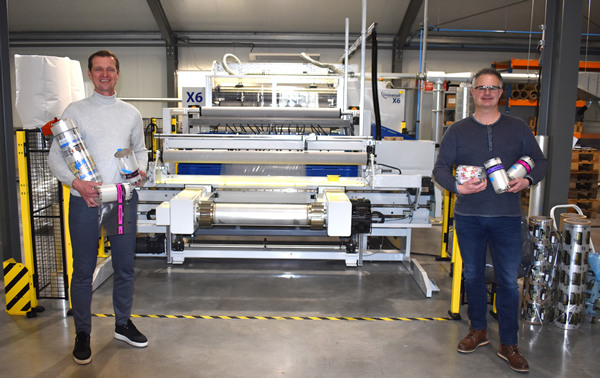
Marc Lodewijks and account manager Wim Mariën.
"You can't recycle composite plastics. They can be chemically separated, but that's very expensive and not necessarily sustainable. Films that consist of a single type of plastic can be recycled as mono-material. Recycled content can consist of 60/70% recycled material. We can buy these films back, this creating a circular system."
That sounds like an achievable goal, but there is still much to be done. "There are no systems in the Netherlands to recycle foils properly. The PET bottles stream, currently the purest one, is an example of where we need to go. These bottles, made of mono-material, have a deposit system. So, they are returned and recycled into new PET bottles. There's no such closed system for films yet," Marc explains.
He says moving away from plastic completely is not the answer. "We've partnered with Sappi, one of the world's largest paper manufacturers. We, thus, also offer paper solutions, like cardboard trays with a topseal or 'Paper Lidding'. However, switching entirely to paper would mean using more energy, water and especially trees. Also, paper isn't naturally see-through, and consumers want to see what they're buying, especially when it comes to fruit and vegetables."
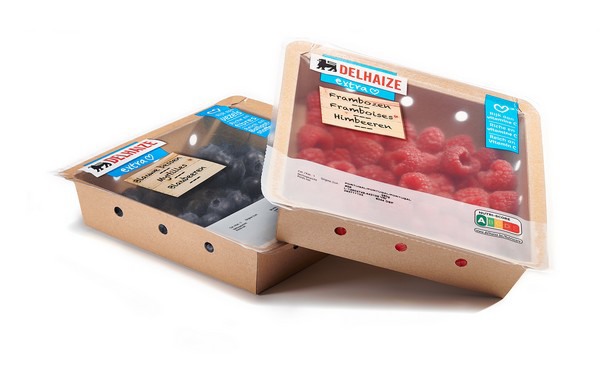
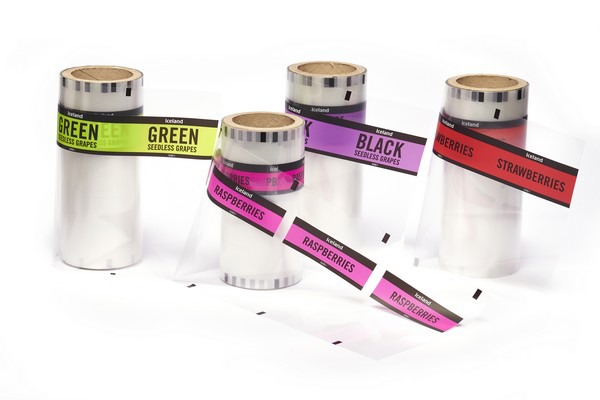
That means there are real solutions to be found in plastics, says Lodewijks. "That's definitely possible too. First of all, through reduction. We're, for instance, increasingly being asked how thin we can make the foils. Currently, most PET films for chilled products are 25 microns; we want to go to 20, preferably even 15 microns. That's certainly feasible for products like soft fruit. That, in turn, means considerably less plastic, which also costs less."
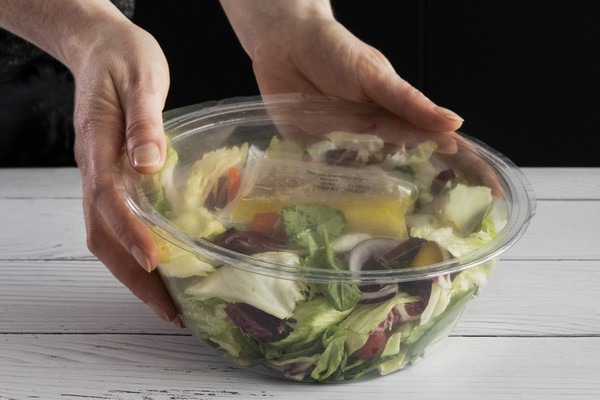
Using topseal packaging is becoming increasingly widespread in the fruit and vegetable sector, Marc notes. "That mainly has to do with shelf life, but ease of use is also important. Fresh herbs, soft fruit, tomatoes, mushrooms, and processed, all-inclusive salads are increasingly topsealed."
"Prepackaging is done on such a large scale that the difference in cost between, say, a lettuce head and prepackaged, sliced lettuce including pine nuts, etc., is shrinking. So why not opt for that? This trend is, however, resulting in more packaging. That's why reducing, reusing, and recycling is crucial," Marc explains.
For the meat industry, the switch is more challenging. "That's because everything in the meat industry is fumigated to extend the meat's shelf-life. That industry mostly uses compound films made up of two or more different plastics. That's to make topsealing 'idiot-proof'. To prevent leakage, both the tray and the foil are then PET and PE. But you can't recycle this type of packaging. That means you have to develop a mono-material tray and foil that still have an oxygen barrier. We managed to do just that and are now bringing that to the market. It's going well."
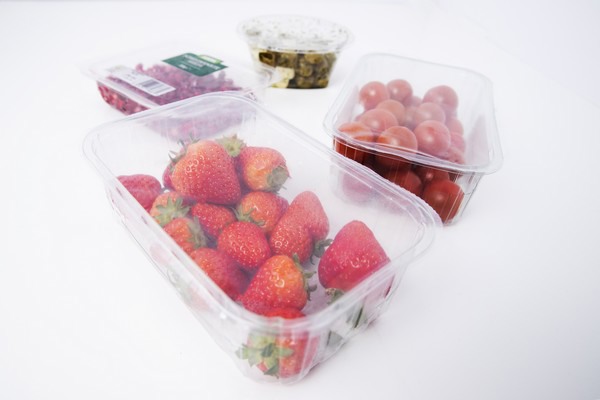
"There's still a long, ambitious road ahead. Reprocessing is still in its infancy. I truly see everything as a certainly attainable challenge," Marc says. "I think combined materials have a limited future. You can't place all the responsibility on consumers either. They don't see the difference between the packages. The industry has to take that responsibility. Give the plastics sector the opportunity to find solutions."
"We're a relatively small player, but we represent a large party in Sappi Rockwell Solutions. Our mutually-developed Rockfruit topseal film with recycled content is a good example. Of course, your company wants to be profitable. Still, I think your objective should also be to market more sustainable products," Marc concludes.
For more information: Marc Lodewijks
PACK11
3 Heijbeekse Street
4709 PD, Nispen, NL
Tel: +31 (0) 850 220 004
Email: [email protected]
Website: www.pack11.nl