Before the stone fruit harvest started in Spain, there was much uncertainty about the possible impact of the Covid-19 situation, given the restrictions on mobility, which could have an impact on tasks like the thinning and harvesting, as well as the product handling and packaging.
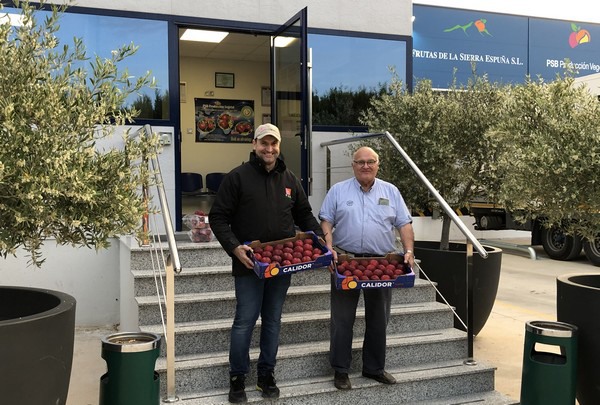 Stéphane Buffat, founder and CEO of PSB, with his father.
“The truth is that this sector is fulfilling its obligations and doing everything possible to continue working and, at the same time, taking all precautions to slow down the spread of the virus. We have made individual protection equipment (IPE) available in the warehouses, as well as in vehicles traveling to the fields,” says Thomas Chevaillier, Technical-Commercial Director of PSB Producción Vegetal, a renowned breeder of stone fruit varieties founded by the Buffat family, which also owns the producer and marketer Frutas de la Sierra Espuña. As a stone fruit specialist, Thomas analyzes the situation of this year's apricot, nectarine and Paraguayo peach productions, and he talks about the most ideal times for producers to plant the best varieties.
Limited apricot production this year
The first European apricot harvest forecasts point to the volume being 37% smaller this year. "We believe the drop in France will be even sharper compared to Europech's forecasts. In Spain, abundant rains have had a considerable impact on the apricot production, as well as other species. An average of around 250 liters per square meter has been recorded, which is unprecedented. In Murcia, around 600 liters per m2 have fallen since September, which is about the same as all rainfall recorded in 2017, 2018 and 2019 combined."
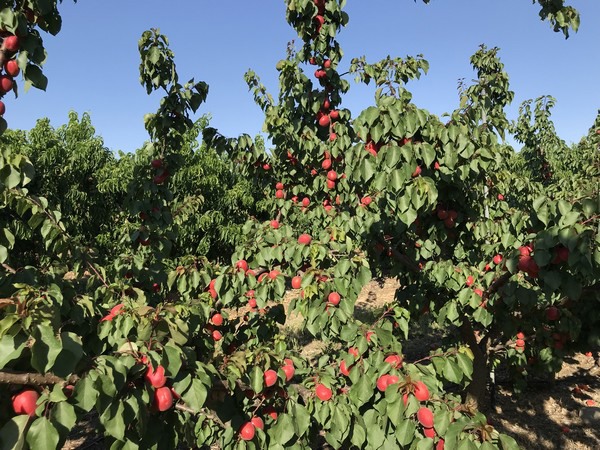
Bolero apricots, of PSB.
"The winter conditions were not very favorable for the crops. In November and December, there was hardly any cold, and January was a rainy month. Then February was too hot and this resulted in a very early flowering that was later affected by heat waves in March, which led to a bad setting of the apricots.”
"The best time to plant apricots in Murcia is June 10"
According to the specialist, despite the fact that the volumes will be almost 40% lower in Europe, there will be enough supply of early apricots, so producers should not bet on extra early varieties. However, there is a significant gap from the end of May to June 20. From the end of April to May 10, a lot of Colorado apricots have been planted, which are very popular with producers and exporters, and there are also Flopria apricots, which are harvested from May 20. From late June (June 20) and until France and Italy start supplying significant volumes we didn't have any varieties adapted to areas with few hours of cold, but now we have the Bolero apricot; red, self-fertile and with a good flavor, which is harvested from June 10.”
Nectarine supply lower than the demand due to losses in early harvest
Regarding nectarines, the abundant rainfall in Murcia had an impact on the quality of the first harvests in weeks 16 to 18. “There has been a lot of fruit loss because of it growing too quickly due to excess rain. The stone bursts and the fruit loses its firmness. Moreover, sugar levels have also been lower than normal, although this is already starting to change this week," says Thomas Chevaillier.
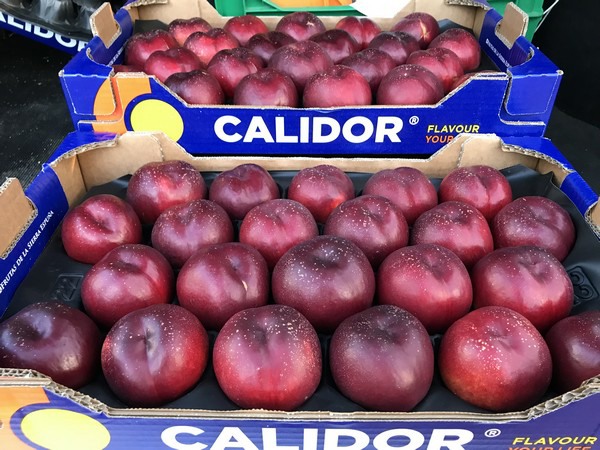
Caracas nectarines
Since many greengrocers and small stores are closed and supermarket chains have not yet started selling nectarines in baskets and small boxes, there were some marketing problems at first. "We could not ship fruit anywhere, especially second class. Fortunately, the rain has stopped in Murcia and we now have temperatures of around 30 degrees Celsius that boost consumption. Nectarines now have a correct brix and the supply is fairly tight due to declines in the early harvests, which is resulting in smooth sales, fair prices, and demand above the supply. The increase in the amount of packaging formats requested by retailers, however, is a growing challenge.”
"Murcia must take advantage of the gaps in the supply of nectarines in May and June"
At the beginning of this week, the early harvesting of yellow-fleshed nectarines, such as the Garcima, Patagonia or Flariba, among others, is being completed. This is still a year with early harvests, so we foresee an even bigger gap between the aforementioned varieties and the next yellow-fleshed nectarines, such as the Garofa and Gartairo, and the white-fleshed ones, such as the Boreal, very common in Murcia and harvested between May 20 and early June. A shortage of yellow nectarines is expected between May 15 and 25. Although the situation won't be as bad this year, we expect there to continue to be production gaps around these dates in the coming years. That is why we suggest planting varieties that can fill these gaps in the market, such as the Omega and Caracas, which are adapted to early areas.
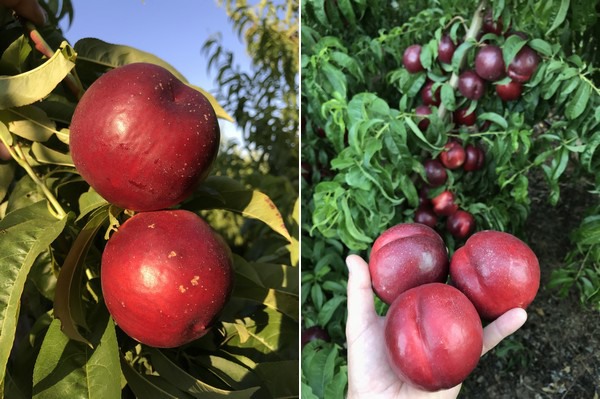 Omega and Amapola nectarines.
Given that Murcian producers have focused a lot on early fruit production, especially between April and May, there is usually a shortage of nectarines from mid-June. "I think this has been a strategic mistake, since the market is not yet very prone to stone fruit consumption at this time and the quality is not that high."
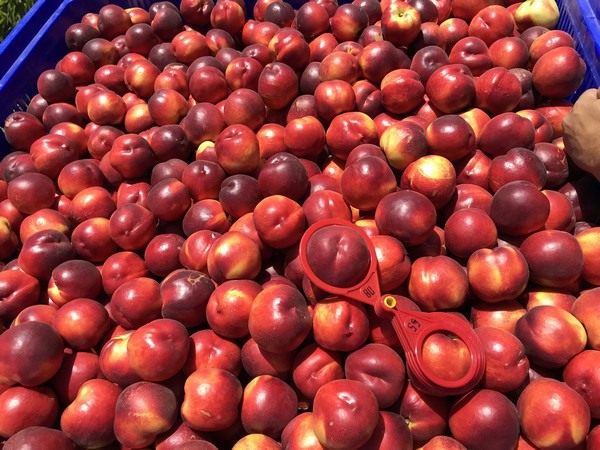 Atanais nectarines, of PSB.
"We believe that Murcian producers should bet on nectarine varieties that are harvested between June 10 and 20, because the brix is higher, considering that Murcia always has good weather at this time. Also, these varieties deliver higher yields, given their longer cycles. We suggest the Atanais yellow-fleshed nectarine, which is harvested from June 12, and the white-fleshed Amapola, which is harvested from June 6. After the third week of June, large volumes of nectarines are already harvested in Lleida and Badajoz and there are no more gaps.”
"UFO Paraguayo peaches are losing ground to new varieties with more color and firmness"
The Carioca and Samantha varieties, of PSB, have been planted quite a lot in Murcia in recent years, to the detriment of the Italian UFO varieties. According to Thomas Chevaillier, “although these were very good at the time and have been very lucrative, they are already becoming obsolete, because the coloring doesn't go as well, and they suffer more cracking problems compared to newer varieties."
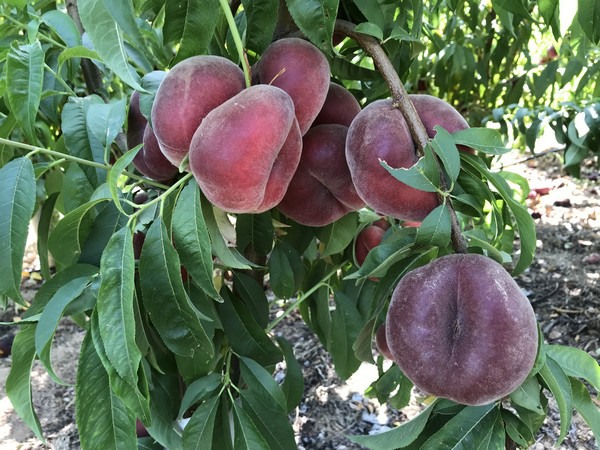 Babylone Paraguayo peach, of PSB.
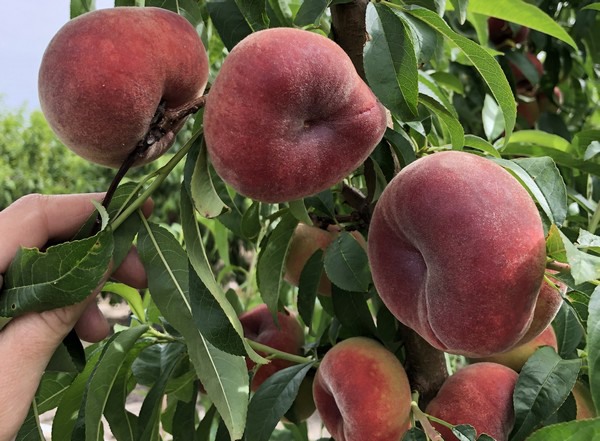 Zodiac Paraguayo peach, of PSB.
"This year, due to the earlier start of the harvest, we see that there will be an even greater production gap between May 20 and June 20, when Lleida's supply arrives. To fill these gaps, we recommend planting varieties like our Contessa, which is harvest on June 10, and the Babylone, with is harvested on June 15. These are replacing the UFO 3 and 4 varieties, as they achieve better coloring and pistillary closure, as well as less cracking."
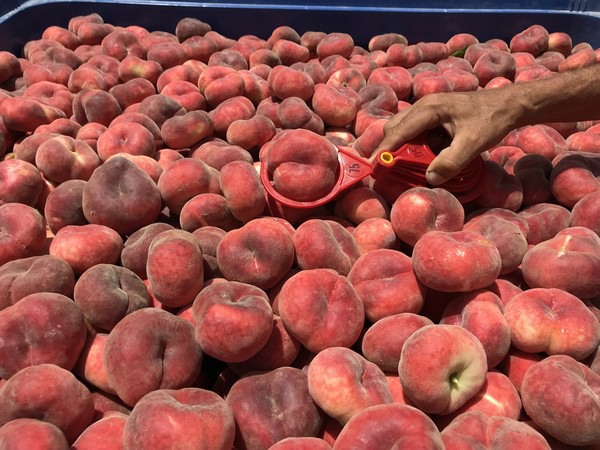
Contessa Paraguayo peach
"We have also found a small gap between late April and early May, for which we have the new yellow-fleshed Vivadona variety, as well as the white-fleshed Zodiac."
For more information:
Thomas Chevaillier
PSB Producción Vegetal
Technical-Commercial Director
T: +34 620 810 125
[email protected]
www.psbproduccionvegetal.com