Yofi Grant is the Chief executive officer of the Ghana Investment Promotion Authority (GIPC). He recently hinted of plans to establish phytosanitary lab in Ghana, aided by Maltese experts.
Speaking to Ghanaweb, the GIPC CEO said that phytosanitary labs will be set up in Ghana, to help the country have quality certification of goods for export. “We have signed an MOU with Malta to provide phytosanitary and all the certification that we require when exporting to the European market. They will also be here to train. We also have an MOU in aquaculture to enable us build our expertise in that sector.”
“The good thing about the Maltese is that once they commit their word, they live up to it,” he noted.
The phytosanitary certificate is an official declaration stating that plants and plant material exporting are free from pests and diseases, so as to prevent introduction and spread of any pests in the importing countries. Ghana lost about US$36 million in foreign exchange as a result of a ban on some five vegetable exports into the European Union (EU) market between 2015 and 2017, the Ministry of Food and Agriculture said.
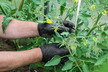
The five plants concerned were chilli pepper, bottle gourds, loofah gourds, bitter gourds and eggplants.
The EU banned the vegetables from Ghana after an audit undertaken by the Directorate General for Health and Food Safety of the European Commission detected a high number of interceptions of harmful organisms on some plant products from Ghana. After the ban was lifted at the last quarter of 2017, Ghanaian authorities have taken significant corrective measures to improve the inspection and control system for plant health at exit various points.
However, the GIPC boss believes that Malta putting up phytosanitary labs in Ghana will increase quality standards.