“My vision will follow that of Manuel Galdeano, former president. I will continue on the path set during his 20 years in charge of the company,” said Antonio Sánchez Baños, new president of Murgiverde.
Antonio Sánchez Baños joined the company (then Ejidoverde) when he was only 18 years old. His long experience includes 10 years in the managing board. The company is one of the largest Spanish fruit and vegetable producers, with an annual volume of 180 million kilos of pepper, cucumber, watermelon, melon, tomato, zucchini and eggplant.
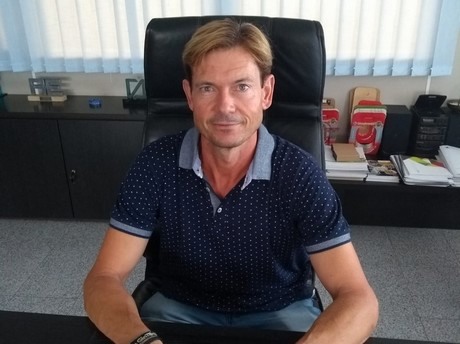
Antonio Sánchez Baños, new president of Murgiverde
Spanish peppers have good prospects
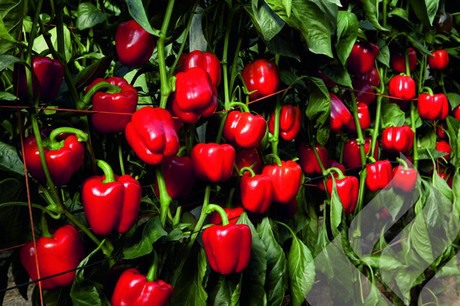
“The early pepper campaign is about to begin in Almeria. In a week, we will already have red peppers in the market. It's a good time, with a gap that the Netherlands can't cover. There is demand for the first red bell peppers and you can expect good prices. This is good news after a late pepper campaign that ended in April and was a difficult one,” says Antonio Sánchez.
According to him, yellow peppers are also in higher demand (for three-color packages), despite being the most expensive. The green, which remains the cheapest because it is easy to harvest and has a greater yield per plant, also remains interesting.
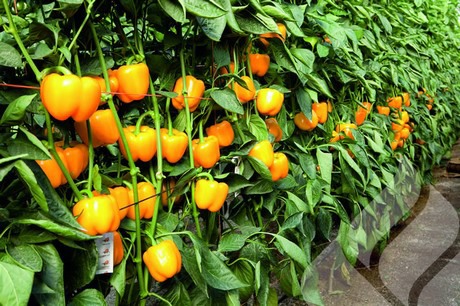
This year, the campaign will be better than the previous one, with about 60,000 tons or more. “Prices fluctuate, as usual; therefore, the most ideal option is for producers and companies to alternate contracts and weekly prices. It is the best model to achieve market stability: to diversify the risks,” says Antonio Sánchez.
Watermelons don't need to eclipse melons
The watermelon campaign has just ended with a positive balance. "Despite a few weeks of uncertainty in July due to the low summer temperatures that slowed its consumption down, watermelon continues to gain ground with high prices," says Antonio Sánchez.
“The stability in the high prices of watermelons is the result of a brand-oriented demand and contracts with large chains. In any case, melons are not going to be dethroned by watermelons; even though the demand is currently going down, the fruit will always have markets. Melons are not as demanded because its price is too high. The producers don't see enough marketing options and the cultivation is more expensive. Watermelons are harvested ripe, with ideal Brix degrees, so they always taste good to the consumer. With melon, this is not always the case. The whole of Almería focusing on watermelons is not a viable conversion. What is being done is to look for varieties adapted to the consumer demands,” says Antonio Sánchez.
Organic line: an obvious bet
Former President Manuel Galdeano had expressed his desire of moving 100% to organic production, and the new president will follow the same path.
“Of course, in some cases, such as hydroponic crops, it is difficult. But yes, organic production is the future. We don't sell fruit and vegetables, but health. We are even betting on biodynamic agriculture."
“The consumer demands organic; it is a fact. Almost all supermarkets already have an organic line. In the case of biodynamic fruit and vegetables, there is also a market, although forecasts are more difficult to make, since it is the consumer who decides. In any case, Murgiverde is a step ahead and we already have Demeter certified biodynamic farms with Palermo, red and yellow bell peppers, and cucumbers. It is not easy: a farm must have 10% of biodiversity and zero phytosanitary products.”
“45% of Murgiverde's production is already organic. Growth has been extremely quick and now it is slowing down, since the conversion takes time, but our goal is to reach 100% organic.”
“The biggest obstacle is the rising temperatures in recent years, which facilitate the spread of pests and prevent easy containment. Aphids, for example, cannot be fought with wasps if it is too hot. The heat causes problems in early plantations, and in the greenhouses it is difficult to keep temperatures below those recorded outside. Organic peppers and cucumbers are the most vulnerable. Research will provide solutions, but that is a slow process,” says Antonio Sánchez.
Organic cucumbers: available 12 months a year
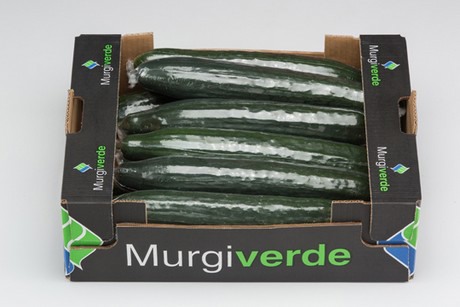
“At this time, we are starting with the marketing of conventional cucumbers. There is a good demand and prices will also be good; much better than in the previous season, when the Netherlands started gaining ground on Almeria very quickly. It is necessary for temperatures to be cold enough to ensure the plants' growth,” says Antonio Sánchez. He adds that “the supply of organic cucumbers can be kept for 12 months a year without too many fluctuations. It is a more stable market.”
Reduction in use of plastic also good for producers
The clear trend of distributors is the reduction in the use of plastic. “Certain changes in packaging can make exporting difficult. A product without packaging has a shorter shelf life and suffers more during its handling. Also, biodegradable material alternatives make the product too expensive and may not be ideal long-term solutions. But it is also true that a reduction in the use of packaging entails changes that all links in the chain can benefit from. The producer must supply more frequently, and at the same time, consumers have fresher products at their disposal,” says Antonio Sánchez.
The company
The Fruit and Vegetable Producers Organization (OPFH) Murgiverde has 800 members with a total of 1,300 hectares. The annual turnover this year will exceed 170 million Euro.
Its production is mostly intended for export, with destinations across Europe, the US and Canada. In Europe, the main importers have traditionally been Germany, the United Kingdom, France, Switzerland, the Netherlands, the Nordic countries and lately also the Eastern countries.
More information:
Antonio Sánchez
Murgiverde
C/ Pérgola, 51
04700 El Ejido, Almeria. Spain
T: +34 950 48 90 90
[email protected]
www.murgiverde.com