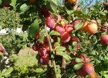
The stone fruit season has already started in northern Spain. For Guimera Select Fruits, a company based in the municipality of Maella, in the province of Zaragoza, the apricot and cherry harvest has just kicked off. "This campaign has only been delayed by a few days. In 2017, we started on May 5; last year, on the 16th. We expect a good campaign, although we still don't know what to expect as far as prices are concerned. The recent rains and fog could cause the cherries to suffer cracking," says Irene Martinez, director of operations. "Given the good flowering, we predict good volumes and optimum organoleptic quality and sizes."
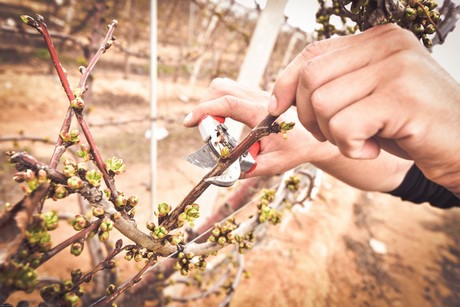
Irene confirms that the last two years have been tough for the stone fruit sector: "In 2017, there was a generalized oversupply that brought prices down. In 2018, Paraguayo peaches were not affected, but the nectarine volume was sharply reduced. Frosts took a huge toll on the north farm, located 240 meters above sea level. In 2018, prices increased, but there was a lot of competition," she says.
With the start of the campaign still so recent, it is soon to speculate on what to expect from the demand and prices. "Prices are set on a weekly basis; until we start, everything we have is hypotheses and uncertainty. But it is true that the market demands high-end products," says Irene. Guimera has several brands, with Quality being the most demanded.
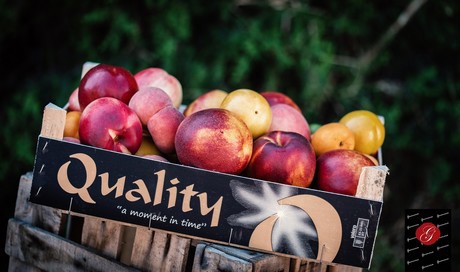
"Demanding customers, such as the United Kingdom, contribute to brand positioning in the high-end sector. Good branding is vital in an unstable market; however, diversification is essential, and the traditional tendency to focus on exports, risky. Our challenge is to focus more on the domestic market, where the demand is on the rise," explains Irene.
"The main cost is still labor, and countries like Turkey, with cheap labor and little technological investment, cause prices to fall. Still, they cannot be considered competition, because they lack the certifications (IFS, Global GAP, etc.) required by the majority of clients," says Irene Martínez. "It is true that markets and retailers are pushing for low prices, but the premium fruit segment can avoid part of this pressure," she says.
For Guimera, technological investment is necessary in the medium and long term. "Four years ago, we acquired a sorting machine specialized in apricots and plums, with optical detection of internal and external defects. The yield obtained has a positive impact," says the director of operations.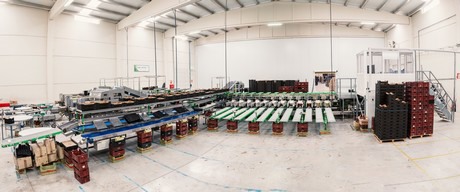
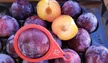
Varietal innovation is essential. "Apricots are our specialty. Choosing attractive varieties, such as the red apricot, helps open markets. Although its taste is similar to that of traditional varieties, its appearance makes it appealing. The new varieties are appreciated by the consumer. Even conventional markets, like Germany, are interested in innovative varieties," says Irene Martínez.
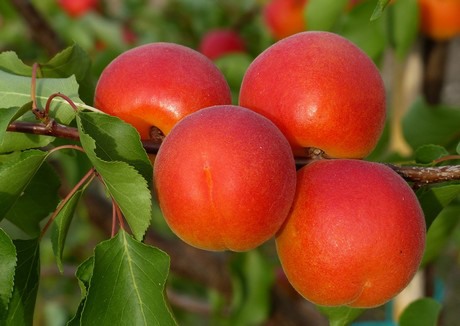 Red apricot: an innovative variety that opens new markets
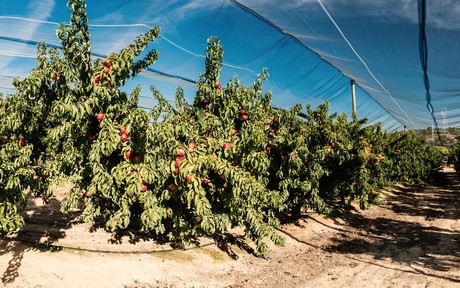
By cultivating in farms at different altitudes, Guimera has managed to extend the campaign. It has crops in Chiprana (144 hectares of nectarines at 110 meters above sea level), Mequinenza (386 hectares at 240 meters) and Torre del Compte (30 hectares of apricots and cherries at 550 meters). "This diversification makes it possible to have a 6 month long campaign, which facilitates the meeting of a growing demand," says Irene Martinez.
For more information:
Irene Martínez
Guimera Select Fruits
Camino Futbol s/n
Maella 50710, Zaragoza. Spain
T: +34 976638758
[email protected]
www.guimerafruits.com