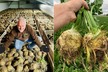
Asparagus farmers are already ready to get started, but in Lower Saxony, winter vegetables are still being served - and they are very popular. "Forgotten vegetables like salsify or swedes are increasingly in demand, especially for younger customers, as 'regional' and 'sustainable' are trendy words," Alexandra Uhrbach, a vegetable grower from Winsen/Luhe told the Landvolk press service. 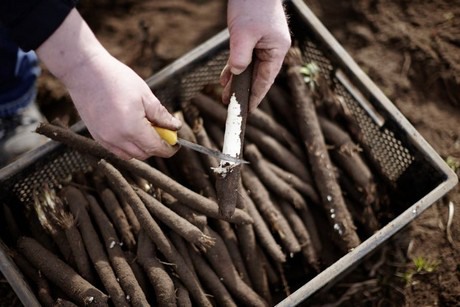 The Uhrbach company produces salsify on some 40ha
Image: Uhrbach
Regional winter vegetables are trendy
All kinds of cabbages, but also swede, beetroot, parsnip or salsify have seen a boom in recent years and are still in demand. "But there are only a few vegetable growers who cultivate salsify. This is mainly related to the soil," says Erich Klug of the Lower Saxony Chamber of Agriculture. Salsify needs sandy, humus rich, nutrient-rich and stone-free soils.
Eight years ago, Alexandra and Bernd Uhrbach decided to not only grow cabbage, carrots, beetroot and swede on their 150-year-old family vegetable farm in Winsen/Luhe, but the 'asparagus of the common man' as well. "We have steadily increased our acreage so that salsify now grows on 40 hectares," says Alexandra Uhrbach.
Special cultivation technology
The have now reached the limit, because black salsify is not easy to grow, says the vegetable expert. It starts with a need for very special seeds and ends with a time-consuming harvest. From mid-October to March, the salsify is harvested up to a length of 50 centimeters. They sit deep in the ground and have to be loosened with special technology before they can be harvested, keeping them as intact as possible. Like carrots, black roots are peeled, but this is not a nice job due to the milky, sticky juice that discolors the skin.
However, tips such as peeling under running water or using disposable gloves can help people to enjoy these vegetables with their unique, spicy and slightly nutty taste. "Healthy salsify are as well," says Alexandra Uhrbach. A 200-gram portion contains six milligrams (mg) of iron, which equates to half the daily requirement, and is low in calories, containing B vitamins, potassium, magnesium and phosphorus.
Company size increased
The entire vegetable acreage in Lower Saxony has grown steadily in recent years. In 2017, it amounted to more than 20,000 hectares. The 881 companies in Lower Saxony mainly grew asparagus, onions, carrots and iceberg lettuce, so that the average size of the farm increased to 23 ha.
For more information:
Uhrbach Gemüsinis
Inh. Alexandra Uhrbach
Boschstr. 24
D-21423 Winsen (Luhe)
[email protected]
www.uhrbach-gemuesinis.de
www.gemuese-box.de