North America heavily relies on Costa Rica for its pineapple supply with the Central American country having a market share of about 85 percent in the Canadian market and 90 percent in the U.S. "Consumers prefer the stability, taste, flavor and presentation and all sales channels are loyal to Costa Rica," says Mauricio Lopez with Go Fresh Produce from Canada. This includes supermarkets, food service operators, independent stores, as well as the wholesale market.
In an attempt to diversify sourcing, Go Fresh has considered other sourcing countries. In Mexico, however, prices fluctuate, which is difficult and risky. Additionally, their consistency in quality is not as steady and despite being closer in proximity to the Canadian market, consumers in both Canada and the U.S. prefer pineapples from Costa Rica. "Since that is the preferred market, we bring in product from overseas, satisfying our customers."
Presence of other Latin American regions, including Guatemala, Panama, Colombia, Ecuador, and Brazil is very limited in the Canadian market. Volume from these markets is low and inconsistent. "If they would like to gain any market share in Canada, they would need to offer consistent supply," Lopez commented. Due to their long transit times, African countries don't play a role in the Canadian market either. "It can be concluded that Costa Rica is still the number one pineapple supplier in terms of quality, volume, and consistency."
 © Go Fresh Produce
Mauricio Lopez
Supply can't meet demand
Costa Rica has about 45,000 ha. of pineapples in production, supplying 60 percent of global demand. "With demand growing about three to four percent annually, demand from the international market is higher than Costa Rica can supply," said Lopez. Other countries are unable to step up as they can't offer the same consistency of supply. In addition, some pineapple growing nations like Brazil and Mexico experience strong demand from their local markets.
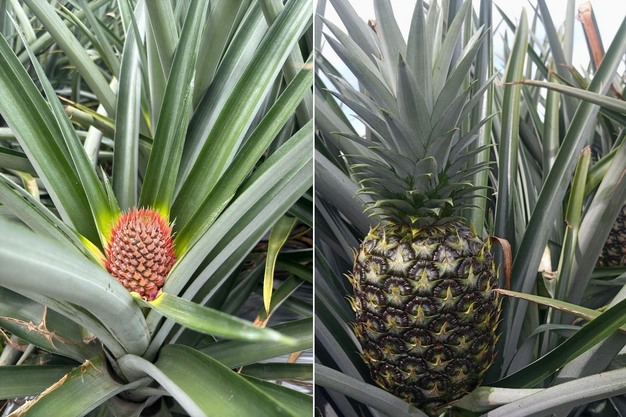
In recent months, weather and strong climatic conditions have affected pineapple volumes from all supplying countries. Costa Rica has been experiencing heavy rainfall and higher levels of precipitation than usual. This has created some phytosanitary issues with new pests and diseases affecting the available volume. There is no other big player in the market to fill the gap from Costa Rica. With the production area being stable and showing no growth, Lopez expects this shortage of supply to last for the next two years. It will take time for supply and demand to be in balance again.
 © Go Fresh Produce
Impact of supply shortage
The shortage of supply is having a significant impact. Not only has the price of pineapple increased, there is also heavy competition between importers to get their hands on the volume required to supply their customers. In addition, there is high speculation in the market, causing instability. If the price is too high for too long, it could become a barrier for consumers to purchase pineapple, and they may shift to other fruits. "If demand drops as a result of high prices, it will result in supply and demand becoming more balanced, but I don't think that scenario will play out," shared Lopez.
Pineapple prices have shown a structural increase since COVID as a result of climate volatility. Other factors like farm-level inflation, increased ESG and compliance costs as well as heightened logistics risks also play a role. At the farm level, labor, input costs, and expenses for pest control have gone up while logistics rates have increased due to freight volatility, as well as higher fuel and congestion risks.
 © Go Fresh Produce
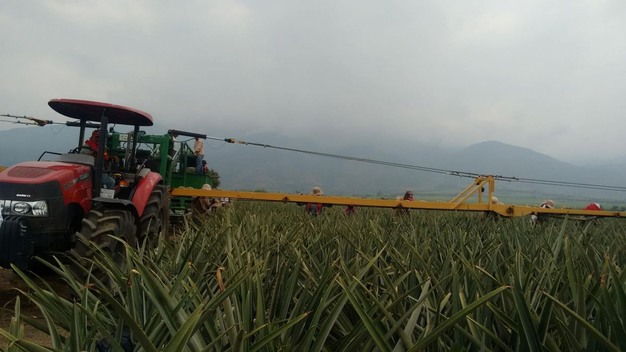
Pineapple field
North America consumption
Taking a closer look at North America, the continent ranks among the top global consumers of pineapples, following the Asia-Pacific region. Strong demand is supported by health-focused diets, rising popularity of fresh-cut and ready-to-eat fruit products as well as more people adopting a vegan diet, valuing pineapples as a versatile alternative. All in all, North America consumes three billion lbs. of pineapples annually with the fresh segment representing 66 percent of total consumption.
In Canada specifically, fresh pineapple consumption is projected to continue its slow and steady rise. This is driven by consistent import supply and stable demand. The best available forecast shows incremental per-capita growth each year, reflecting the ongoing preference from Canadians for fresh tropical fruit, both with crown and crownless. The latest is a new trend on the shelf. In 2025, Canada imported between 133,000 and 135,000 tonnes and this number is expected to slightly increase this year.
Outlook
With strong demand in both fresh and processed formats, pineapples remain a strategic export commodity for tropical economies and continue to be a staple of produce aisles internationally. In developed markets like North America and Europe, growth is driven by rising global fruit consumption, expansion of processed pineapple industries, increased retail availability and strong international trade flows. "With this trend expected to continue, we need to accept volatility in the pineapple market as permanent," said Lopez. "Given that Costa Rica is the only country able to offer consistent supply to consumers globally, we need to treat it is an anchor, not a vulnerability."
 For more information:
Mauricio Lopez
Go Fresh Produce
Tel: +1-416-259-6397
[email protected]
www.gofreshproduce.com