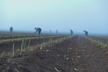
Australia's asparagus season has recently wrapped up, and while growers have avoided losses for the first time in several years, the overall picture remains challenging.
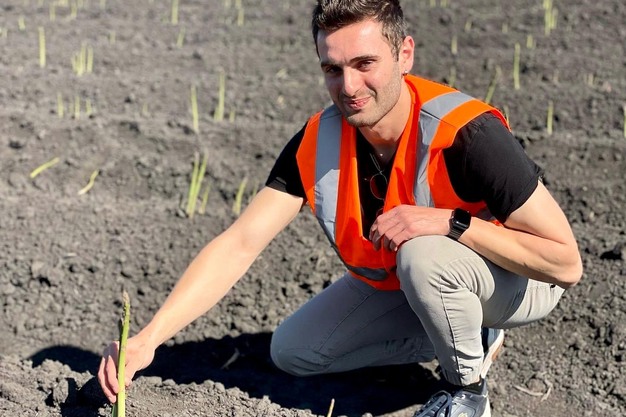
Samir Makssi of VBA Farming says the latest season was a step forward, but the line remains a struggle with profitability proving elusive. "It was the first season since 2021 where growers haven't lost money, but it hasn't been a significantly profitable season either," he says. That comes despite relatively strong returns. "We had the highest average returns across the entire export season that we have since 2018," he adds. The issue is that costs have continued to outpace those gains, leaving growers still under pressure even in a comparatively good year.
 © VBA Farming
One of the biggest structural challenges is competition in export markets, where Australian asparagus has steadily lost ground. "We've seen over the past five years, or so we've probably lost between 60% and 70% of our market share in Japan alone to Mexico," Makssi says. "Our product is on average of better quality," he notes, "but due to the labour costs in Australia, it's really difficult to compete." There's no real way to differentiate the product on quality, which doesn't allow Aussies to close the gap: "Our loose prices are more expensive than their small bunches," despite the additional labour required to produce bunches.
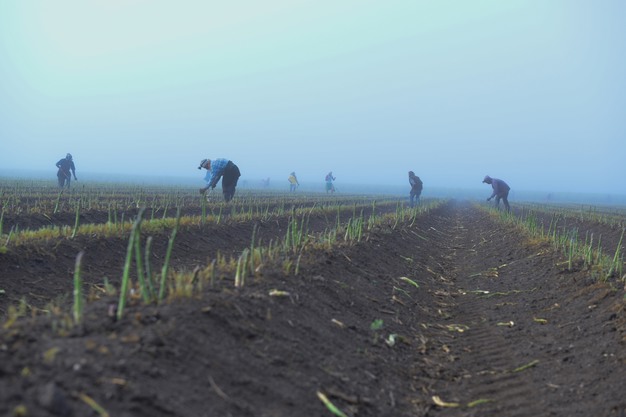
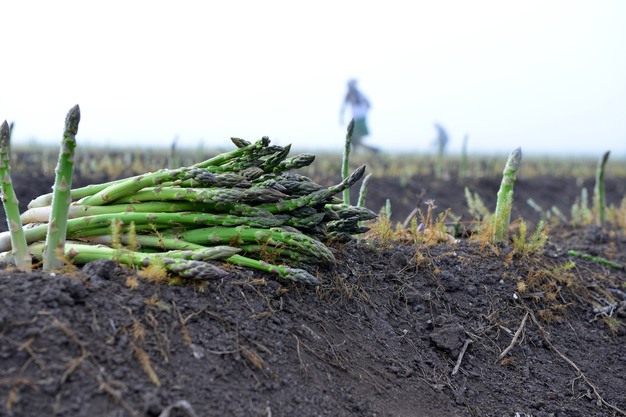
That cost disadvantage reflects a deeper issue within the crop itself. Asparagus remains highly labour-intensive, with no viable mechanisation available. "Because asparagus doesn't grow uniformly, it has to be hand-harvested," Makssi explains. "We don't have the technology where we can machine-harvest it." The same applies to packing. "We don't have sophisticated machinery yet, where it can grade and bunch the product for us," he says. As a smaller category, asparagus has not attracted the investment needed to drive automation.
 © VBA Farming
Attempts to offset these pressures through policy support have had limited effect. During COVID, export subsidies provided some relief, but the benefit was quickly absorbed. "The costs of inputs, the increasing cost of labour pretty much accounted for that anyway," Makssi says. When those subsidies ended, "We ended up in a more challenging position than prior to the subsidy." In his view, such measures act only as a short-term fix rather than addressing the underlying economics.
Those economics have been shifted by a change in perception of the product, on the part of retailers. "It used to be a premium product; it has been turned more into a commodity now," he says. Retailers continue to promote asparagus as an everyday line, but the production model does not support commodity pricing. "The labour cost involved just isn't really supportive of it being that everyday commodity line."
 © VBA Farming
The strain has led to significant consolidation. "Ten years ago, in Mildura there were 15 to 20 growers… now there's only one or two," Makssi says, and in VBA's own Koo Wee Rup area, it's down to three growers and a couple of peripheral producers.
For Australian asparagus, the result is a sector that can deliver strong quality and even improved returns in favourable seasons, but still struggles to translate that into sustainable profitability.
For more information:
Samir Makssi
VBA Farming
Tel: +61 417 891 426
[email protected]