The global orange juice market has slowed, according to market sources, as the ongoing Middle East conflict increases uncertainty around consumer purchasing behaviour.
Following US and Israeli military action in Iran at the end of February, energy prices have risen, with expectations of accelerating inflation in the EU and the U.S. in the coming months.
For producers, input costs and logistics are key concerns. Market participants are monitoring freight rates, as higher oil prices and additional surcharges are expected to increase shipping costs. The Gulf region remains an important market for Europe and Brazil, raising questions about order continuity and transport routes.
 © Expana
Sources report that uncertainty around consumer purchasing is weighing on market sentiment. "We will all pay more for energy and have less money for unnecessary products. How will consumers handle this? It is this uncertainty that will influence purchasing decisions along the supply chain," one source stated.
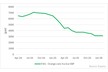
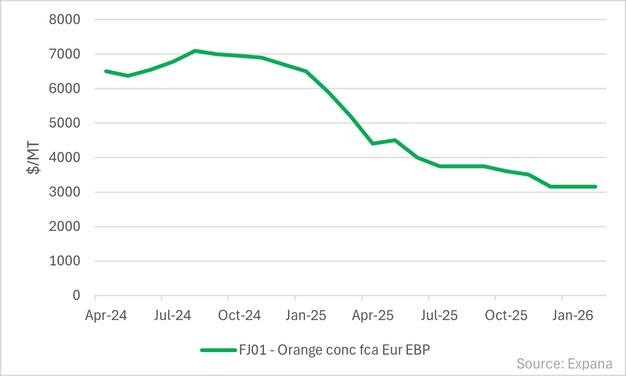
Before the escalation, the orange juice market was already under pressure, with reduced consumer interest following high prices in 2024, which led buyers to switch to alternative products. Prices declined in 2025, and retailers introduced promotional campaigns, but this has not yet resulted in sustained demand growth.
As of February 27, Expana Benchmark Prices for orange concentrate FCA Europe stood at US$3,150 per ton, unchanged month on month. Market participants describe trading activity as quiet, with the industry still waiting for a recovery in demand.
Following the escalation in the Middle East, sentiment remains weak. Sources indicate that the industry is maintaining a cautious approach, noting that "Nobody wants to make expensive mistakes."
Source: Mintec/Expana