The South African macadamia sector is navigating changing market conditions, supported by expanding demand across Asia, Europe, and the Middle East, alongside easing tariffs in key markets.
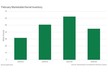
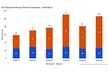
South Africa remains the world's largest producer of macadamia nuts, with the harvest season starting in early March and continuing through to early spring. Price developments reflect shifts in product mix and market conditions. Average prices for whole kernels increased by 4.4%, from US$13.50/kg last year to US$14.10/kg this year. In contrast, prices for halves and pieces declined by 8.7%, from US$9.90/kg to US$9.04/kg, linked to higher volumes, carry-over stock, and previous disruptions in the U.S. market.
Shane Hartman, chief executive officer of Global Macadamias, said tighter margins are influencing grower decisions. "The greater the ability of a processor to keep kernels whole during the cracking process, the greater the returns for growers. Whole kernels have always commanded a premium, and in the current market, maximising whole-kernel recovery is key to supporting grower returns," Hartman said.
Market diversification continues to shape export flows. According to Graeme Taylor, corporate general manager at Global Macadamias, demand in the U.S. is recovering following earlier tariff disruptions. "At the start of last year, macadamia sales were really gaining momentum. But the Labour Day tariffs, and the volatility that followed, scared a lot of buyers.
"Now that the tariff has been reduced to zero, at least for this year, we are seeing more interest in macadamias. Buyers are quite confident that the tariff debacle will settle down, and as confidence in macadamia supply rises, so too will demand, and potentially prices in the long term."
Outside the U.S., exporters have expanded into additional regions. "When the U.S. market paused, the rest of the world kept moving. We've been able to open markets and sales channels in previously unserved regions, including those in Singapore, Kuala Lumpur, and Japan.
"Sales to Europe are also expanding, both within traditional areas like Spain, Germany, and the Netherlands, and new countries like Poland and Lithuania. Our reputation for supplying high-quality macadamias has paid off in the Japanese market, where market share has also expanded," Taylor said.
China is expected to play a larger role following anticipated tariff changes. "Both in-shell and kernel sales into China are expected to increase this year, although caution should be exercised in this market to prevent over-reliance."
Looking ahead, increasing volumes from new orchards and a focus on quality are expected to support supply. Taylor noted that reduced tariffs in the U.S. and China, combined with broader market diversification, are shaping trade flows and demand patterns.
Source: FoodForMzansi