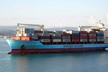
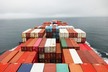
The trading environment for South African fruit exports to the Middle East is becoming more complex due to the conflict in Iran and disruptions in the Strait of Hormuz. Exporters report limited shipping options, rising costs, and increased risk.
Riaan Ferreira, director of GF Marketing in Cape Town, said uncertainty remains the main issue. "It is an understatement to say it is complex, with the uncertainty the biggest issue. Anything in the fruit business needs certainty so we can make decisions and move on. There is currently no route to the market. Costs have tripled, and risks have now increased.
"Shipping to the Middle East has increased to US$10 000 per container. Even if the war ends immediately and prices drop, who will cover the increased costs?"
He added that price ceilings introduced in some Middle Eastern markets are affecting trade. "Because of this ceiling, you can't sell the fruit for more, even if costs have clearly increased."
Kashif Shahzad, head of procurement at Global Star in Saudi Arabia, said supply conditions are changing as the conflict continues. "The Saudi market was quite stable compared with other Gulf states, except Oman, which is affected due to its position before the Strait of Hormuz. Some shipments are also being redirected to Khorfakkan and Fujairah ports in the United Arab Emirates.
"However, this stability may not last, as most shipping lines have already refused to load cargo destined for those affected areas."
As supply becomes constrained, prices are increasing. "Prices have increased crazily, as the movement of the fruit is limited. Naturally, costs will increase, too. Shipping lines have already imposed war surcharges, and domestic transportation will also add to the final landed cost.
"This may result in a shortage, or at least a reduced supply to our markets, mainly due to rising prices."
Market prices reflect these conditions. South African Royal Gala apples reached US$38.67 per carton in week 11, up 24% year-on-year and 49% compared to the same period in 2024. White seedless table grapes increased by 36.2% to US$25.67 per carton, while red plums rose by 47.2% to US$16.40 per carton.
Alternative market options remain limited. "Our shipments are on the East; they can't reach the Red Sea. Some exporters can divert fruit to other markets in Asia, such as Malaysia, Singapore, and Bangladesh. However, this is causing oversupply and reduced prices in those markets," Ferreira said.
Shahzad added: "We hope things return to normal soon, although it seems it may take some time."
Source: Farmer's Weekly