Some of the big polymer producers in the world are closely watching South African plastics innovator Superthene, developer and manufacturer of a polyethylene replacement for PVC.
"We seem to be the leaders in the development of this technology globally," says founder Billy MacMillan: the kind of technology providing a more economical plastic which is non-hazardous to human health and infinitely recyclable to boot.
"PVC is the current norm, but it's the norm because it was the only thing available that offered an on-shelf appeal as well as shelf life," adds McMillan, plastics technologist and polymer innovator. "We've been working on Superthene for twenty-odd years. We are probably ahead of the pack. Our film is a lot tougher and a lot more stretchable than traditional PVC, while matching the on-shelf appearance as well as extending shelf life in certain instances."
 © Superthene
Plastic Pact signatories look for PVC alternative
PVC cling film, now designated a problematic plastic due to carcinogenic chlorine gas emitted when heated (as when film is cut by a hot wire, as is commonly done) and because PVC cannot be recycled. Retailers that are signatories to the South African Plastics Pact are obligated to look at alternatives for all forms of single-use packaging, including PVC.
McMillan continues: "If you take the South African market, we estimate - and it's very difficult to tell - but we estimate that the market uses around 1,500 tonnes of cling film a month. If you had to convert all of that into polyethylene, instead of PVC, it would instantly become 900 tonnes. This is due to the huge density differences between the two polymer groups."
"The retailers in South Africa that are changing to Superthene and to more sustainable packaging are actually doing it mainly because it's the right thing to do," says his colleague Wayne Dickson, "and not just because they've been forced to by government intervention."
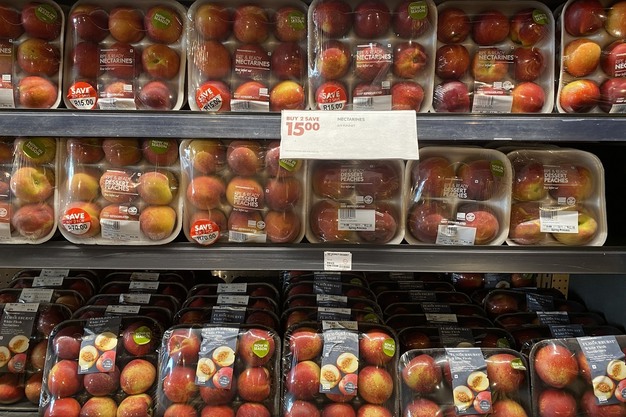 © SupertheneNectarines covered by Superthene, a non-hazardous, recyclable polyethylene cling film
It has taken years to learn all the tricks of the trade to retrofit existing machinery to adapt to the tougher and stretchier Superthene; differences in cold chain protocol in different packhouses play a role in Superthene's performance as well.
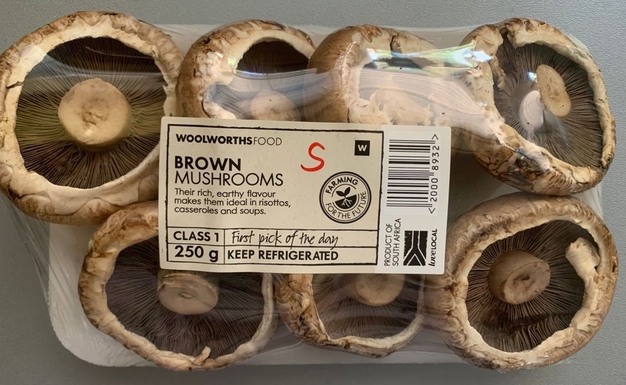
"Each individual company that you work with has different protocols, different ways of setting up a cold chain. Different mushroom guys pack and cool and chill their mushrooms differently - we find that what works 100% at one packer, only works 90% at another," Wayne Dickson points out. Different perforation patterns result in differences in shelf life, which is why Superthene prefers sending out its specialised technical team to set up the machines. "We can go company by company across the spectrum of machines and fine-tune the equipment ourselves, which we've found has been extremely useful."
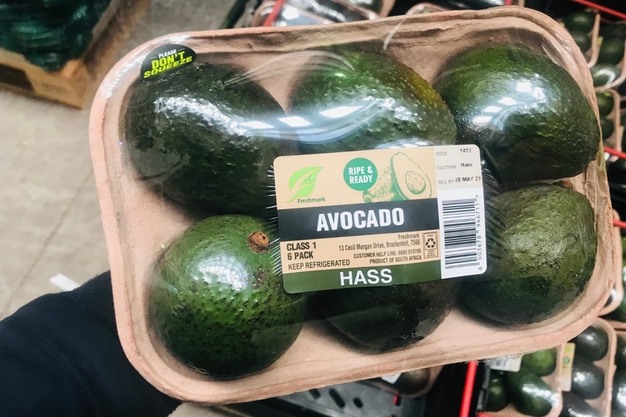
Clients, too, have found it useful. "On fruit and vegetables, the cost saving is anywhere between 10% and 25%, depending on what they're packing. Very seldom are we the same cost per pack as PVC, due mainly to the yield advantage our product offers," says Roy Keytel.
 © Superthene
In the United States, where a licensed Superthene manufacturing plant is busy being set up, Walmart has shown keen interest.
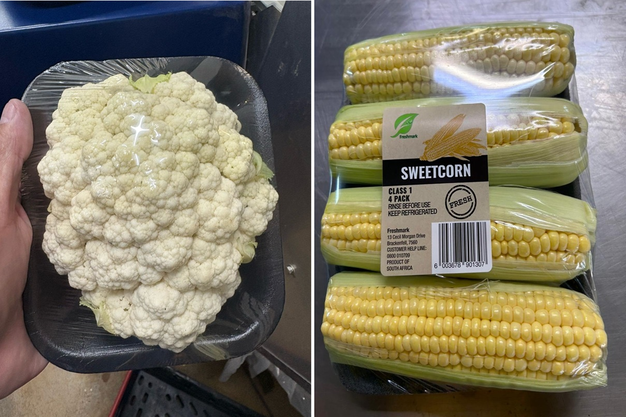
"The areas where we're very strong in is sweet corn; we've also had a very big impact in lettuce and cauliflower heads recently, where we've actually taken the film from a 380mm x 12 micron PVC down to 350mm by 10 micron Superthene film, which obviously gives huge savings to the customer," Dickson says.
"In Europe," Keytel adds, "the mushroom packers who are using our product love it. They are prepared to pay a little bit more of a premium due to certain of their retail customers being signatories of the Pact ."
NNZ, Superthene's agents in Europe, see big potential for Superthene on a variety of produce variants once we can bring the costs close to that of PVC on the ground. In this regard, we are working very closely with them to improve the shipping costs as well as the costs of the product to achieve this end.
 © Superthene
For more information: Superthene
Tel: +27 21 205 0788
Email: [email protected]
https://superthenefilms.com/