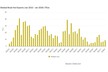
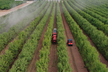
The nut sector in Portugal has undergone a journey of transformation and recognition over the past two decades, says Nuno Russo, executive director of the Portugal Nuts association: "In the context of the broader evolution of Portuguese agriculture, characterized by modernization, internationalization, and diversification of crops, nuts have become one of the most dynamic and promising segments of the national agri-food landscape. Alongside the growth of nuts at the national level, new investments, both domestic and foreign, have emerged in the production and processing areas, which explains the increasing trend in the industry and, consequently, in the quantities of processed nuts."
 © Portugal Nuts
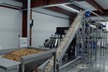
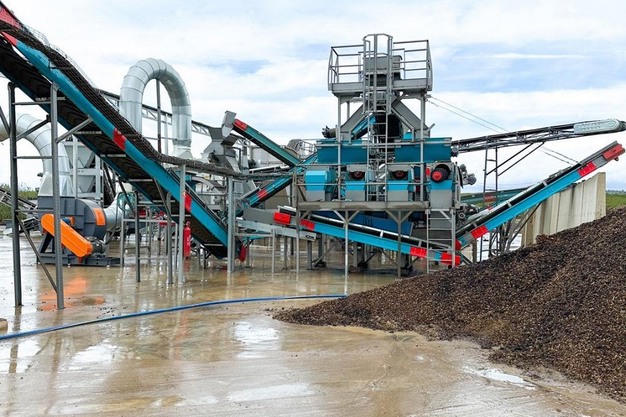
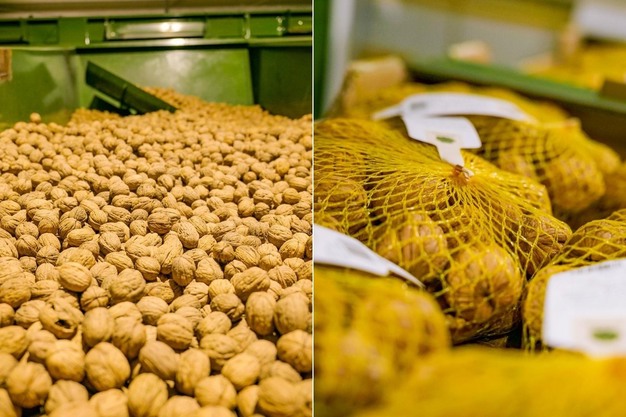
"In the last couple of years, due to temporary climate adversity, the industry has had bad productivity results which has slowed growth, but with the coming of a regular year, we believe the sector will continue its upward trajectory. There is a need for support in investment in the industry associated with the nut cluster in Portugal, creating a more 'verticalized' supply chain that allows for greater value creation for national production, improving even more its quality so that it can be placed on the international market," Russo explains. "But, in the case of the walnut, there is, in Portugal, the largest processing unit in Europe, which is unique in size and characteristics, with the capacity to process, pack, and ship 6,000 tons of walnuts with shell and kernel."
According to Russo, the Portuguese nut sector is showing solid growth, with a direct impact on the economy, trade balance, and the global reputation of Portuguese agri-food products: "With a self-sufficiency rate of around 140% and a positive trade balance of €76.4 million, Portuguese nuts are now synonymous with quality, sustainability, and innovation. Portugal is the second largest almond producer in Europe, and in the top 5 of the world producers, and exporters, of almond, a world top 10 producers of pine nuts, and one of the major producers of walnut, near top 10 producing countries in the world."
The role of water in any crop is crucial for its development and productivity, Russo states. "When irrigation conditions that meet total watering needs are adopted, productive potential increases significantly. More recently, new plantations under irrigation systems have emerged, showing high productive potential. However, water distribution is increasingly temporarily uneven available resource due to climate change, making water storage, irrigation efficiency and public policy a key aspect for environmentally, socially, and economically sustainable production."
 © Portugal Nuts
The development of Alqueva's irrigation, the biggest artificial lake in Europe, was decisive for the transformation of the nut sector in Portugal, Russo explains. "This enabled the establishment of modern, technologically advanced orchards focused on efficient resource use, and this region has led growth, especially in almonds and walnuts, largely due to the availability of water. After initially creating an artificial water shortage, in the last couple of years, water regulators have come to understand that the Portuguese nut sector, resembles high performance orchards as seen in the Californian Central Valley and Australia, more than it resembles central Spanish orchards, and that means that water allocations have been increasing and are now close to what they need to be."
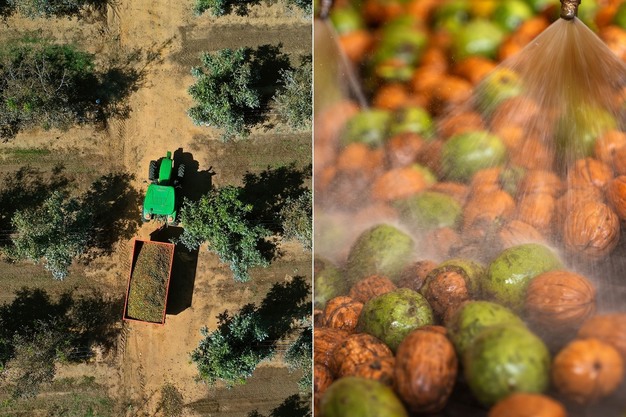
The Portuguese acreage for almonds and walnuts have significantly increased, Russo emphasizes: "The area dedicated to almond cultivation has doubled over the past decade, now covering 52.000 hectares. Walnut orchards span 5.400 hectares, and the total area for tree nuts exceeds 110.000 hectares, a 54% increase in ten years. The national production of nuts continues to grow, strengthening its position in international markets, not only boosting the national agricultural economy, but also attracting investments, positioning Portugal as a global player in the production and export of Portuguese agri-food products."
Russo sees potential in supplying various European markets in the future, although currently most of the produce is exporter to a single country. "For domestic almonds and walnuts, Spain is by far the main export market. However, with the growth of national production, a very significant increase in exports of dried fruits is expected, and Portugal could differentiate itself by being close to consumer markets in Europe, and by being able to produce in very efficient and environmentally sustainable ways, combined with the excellent quality of domestic production."
 © Portugal Nuts
"In 2024, Portugal exported over €130 million in nuts, with almonds leading the way at €100.24 million; a 68.6% increase compared to 2023. Walnuts also saw a notable rise, reaching €2.2 million, up 27.8% from the previous year," Russo explains.
Russo feels that Fruit Logistica will also be a nice opportunity to unlock growth potential further: "With a focus on excellence and adapting to the demands of the global market, our internationalization project, NUTSbyPORTUGAL, will concentrate on a set of key initiatives based on promotion and marketing actions, business missions, and trade fair visits, such as Fruit Logistica, which provide a privileged insight into the reality and dynamics of this agri-food sector, as well as the opportunity to gain knowledge about competitors, market operations, business opportunities, and potential partnerships, to fully unlock international growth potential in uniquely relevant markets, to increase exports and the competitiveness of the sector, such as Germany, promoting sustainably produced products."
Just over a decade ago, nuts were a discreet presence in Portuguese agriculture. Russo is happy to see this has changed completely. "Today, nuts are one of the most dynamic, sustainable, and strategic sectors in the country, consolidating a remarkable growth trajectory, both in planted area and economic value, and currently playing a significant role in national agriculture. They are part of the set of permanent crops with the highest potential for added value and export, transforming the very concept of modern agriculture," he concludes.
For more information:
Nuno Russo
Portugal Nuts
[email protected]
https://portugalnuts.pt/en/