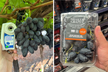
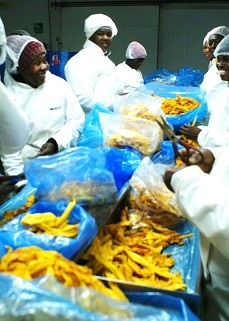
 © Carolize Jansen | FreshPlaza.comYears ago, dried mangoes saved the South African mango industry, reckons Baobab Dried Fruit's operations manager Willie Jacobs. He helped Hoedspruit mango grower Bavaria expand its mango drying facilities, which started 31 years ago as a sideline for reject or imperfect fruit.
Right: January flooding has resulted in more mangoes being sent for drying
Jacobs and his wife, both trained food technologists, joined six years later, and it has since bloomed into a flourishing business in its own right with a product immensely popular with consumers.
"Drying turned the whole industry around: then the juicing price went up because they were not getting so much fruit at the juice factories anymore, followed by the local mango price and the export prices because it presented a new avenue open to mangoes," Jacobs observes.
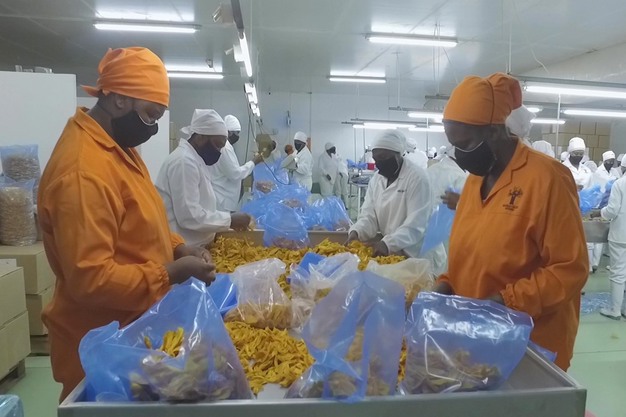
Most product end up in blue-chip retail © Baobab Dried FruitBaobab Dried Fruit receives mangoes from January until April, and typically, their bulk product is sold out by September or October to clients with end customers in Spain, the UK, Switzerland, and elsewhere. "Most of the product will end up in blue chip retail chains, but increasingly also into specialized health stores and pharmacies as well," says Nico van Schalkwyk, CEO of Fruitalyst, which manages the marketing of Baobab's product, as well as mandarins under the ClemenGold brand.
"Our focus is therefore on higher-end customers who require a guaranteed supply of consistent quality and good traceability and certifications. ESG is also important for most of these customers, especially in the EU and UK – and our farms are fully compliant."
Van Schalkwyk adds that when West Africa's main crop of dried mango comes in April/May, they will have a clearer view of the dried mango season, but the demand is pulled along by the movement towards healthy eating. "One of our Group of businesses' strengths is that we manage the process from our own farms to processing, without another middleman. It's a short supply journey with the minimum time delay from harvesting to end product, and we are in full control of the quality."
 © Baobab Dried Fruit
Heavy flooding sends more mangoes for drying
The heavy flooding of January means that a higher proportion of the Hoedspruit mango crop is available for drying, an eventuality for which they prepared by finding an extra 150 tonnes of orders for this year, totalling 500 tonnes of dried mango. A quarter of that is sold in South Africa.
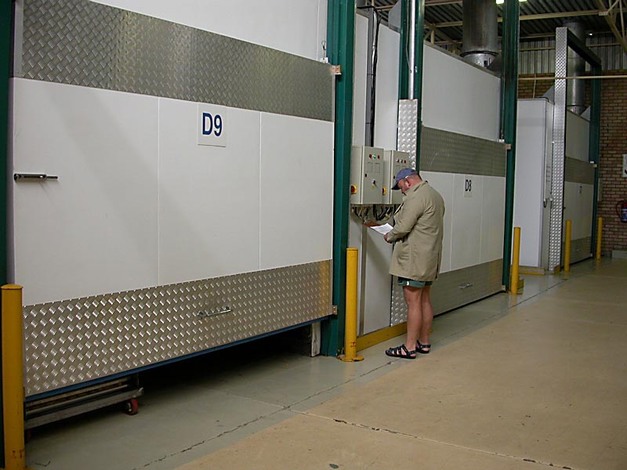
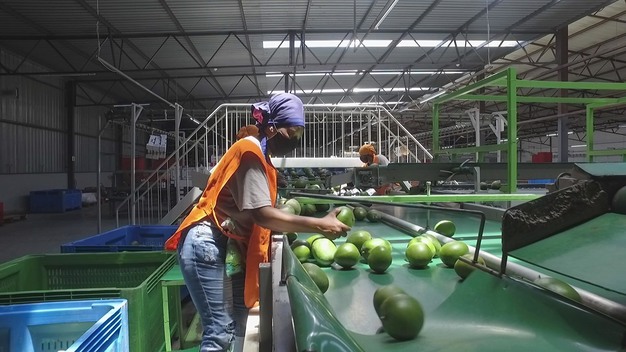
Baobab Dried Fruit's multiple drying ovens – the facility is located next to the mango packhouse BBI Packers outside Hoedspruit - are not run by rote, following fixed recipes and techniques. Instead, Jacobs relies on the intuitive blend of methods and tricks of the trade he's developed through working in mango-drying factories in South America, India, and Africa, including those he helped set up in West Africa.
"My team and I have among us around 250 years of experience in drying mango, but drying is not an exact science," Jacobs remarks. "The particular cultivar, the stage of ripening, the relative humidity on the day, all play a role in factors like the absorption of sulphur. I take it all into account every day when I decide on the drying time for each specific batch as it comes in. It's a feeling that you get."
 © Baobab Dried Fruit
"Drying is not an exact science. It's a feeling that you get."
He says that during the recent floods, the cut strips took longer to dry out as the oven fans suck in fresh air from a saturated atmosphere. An inexperienced dryer might assume the fruit is ready when, in fact, it is still too moist, and if packed, its shelf life would be compromised. Most cultivars yield dried fruit with an eighteen-month shelf life; Tommy Atkins – Jacobs prides itself on the plump product they manage to dry from Tommy Atkins, which can easily turn unappetizingly hard during the drying process, has a twelve-month shelf life.
He is always tweaking the process: a seemingly small change with large returns was his realization that bottlenecks were forming when mango strips stuck to the drying racks and had to be prised off, damaging the pieces and reducing export grade. Covering the racks with Teflon nets worked wonders, he says, and the daily output jumped from 50 tonnes to 70 tonnes per day with 90% export grade.
"With the elevated demand for dried mango, it's really helping farmers out this year. And the price isn't coming down - on the contrary, it's rising. So it seems that despite the increased volume we will market this year, there remains a shortage in dried mango."
 © Baobab Dried Fruit
For more information: Willie Jacobs
Baobab Dried Fruit
Tel: +27 (0) 15 975 5337
Email: [email protected]
https://baobabdriedfruit.co.za/