After a challenging logistics start to the 2025/26 season, South Africa's table grape industry reports that harvesting is progressing well across most production regions, with volumes in line with expectations and the national crop estimate unchanged.
Warm early-season temperatures accelerated ripening in certain cultivars by 10 to 14 days, placing the harvest ahead of its usual schedule. As a result, the industry anticipates that the season will conclude earlier than last year.
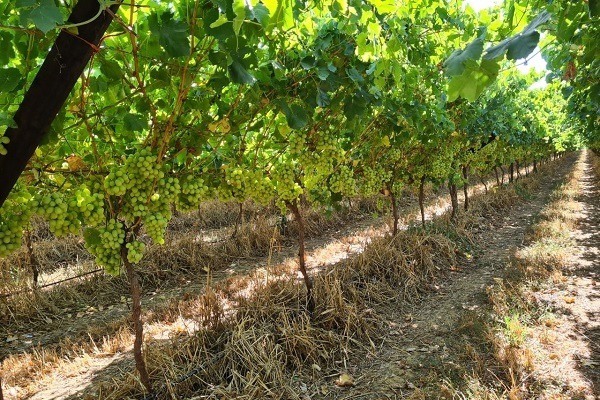
The South African Table Grape Industry (SATI) has maintained its national crop estimate at 79.4 million 4.5kg cartons inspected for export.
 © Niet potentieel
While production has remained steady, logistics challenges — particularly at the Port of Cape Town — have continued to affect operations. According to SATI CEO Mecia Petersen, port congestion and wind delays remain a concern.
During November and December 2025, wind delays were nearly double the amount recorded during those months in 2024.
In response to these constraints, exporters have significantly increased the use of Eastern Cape ports. During the 2024/25 season, only 6% of grapes were shipped through the Port of Ngqura. This season, the share routed through Eastern Cape ports has increased to about 26%.
Between Weeks 48 and 05 alone, 4,558 containers were diverted to Eastern Cape ports, compared to just 533 during the same period last season. "Utilising Eastern Cape ports is currently the most viable alternative available to the industry," Petersen notes, "however, it comes at a significant cost to both producers and exporters."
In addition, to support cold chain integrity during windbound periods, the deciduous fruit export industry, in partnership with the Western Cape government and other stakeholders, privately funds additional electricity generators at the Port of Cape Town to increase container plug capacity during peak deciduous weeks.
Holding ground in a competitive global market
Beyond logistics, South Africa's table grape exporters face intensifying global competition and trade barriers. As the world's fourth-largest exporter of table grapes, the country operates in an increasingly competitive marketplace, with overlapping production windows and growing supply from competing origins.
However, established markets remain stable. Over the past five years, exports to the European Union have grown at an average rate of 3% annually. The EU accounts for 58% of South Africa's grape exports, while the UK represents 18%.
 © SATI"The EU is a mature and competitive market, yet we are maintaining and strengthening our position," Petersen (right) says. "Our focus remains on delivering quality fruit, reliability, consistency, and strong commercial engagement."
Stability through adaptability
South Africa's reputation for good agricultural practices and precision farming also continues to underpin its competitiveness. SATI highlights producers' ability to respond to market intelligence and adjust plantings toward preferred varieties and specifications as a key strength.
At the same time, market diversification efforts are progressing. The first shipment of grapes to the newly opened Philippines market is planned for this season, with a market development campaign scheduled to coincide with the arrival of the first containers in March 2026.
Market access to the Republic of Korea has also recently been finalised following the publication of the export protocol. The industry expects to ship its first consignment during the 2026/27 season, once final administrative processes are completed.
In contrast, new trade barriers, such as tariffs for exports to the USA and China, present challenges. The recent implementation of a 30% tariff on South African exports to the United States is expected to impact volumes in what had been a promising growth market. "Competition is intensifying globally," she says. "But this is not unique to South Africa - it affects all exporting nations."
While logistics disruptions and global trade pressures persist, the 2025/26 season reflects an industry that remains operationally resilient. Production volumes are holding steady, export planning has adapted to port constraints, and diversification into new markets continues.
In a more competitive global environment, South Africa's strategy remains clear: focus on quality, maintain reliability, and be agile enough to adapt to shifting conditions.