"Each season has its own challenges," observes Jacques Jordaan, manager of the Canning Fruit Producers' Association and Dried Tree Fruit, "and where we currently find ourselves, it is certainly the ripple effect of dry and hot conditions, US tariffs and geopolitical unpredictability, markets under pressure, the strong Rand and renewed problems at the Cape Town harbour."
As for production, across the categories of apricots, peaches, and pears, the dominant themes of the season are early ripening, short seasons, smaller fruit sizes, and a high proportion of fruit being diverted to juice or pulp.
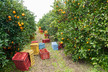
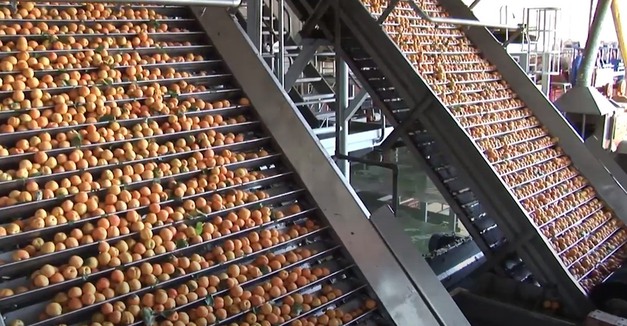
"This must have been the shortest apricot harvest period in history," Jordaan remarks, explaining that processing apricots were harvested within a single week this year, with volumes roughly 20% lower than last year. "The harvest started about ten days earlier than last year, and most intakes were essentially completed by the first week of December. The crop coming through within one week created logistical pressure on farms and at factories, and much of the fruit had to be diverted to juice because of overripening," he says.
Of the almost 22,000 tonnes of processed apricots, 55% went towards the canning factories, and 45% went for juicing and puréeing.
 © Canning Fruit Producers' Association
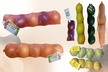
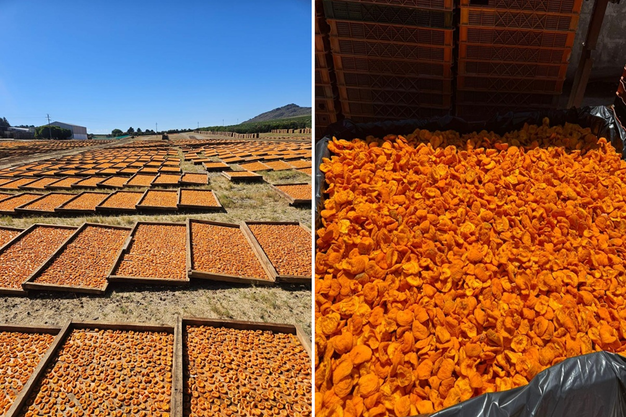
Drying of apricots and peaches
Jordaan adds that the early, short season inevitably led to small sizes, not only on apricots but clingstone peaches as well. The lack of larger sizes is a challenge for most fruit types, including pears from some areas.
"While the overall quality is good and the fruit is healthy, heat and water availability remain the key limiting factors determining production volumes and allocation."
As growers enter the second half of the drying season, the demand for high-quality South African dried fruit remains steady in key markets, he says. As a result of a smaller harvest and a lower crop from Türkiye, apricots for drying are sought after.
 © Canning Fruit Producers' Association
However, with prunes, he remarks, driers are only interested in buying large and extra-large fruit, and even the prices for these prune sizes are under pressure. "To make economic sense prune producers are forced to pursue opportunities in the fresh market," he says.
Uncertainty about carry-over stock of dried pears and how driers will manage stock levels adds uncertainty to the pear category, coupled with US tariffs and EU low-sulphur requirements affecting fresh and processing grade pears.
"A significant volume of pears will therefore be diverted to the fresh markets this year. Nevertheless, sufficient volumes remain available for processors."
There is a strong demand for Elberta peaches, but an oversupply of clingstone peaches in the South African market. "This is a spinoff from the conservative approach of canning factories. There was a reluctance by processors to take in peaches," he notes, "and it will probably lead to a drop in intake volumes."
 © Canning Fruit Producers' Association
AGOA and US tariffs affect canned fruit exports
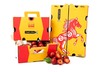
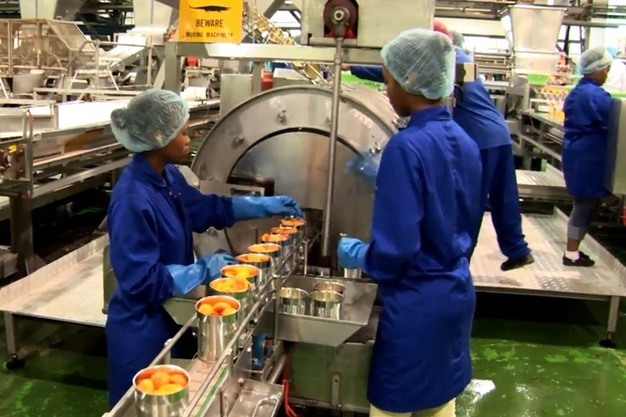
South African canned fruit had benefited from the AGOA agreement; the United States is a net importer of canned fruit, with only two core canning operations, namely Del Monte Foods and Pacific Coast Producers (PCP), with most canned fruit imported from Greece and China.
"Current tariffs have drastically reduced the competitiveness of South African canned fruit relative to other countries. Since 2024, the rand has steadily strengthened against the US Dollar and because approximately 80% of South African canned fruit is exported, it has had a significant impact on the profitability of the canned fruit industry.
Moreover, Jordaan points out, Del Monte cited cash-strapped US consumers cutting back on spending when declaring bankruptcy last year; last month, its assets were bought by three companies. "Pacific Coast Producers acquired the canned fruit division. Pacific Coast Producers operates as a cooperative and is owned by producers. It remains uncertain how takeover inventory will be managed and what impact this will have on the market. Over the medium to long term, however, this consolidation is expected to create additional opportunities in the market," he reckons.
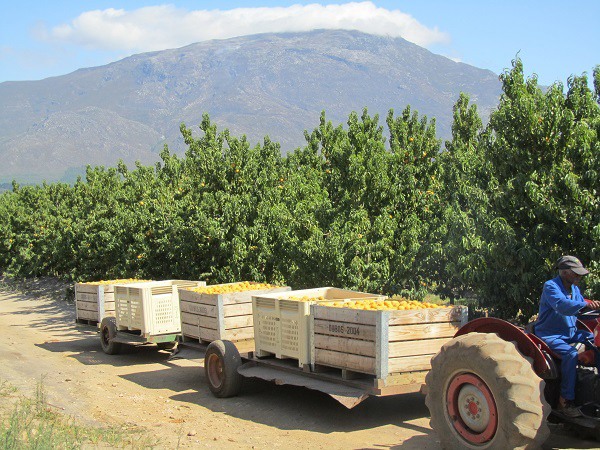 © Canning Fruit Producers' Association
Canning factories' conservative approach favours Elberta peaches over clingstone peaches
 For more information:
Jacques Jordaan
Canning Fruit Producers' Association
Email: [email protected]
http://[email protected]