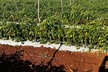
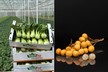
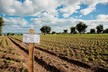
A modern agricultural community in Cambodia's Tram Kak district has scaled up cauliflower cultivation for commercial supply, transitioning from subsistence monocropping to diversified vegetable cultivation.
Khim Finan, Undersecretary of State at the Ministry of Agriculture, Forestry, and Fisheries, said the Tram Kak Modern Agricultural Community has shifted from a single-crop system to producing 16 varieties of what the ministry classifies as "safe vegetables." The adjustment follows engagement between the ministry and local growers that began more than a year ago.
"When the ministry first engaged with this region over a year ago, farmers here were almost entirely dependent on curly cabbage," Khim Finan said. "This led to frequent harvest gluts, which caused market prices to collapse. Today, the community provides a consistent daily supply of high-quality produce under stable, pre-negotiated contracts."
The inclusion of cauliflower is part of the Royal Government's Modern Agricultural Community initiative, which aims to restructure smallholder cultivation systems toward commercial market participation. The model focuses on demand-driven planting decisions aligned with buyer requirements, the use of diversified crop portfolios to limit exposure to price fluctuations, and the application of defined technical standards.
Cultivation within the community is supported by net-house systems intended to meet monitored pesticide-use requirements associated with the "safe vegetable" classification. These systems are used to maintain uniform quality and support predictable harvest schedules.
To formalise market access, the Tram Kak community has entered into a contract farming agreement with Tropicam Fruit and Vegetable Co., Ltd. Under this arrangement, the community supplies agreed volumes of produce at fixed prices, with the distributor responsible for onward marketing and distribution.
According to the ministry, the contract structure is intended to link rural producers with urban demand channels while reducing reliance on spot-market sales. By coordinating planting schedules and product specifications, the model seeks to support consistency in supply and quality, enabling local cultivation to compete with imported vegetables.
The Tram Kak case is cited by the ministry as an example of how crop diversification and structured market relationships can be applied within smallholder systems to support commercial vegetable cultivation under controlled conditions.
Source: Khmer Times