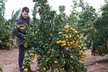
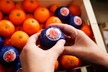
In Jeju, South Korea, tangerine growers are facing increased market pressure following the full removal of import tariffs on U.S. mandarins under the Korea-U.S. free trade agreement. From this year, the tariff on U.S. mandarins has been reduced to 0 per cent, down from 144 per cent when the agreement took effect in 2012. The phased reduction has now concluded, allowing duty-free imports to enter the South Korean market.
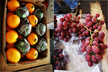
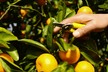
The development is affecting producers of late-maturing citrus on Jeju Island, including varieties such as cheonhyehyang, hallabong, and redhyang. These varieties are marketed in the period between winter open-field tangerines and summer greenhouse tangerines, which coincides with the import window for U.S. mandarins. The overlap has increased competition during a key sales period.
In response, the Jeju Agricultural Products Supply Management Committee's Citrus Committee announced measures aimed at stabilising the market. These include strengthening quality management through the shipment of fully ripened fruit and carrying out an emergency purchase of 10,000 tons of late-maturing citrus. This volume represents about 10 per cent of total late-maturing citrus production and is intended to reduce the impact of short-term price pressure on farm income.
Jeju tangerines have a long production history linked to the island's climate and growing conditions. Historical records from the Three Kingdoms era, the Goryeo period, and the Joseon Dynasty document citrus cultivation on the island. Tangerines were also transplanted from Jeju to mainland coastal regions in the early 15th century.
Jeju's citrus production is supported by local climatic factors, including mild winters, an annual average temperature of about 15 degrees Celsius, more than 2,000 hours of sunshine per year, and well-drained volcanic ash soils. Annual rainfall of about 1,800 mm contributes to water availability for orchards.
The development of modern citrus cultivation on the island was influenced by the introduction of the seedless Onju mandarin in the late 19th century. The variety became widely adopted and played a central role in farm incomes for several decades.
Jeju Governor Oh Young-hun said that duty-free imports of U.S. mandarins were anticipated under the FTA framework. "If we can produce Jeju late-maturing citrus at world-class quality and establish a system to deliver it reliably to consumers, there will be no major problem no matter what imported agricultural products enter," he said.
Local authorities and growers indicate that future competitiveness will depend on consistent quality, coordinated supply management, and stable market access.
Source: ChosunBiz