Moroccan date production has improved significantly this season, both in terms of quality and volume, thanks to more favorable weather conditions. According to Othmane Tahiri Alaoui of the Arsat Nakhil cooperative based in Erfoud, the improvement in supply applies to all varieties produced in Morocco.
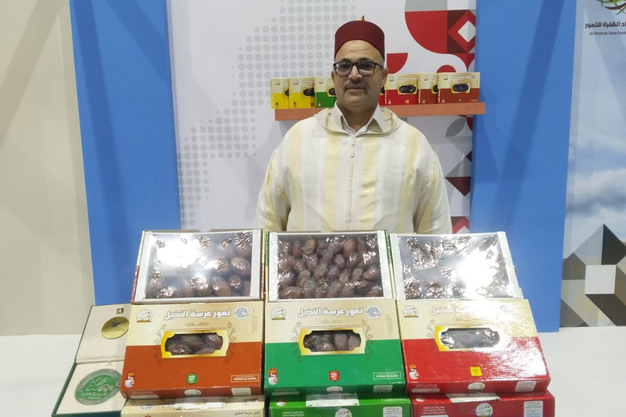 © Othmane Tahiri Alaoui
The grower states, "Since the harvest began in September, we have seen a marked improvement in quality and volume across all varieties. In the eastern oases, from Errachidia to Erfoud, volumes have increased by nearly 50% thanks to the rains that blessed our country last year. The timing of the rains was also advantageous, as we did not have heavy rains in September at the time of harvest, which would have been a problem."
"The improvement in quality and volume undoubtedly applies to premium dates such as Medjool, which are now grown on modern farms and receive special attention from growers supported by the government as part of the Green Morocco Plan. Apart from these varieties, we are also seeing all other varieties of dates benefiting from better production conditions and delivering strong yields this season," Alaoui continues.
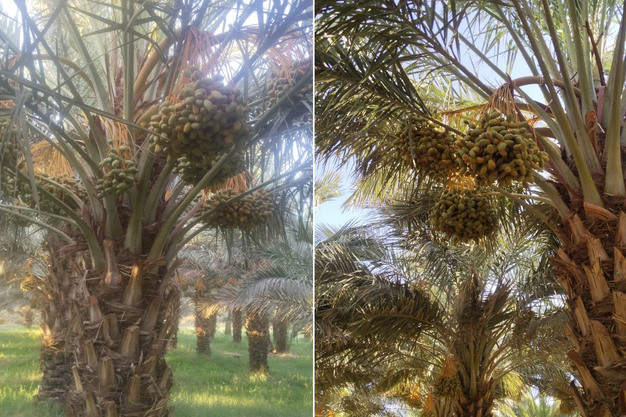 © Othmane Tahiri Alaoui
The current period is very busy for date growers and traders, who have begun supplying Moroccan cities in preparation for the month of Ramadan, which falls in mid-February this year. Alaoui says, "All the dates that come onto the market are sold the same day, no crates are returned to warehouses. Erfoud is busy with traders who come to stock up on dates and then redistribute them throughout the country."
The grower says that date prices will be "fair" on the local Moroccan market this year. He continues, "Growers and traders alike are maintaining prices similar to last year and focusing more on quantity."
The value of dates is enhanced by improved sorting and packaging, a new development on the local Moroccan market. Alaoui explains, "Even for the local market, we are doing more sorting to enhance the value of large sizes. The same applies to packaging, as we are seeing that consumer preference is shifting towards small packaging of 1 or 2 kg, even smaller in supermarkets, instead of the 5 kg boxes or 7-8 kg crates that were previously the norm."
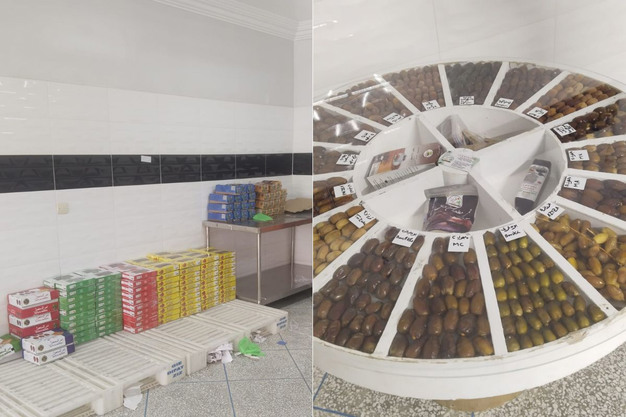 © Othmane Tahiri Alaoui
Improved production also leaves more room for exports. Alaoui shares his experience: "Until now, I didn't export much because the local market was more than sufficient. Now it's time to step up our efforts to explore international markets, and I'll be participating in the International Green Week exhibition in Berlin from January 16 to 25."
Morocco is one of the world's leading consumer markets for dates and the second-largest importer of this fruit, after India, with the particularity of stable demand throughout the year and peak consumption during the month of Ramadan.
For more information:
Othmane Tahiri Alaoui
Cooperative Arsat Nakhil
Tel: +212 6 72 31 41 66
Email: [email protected]
www.candattes.com