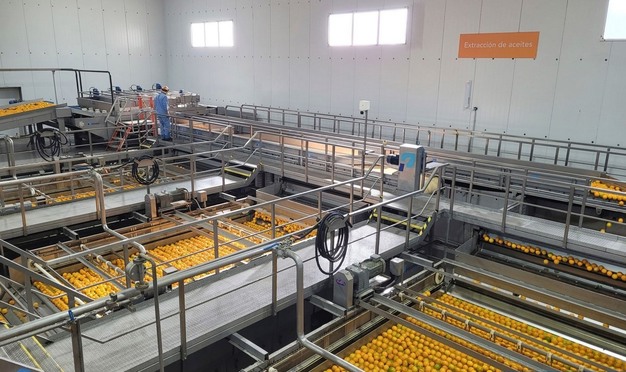
Following the decision to reduce fresh orange exports in order to prioritize processed products, the Argentinian citrus sector is undergoing a transformation process that, according to Ledesma commercial and logistics manager Walter Scotton, has yielded better results than expected. "The combination of juice and essential oil has allowed us to have two very good financial years, and we now expect a similar one," he says.
It hasn't been a minor change; while fresh fruit generates a single income, industrialization adds value with juice concentrate, essential oils, and peel. This has made it possible to cushion the impact of the strong international volatility. "The orange juice market is finding its balance. Last year we saw record prices of 6,000-7,000 dollars per ton, and today we are at 2,800-3,500; much lower, although still historically high values," says Scotton.
 © Ledesma
Prices are still mostly determined by Brazil. The drastic drop in production in 2023/24 led to a skyrocketing market, but the partial recovery, together with a reduction in consumption, has brought prices down. Still, the balance between supply and demand remains tight.
"In Argentina, production has remained relatively stable at around one million tons per year, with the local market as the main destination for fresh production. Last winter's frosts had a limited impact, and production has still been fairly normal. The real challenge has been in the juice market, where many companies had paid a lot and have then had to deal with the price drops," he says.
 © Ledesma
Europe and the United States are still the main buyers, although Asia is starting to become more relevant, especially Japan and Thailand. The domestic market also absorbs 30-40% of the juice concentrate.
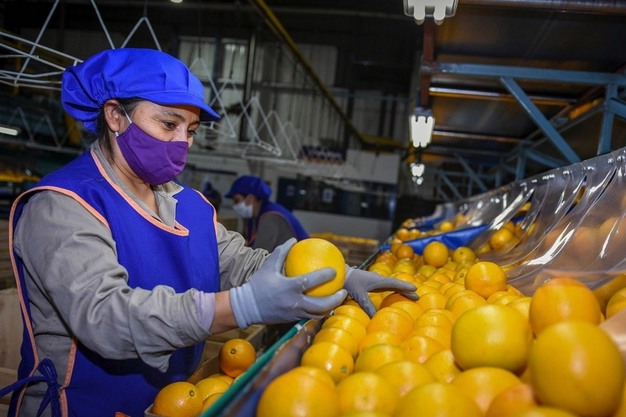
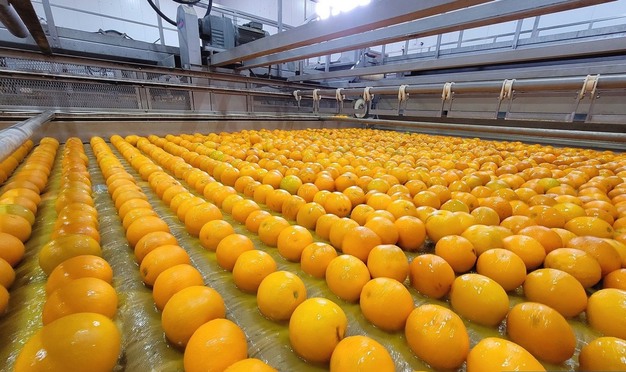
The greater focus on industrial products brings advantages in logistics. "For every 12-15 tons of fruit, you transport just one ton of juice. Working less with fresh fruit drastically reduces the need for working capital and risk," says Scotton. In addition, harvesting and handling costs are also lower.
 © Ledesma
In the Southern Hemisphere, fresh fruit prices are still mostly determined by South Africa, forcing Argentinian exporters to be market takers. However, the cost efficiency achieved has allowed competitiveness to be sustained. Besides, the production of 100% Valencia orange juice is a differential attribute, "highly appreciated in some segments that demand a single variety," he says.
Looking ahead, Scotton highlights how a large part of the regional industry is learning collectively. "The objective is the economic sustainability of the business. A more balanced mix between fresh and industry is allowing us to be competitive on both fronts."
 For more information:
Walter Scotton
Ledesma
Buenos Aires, Argentina
Tel.: +54 11 5584 2122
[email protected]
www.ledesma.com.ar