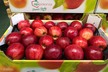
Fifteen fruit processing enterprises participating in a state support scheme accepted more than 40,000 tons of substandard apples, according to the Ministry of Environmental Protection and Agriculture of Georgia. The program generated over GEL 12 million, approximately US$4.5 million, in income for farmers, while state subsidies exceeded GEL 4 million, around US$1.5 million.
The participating processing companies are located in Shida Kartli, Kakheti, Samtskhe-Javakheti, Mtskheta-Mtianeti, and Racha-Lechkhumi and Lower Svaneti. By December 15, 2025, these enterprises purchased substandard apples at a minimum price of 27 tetri per kilogram, equivalent to about US$0.10 per kilogram. Under the scheme, the Rural Development Agency provided a subsidy of 10 tetri per kilogram, or roughly US$0.04 per kilogram, to the processing companies.
The state initiative, titled "Supporting the Sale of Substandard Apples," was launched in September 2025. The program was designed to support apple growers during the harvest period and to ensure the organised collection and processing of apples that do not meet fresh market specifications. A coordination headquarters was established by the Ministry of Environmental Protection and Agriculture to manage and monitor the implementation process.
According to the ministry, the program enabled the redirection of apples that might otherwise have remained unsold, linking growers with domestic processors and maintaining market flow during the peak harvest window.
Summarising the outcomes at a meeting held in Gori, Rural Development Agency Director Zurab Gozalishvili stated that the economic effects were observed across both farming and processing segments. He added that apple concentrate produced through the program is mainly exported to Germany.
The figures reflect the role of processing channels in absorbing surplus and lower-grade fruit, supporting farm incomes while supplying raw material for further processing and export markets.
Source: Business Media