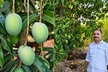
Papaya cultivation in Singair Upazila of Manikganj district in Bangladesh is increasingly carried out on a commercial basis, supplying both local markets and major wholesale hubs across the country. After meeting local demand, fruit from Singair is shipped daily to Dhaka and other urban markets.
According to the Upazila Agriculture Office, nearly 40 per cent of Bangladesh's total papaya production now originates from Singair. During the current season, the estimated market value of papaya traded from the upazila is between Tk 6.0 billion (US$54.5 million) and Tk 6.5 billion (US$59.1 million). This places Singair among the country's main papaya-producing areas.
Papaya is cultivated year-round in Singair and is widely used as an intercrop alongside carrots, maize, and other vegetables. This season, papaya has been planted on around 850 hectares, about 100 hectares more than last year.
Farmers report that once planted, papaya trees can produce fruit for up to three years. Production costs per bigha range from Tk 35,000 (US$318) to Tk 40,000 (US$364), while net returns are reported at Tk 50,000 (US$455) to Tk 60,000 (US$545). Lower risk and regular harvesting cycles have contributed to wider adoption among growers.
Abul Hossain Babul, a farmer from Char Azimpur village, said, "This year I cultivated papaya on 14 bighas of land. I invested around Tk 600,000 (US$5,455) and have already sold papaya worth Tk 1.2 million (US$10,909). The soil and climate of our area are very suitable for carrot cultivation, so we grow papaya as an intercrop with carrots. After harvesting carrots, we also cultivate sweet pumpkin, local gourd, and coriander alongside papaya."
Another grower, Shamsul Haque, said, "Along with carrots, papaya cultivation has become very popular in our area. Due to favourable weather, production has been very good this year. However, prices are lower than last season. Still, because of the good quality of our papaya, wholesalers buy directly from the fields."
According to local officials, around 2,500 farmers are currently involved in papaya cultivation in Singair. With rising volumes, 12 to 13 trading hubs have developed in the area, supporting logistics and distribution.
Truckloads of papaya are shipped daily to markets in Dhaka, Ashulia, Baipail, Savar, Gazipur, Noakhali, Chattogram, and Feni. Karwan Bazar wholesaler Bashir Reza said, "Papaya from Singair is large in size and good in quality, which creates strong demand in the market. Since Singair is close to Dhaka, transportation is also convenient. I take one truck of papaya every day."
Singair Upazila Agriculture Officer Md Habibul Bashar Chowdhury said, "Singair is known as the kitchen house of Dhaka. About 40 per cent of the country's papaya is produced here, and cultivation is increasing every year. This season alone, papaya worth Tk 6.0 to Tk 6.5 billion (US$54.5 to US$59.1 million) is expected to be traded from Singair."
Source: Financial News