The Ecuadorian pitahaya season is ending the year in a challenging environment, characterized by declining consumption, increased supply, and significant price fluctuations. According to Sergio Intriago, CEO of Exposour, this is a critical time for the industry to reevaluate its strategy and improve supply chain planning.
"It's a complex, unprecedented situation. Decreased consumption, oversupply, and highly volatile prices have pressured producers, exporters, and distributors. Nonetheless, there are important lessons to learn," Intriago stated.
 © Exposur
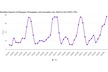
The United States, which accounts for over 85% of Ecuadorian pitahaya sales, exemplifies this situation. Temporary market saturation led to fruit accumulation and price fluctuations, impacting returns at the source. However, Intriago emphasizes that this pattern aligns with established market behaviors and the rapid flow of commercial information today.
At the start of the year, heavy rains significantly reduced export supply from April to June, resulting in historically high prices. "We observed fruit reaching prices as high as five dollars per kilo. This price signal prompted an immediate response; once production normalized, markets expected large volumes and adjusted their purchasing rate," he said.
 © Exposur
Intriago commented, "The market today is susceptible to information. When large volumes are anticipated, it tends to cut back on consumption." This pattern isn't exclusive to pitahaya; it's a typical trend seen in global fresh markets.
While Europe experiences slightly higher prices, it largely aligns with the US market. However, the elevated cost of air freight limits Europe's capacity to process larger volumes, making it more of a secondary market rather than a primary one.
 © Exposur
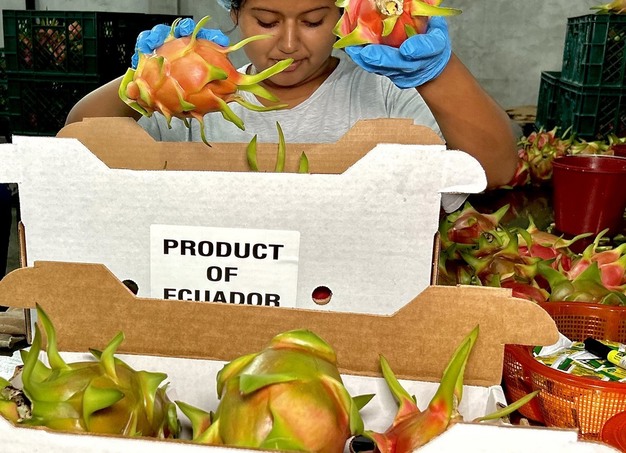
According to Exposour, the current situation is driving positive structural changes. "Buyers are prioritizing better planning, reducing risks, and demanding higher standards of traceability and food safety. They now require more accurate volumes, clearly labeled fruit, and strict compliance with standards. This process helps organize the supply chain," Intriago stated.
Consumer preferences are also changing, especially in the United States, where demand for larger fruit is increasing. This trend directly affects production planning at the source.
Ecuador faces a competitive environment with Peru, Guatemala, Mexico, and Florida's expanding seasonal production. Intriago emphasized the need for coordination and differentiation: "Competition forces us to be more strategic, more efficient, and more consistent."
 © Exposur
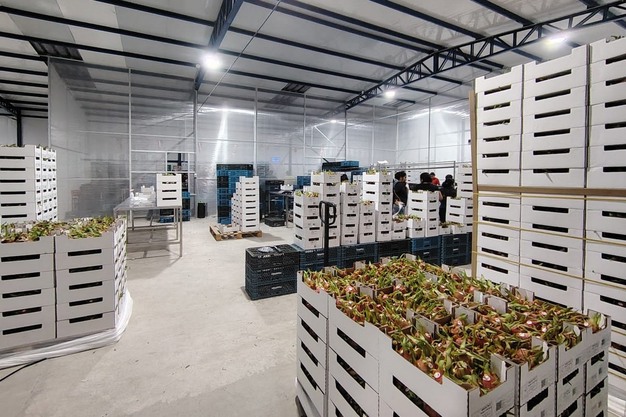
In this context, Exposour's CEO recommends two main strategies for market stability: "a more disciplined approach to managing exported volumes and stricter control over price formation. Avoiding extremes, such as very high prices or unsustainable levels, is essential to safeguard the entire supply chain," he explains.
Looking ahead, Intriago believes that recovery will mainly depend on supply management. If volumes are adjusted to the market's actual capacity, signs of improvement could appear starting in January. "This is a time of adjustment, not a time of retreat. Ecuadorian pitahaya still has enormous potential, but it requires planning, coordination, and long-term vision."
 © Exposur For more information:
Sergio Intriago
Exposour
Ecuador
Tel: +1 305 490 13 61
Email: [email protected]
www.exposour.com