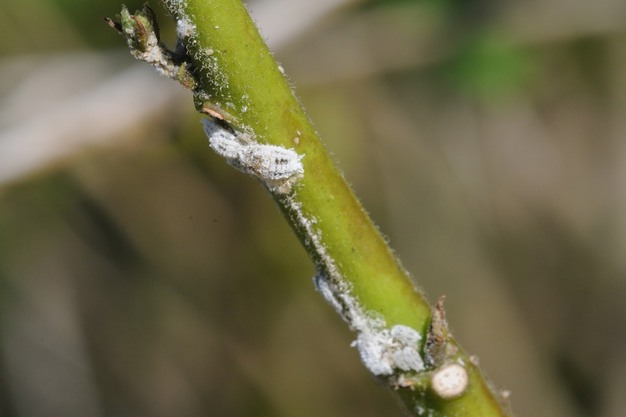
La Unió Llauradora warns of a new cotonet, Phenacoccus solenopsis, found in the Valencia Region. This pest primarily affects solanaceous crops, including peppers, tomatoes, and eggplants, as well as ornamental plants.
The pest was first discovered in Alicante, on a lemon tree in Elche, and on an ornamental lantana in Crevillent. The Regional Ministry of Agriculture has informed the Ministry of Agriculture about its presence in Valencia.
 © La Unió
Initially, it doesn't seem particularly concerning, as the European Commission, after conducting a risk assessment, has decided not to include it among the 400 quarantine pests listed in Implementing Regulation 2019/2072.
This new cotonet, native to North America, has now spread worldwide. In Europe, it has been reported in Italy, France, Greece, Cyprus, and the Canary Islands, especially in Tenerife. The initial detections in the Valencia Region mark its first official appearance on the mainland.
It is a mealybug, a pest that feeds on around 300 plant species by sucking on their aerial parts, particularly new shoots. It excretes honeydew, which attracts ants and encourages fungal growth, such as black mold. This pest significantly affects ornamental plants such as hibiscus and lantana, greenhouse vegetables including pepper, tomato, and eggplant, and field crops such as cotton. Large infestations can cause die-back and reduce yields.
 © La Unió
Adult and immature P. solenopsis could enter the EU via imports of fresh fruit, vegetables, and cut flowers, though the primary route is likely through plant imports. The presence of suitable hosts and favorable climate conditions suggests that much of the EU could support its establishment.
"Generally, it doesn't seem to be a major concern or pose a high risk, but it is yet another imported pest amid increasing imports in recent years," said Carles Peris, secretary general of La Unió.
The need to prevent issues caused by imported pests and diseases in Valencian agriculture is one reason La Unió is calling for a tractor parade protest this Thursday, December 18, through the streets of Valencia.
 For more information:
Carles Peris
La Unió
Tel: +34 658 92 89 23
Email: [email protected]
https://launio.org