Mozambican bananas are not "free-riders" undercutting South African farmers, nor do they threaten the survival of the local banana industry, says Charlie van Dyk of the Novasun Group. Instead, he posits that regulated regional imports are supplementing domestic production, not replacing it.
Following land claim sales in the Komatipoort area of Mpumalanga in 2007, much former banana land in that part of South Africa shifted to sugarcane production. "To continue supplying South African customers, Novasun relocated part of its production to southern Mozambique, effectively replacing lost local supply rather than displacing existing growers," Van Dyk says.
Many large banana producers today operate across South Africa, Mozambique, and Eswatini. The Mozambican Banana Producers Association (BANANAMOZ) has thirteen members producing 160,000 tonnes of bananas per year on 4,000 hectares, in two provinces, namely Maputo and Gaza.
South Africa currently produces approximately 400,000 tonnes of bananas annually, while imports amount to about 152,000 tonnes from Mozambique, 39,000 tonnes from Eswatini, and 4,000 tonnes from Zimbabwe, with small additional volumes from Seychelles and Ecuador, according to figures from DALRRD (formerly DAFF) and PROKON.
Imports therefore account for only around one-third of the bananas sold in South Africa, Van Dyk maintains. Removing regulated regional imports, however, would severely constrain supply and could cause banana prices to surge – potentially, he says, even doubling current banana prices.
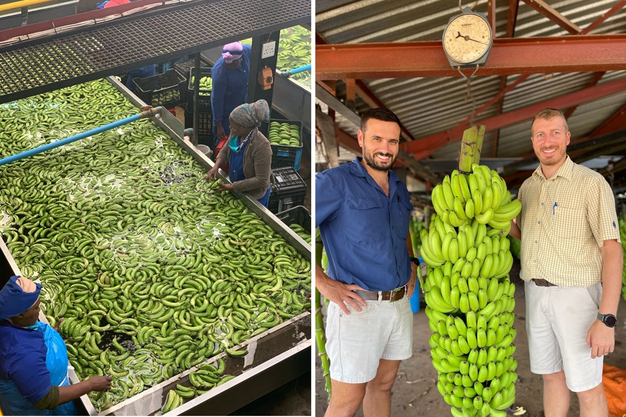 © Novasun Group Riaan Botha, Novasun Limitada director and general manager, with Jan van Dyk, packhouse manager and Novasun Limitada director
"Mozambican bananas land in South Africa at higher cost"
Mozambican banana producers are also not landing fruit in South Africa at artificially low prices – far from it, he says. While hourly wage costs in Mozambique are lower than in South Africa, resulting in a saving of about R13.85 (€0.7) per carton, the scales tip in other directions: workers have thirty days paid leave per year, for example, almost double the South African amount of paid leave. Attracting talent and their families to rural Mozambique comes with costs, he remarks.
The cost of compliance is significant. "Cross-border logistics, taxes, regulatory requirements and administration add roughly R17.82 [€0.9] per carton, meaning that Mozambican bananas land in South Africa at a higher cost than locally produced fruit," Van Dyk explains. "In net terms, this equates to an additional cost of approximately R4.87 per carton, demonstrating that compliant imports do not undercut South African producers."
Forex availability has become a problem since the post-election instability in Mozambique, and the metical has been linked to the USDollar in an attempt to stem its devaluation.
He continues that beyond supply stability, Mozambican banana production supports South African jobs and businesses throughout the value chain: transport, fresh produce markets, and key farming inputs such as fertilisers, herbicides, packaging materials, irrigation equipment, and heavy machinery. Most of these inputs are sourced through its Southern neighbour, generating clearing fees, border charges, and tax revenue that benefit the South African fiscus.
In Mozambique itself, the banana industry provides direct employment to more than 15,000 workers, including a significant administrative workforce responsible for managing export compliance and documentation.
 © Novasun Group
Unfounded TR4 association with southern Mozambique
"Concerns regarding Fusarium Tropical Race 4 (TR4) in relation to Mozambican banana imports into South Africa are not supported by the regulatory or phytosanitary evidence," he says. "The presence of TR4 is confined to far northern Mozambique, specifically the Matanuska production area, and has not been detected in southern Mozambique."
Stellenbosch University plant pathologist Prof Altus Viljoen confirms that the disease is not present where the bananas destined for South Africa are grown. In accordance with Mozambican and South African phytosanitary controls, the fruit originating in the Matanuska area is not authorised for export to South Africa. "Matanuska bananas are therefore excluded from the South African market and are supplied to alternative export destinations. On this basis, there is no phytosanitary justification for associating southern Mozambican banana production, or imports into South Africa from those regions, with a TR4 risk."
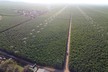
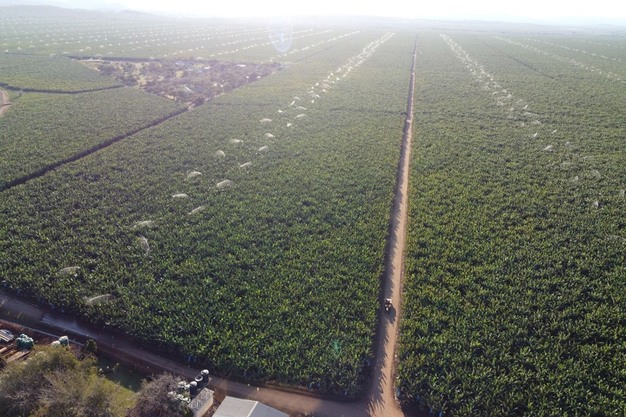 © Novasun Group The Novasun Group has 450 hectares of bananas in southern Mozambique
For more information:
Charlie van Dyk
Novasun Group
Email: [email protected]