The global papaya market is entering December with uneven supply and shifting demand patterns, driven by weather conditions in Brazil, rising logistics costs, and evolving retail strategies.
In Italy, Formosa arrivals are affected by weather-related quality issues and higher air freight costs, keeping prices elevated. The Netherlands reports a tight Golden papaya supply, while Formosa faces added pressure from Spain. Germany notes reduced Brazilian volumes due to an unusually cold winter but expects availability to improve as summer progresses. Spain is seeing reduced papaya availability this winter, as colder weather in the Canary Islands has delayed harvests.
In North America, Mexico continues to dominate supply, and retailers are increasingly merchandising fruit with more colour to stimulate sales. Demand typically eases through the holiday period but strengthens again in early January and ahead of the Lunar New Year.
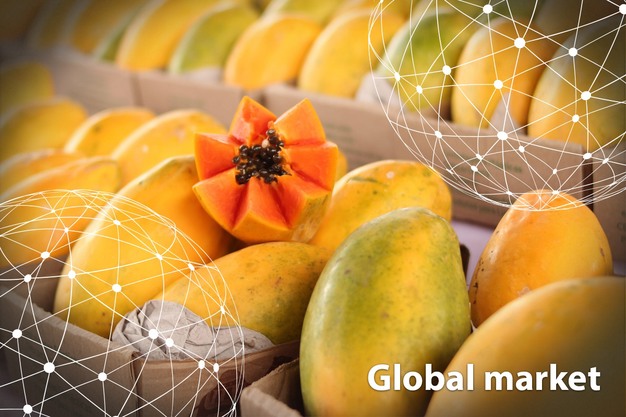 © Viola van den Hoven-Katsman | FreshPlaza.com
Brazil continues to face strong domestic and international demand, but export volumes to Europe remain limited by residue regulations, production challenges, and a growing reliance on the domestic market. Panama is navigating a transition year, with selective opportunities in Europe during winter offset by high airfreight costs, while demand in the U.S. remains the main outlet. Ecuador's export sector has largely halted following virus pressure, shifting production toward the domestic market and trials with more tolerant varieties to regain export potential.
Italy: High costs and quality issues affect the papaya market
Papayas are very delicate products with complex logistics. They are almost exclusively transported by air, which has a major impact on costs. Despite this, the product has historically been given limited commercial value compared to other exotic fruits. Most production comes from Brazil, which remains the reference point for quality and consistent supply. A small percentage originates from Spain, but these are specific varieties for niche markets. Brazilian papayas are the most appreciated on the market due to their organoleptic properties and reliability.
According to a Milan-based wholesaler, the current papaya market, particularly for the Formosa variety, is marked by quality issues and high logistics costs. The wholesaler works with two major Brazilian producers: one has been unable to ship for about a month because of rain and unstable weather, while the other has experienced ripening problems after a period of excellent quality. "For about ten days now, very green fruit has been arriving that is struggling to ripen." Although farm-gate prices are relatively stable, air freight costs are currently rising due to the Christmas period, affecting the final price. "November was particularly negative, with a weak market that led to losses on many shipments." The Formosa variety dominates the market, while Golden papayas are almost exclusively sold in supermarkets. Current selling prices range from around €14.50 for cheaper varieties to €17 or €18 for leading brands for coloured, firm, good-quality fruit.
Another wholesaler at an agri-food centre in northern Italy notes that papaya represents a very small share of the exotic fruit category. Sales increase somewhat in the run-up to Christmas, but volumes remain limited. The papayas sold at this market are Formosa from Brazil, weighing around 1.2 kg each. The wholesale price is around €3 or €4 per kg.
"To make Formosa papayas more accessible and bring them closer to consumers, we are proposing a ready-to-eat solution: papayas that have been cut in half. This format meets the demand for convenience and reduces the purchasing barriers linked to handling whole fruit," reports a leading Italian importing company. "Papaya is not one of the most expensive exotic fruits, but air logistics strongly impact the final price. This is a critical factor that limits the product's competitiveness while ensuring the necessary freshness."
Netherlands: Golden supplies tight, Formosa under pressure
"This December, we are once again facing a shortage of Golden papayas. This situation is expected to continue until the end of the month. Brazil currently has a strong domestic market, and demand in Europe is also firm, which is keeping prices at healthy levels," says a Dutch importer. "The Formosa papaya market, however, is not performing as well as last year. There is still supply coming in from Spain, and that is increasing competitive pressure."
He underscores the importance of fixed programs in the import trade. "You really need supply contracts in place; only then can you secure a reasonable margin. If you're forced to sell papayas year-round on the spot market, you will go bankrupt in no time. The peak season for papaya sales traditionally runs from December through March, when European fruit availability is low. Overall, we've had a better year with papayas than last year. Prices may not have been as high, but the additional volume compensated for that."
Germany: Cooler Brazilian winter limits papaya volumes
Winter in Brazil, the country of origin, was exceptionally cold this year, resulting in predominantly large sizes. In general, there were fewer fruits than expected, as availability declined in some cases due to the cold weather. An importer says: 'We therefore refrained from advertising in December because we did not want to make short deliveries. Due to the cold weather and resulting reduced availability, the risk with papayas is too high. Summer is now slowly approaching in the country of origin, so there will be enough fruit until January or February.
Spain: Colder winter delays Canary Islands harvest
Papaya production in the Canary Islands, Spain's main growing region, is currently much lower than at the same time last year. "Normally, we would have double the supply we have now, and weeks 50 and 51 are peak demand for papaya," says a producer from Tenerife. While winters in recent years have generally been warm, this season has been colder in the Canary Islands, delaying the harvest. Although volumes would normally start to increase in November, this season is now expected to pick up only from February.
In addition, most producers have staggered their plantings to avoid large fluctuations in output, which, combined with the cold weather, has further limited availability. Despite the current situation, papaya acreage in the Canary Islands continues to expand each year. "Spanish papaya is becoming increasingly established in Europe, as it is considered a local, exotic product," the producer notes. Smaller volumes of papaya are also produced in greenhouses in Andalusia, particularly in Almería, as well as in Murcia.
North America: Retailers increasingly display papayas with color
For papaya supply, the U.S. and Canada rely primarily on Mexico, which accounts for about 85 per cent of the North American market. Central America supplies 12–13 per cent, while Brazil and Hawaii together contribute 1–2 per cent. These regions provide year-round availability, although volumes fluctuate seasonally.
In the northern hemisphere, production slows at this time of year due to colder weather. Brazil, located in the southern hemisphere, is currently sending papayas with good external color. More retailers have begun displaying papayas with greater coloration and more advanced maturation. This presentation makes the fruit more visually appealing and supports higher sales, resulting in a stronger euro-per-square-foot value. Retailers increasingly view displaying color as the preferred merchandising approach because it encourages consumption.
Overall, papaya consumption continues to grow, but demand typically dips during the Thanksgiving, Christmas, and New Year holiday period. It improves again at the start of January when New Year's resolutions influence purchasing patterns. Demand also strengthens in the weeks leading up to the Lunar New Year on February 17, 2026.
Brazil: Demand outpaces export availability
Brazil is seeing growing demand both on the domestic market and internationally, but exports remain constrained by European Maximum Residue Limits (MRLs), which limit the volume of fruit that can be shipped to that market. Production is further affected by diseases, unpredictable weather conditions, and the limited availability of suitable crop protection products. While European buyers are seeking riper fruit with stronger eating quality, Brazil is currently unable to fully meet this level of demand. As a result, the market is characterised by high demand and insufficient supply, with sales relying heavily on the domestic market.
Panama: Transition year and selective market focus
Panama is experiencing a transition year due to changing weather conditions and the adjustment to a new farm. Winter shortages in Europe are creating opportunities, but high air freight costs raise final prices and reduce competitiveness compared with Brazil, which benefits from more favourable logistics rates. Spain offers opportunities during the winter period, but it remains challenging for the rest of the year due to local production from the Canary Islands. As a result, expansion into Europe is progressing gradually and with caution, while performance in the U.S. remains strong, where demand continues to grow, including for green papaya.
Ecuador: Export sector disrupted by virus pressure
Ecuador has seen exports fall from around 9,000 tons to almost zero following the spread of the PRSV-P virus, which devastated the Solo Sunrise variety that formed the backbone of the export sector. Current production is now focused on the domestic market, using Passion Red, a larger fruit that is less suitable for export. The collapse of exports has prompted a shift toward more tolerant varieties, alongside trials with a transgenic line, SoloSunrise Samira, as efforts continue to restore access to international markets.
Next Topic: Pomegranates