The adoption of drip irrigation at the start of the century in Santa Rita de Siguas, a key agricultural area in the Arequipa desert, transformed production. This shift benefited Fundo América, a company now managed by the third generation of the Lozada García family. Currently, they cultivate grapes and pomegranates, though until last year, they also produced sweet onions. Their most longstanding activity, however, is dairy farming, which they have been practicing since 1968.
Adrián Lozada Acosta, the youngest family member involved in the business, said, "Implementing drip irrigation has boosted our efficiency and enabled us to cover a larger area with the water we save. Water is drawn from the Siguas and Colca rivers, which originate from snowmelt on Nevado Ampato, a dormant volcano over 6,000 meters tall, located less than 100 km away. The combination of a steady water supply, a mild climate, plenty of sunshine, and good soil management helps us produce vegetables and fruits here."
Until last year, sweet onion was a staple in Fundo América's catalog. The first export-quality sweet onions, introduced in 1992, came from Fundo América. "We used to send half of our onions to Spain, and the other half to the United States," stated Carlos Lozada, Adrián's father and operations director. "But when land rent prices rose from around $2,500 to $5,000 per hectare due to cochineal cultivation for its dye, growing onions was no longer profitable for us. We grew onions for 33 years, and it's a period of time I remember fondly," he added.
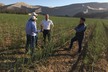
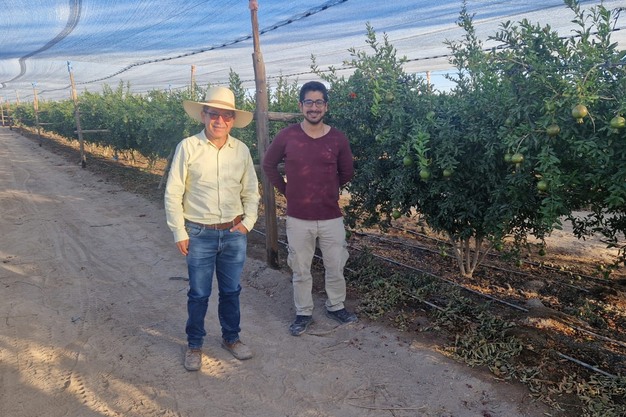 © FreshPlazaCarlos Lozada García and his son, Adrián, stand under the shade netting that shields the pomegranates from sunburn as an alternative to paper bagging.
Permanent crops like grapes and pomegranates are becoming increasingly popular. "Pomegranate offers us a privileged commercial window: from mid-January to mid-March," Adrián stated. "The harvest in Ica, one of Peru's largest production centers, mainly happens in March and April. Additionally, the Wonderful variety, the pomegranate we grow, shows better coloration here due to the large temperature difference between day and night. Production costs are slightly higher here than in Ica because we are farther from the port and labor costs are nearly twice as high, but we can sell a 3.8-kilogram box for an extra $2 in January. That difference makes up for the higher costs." Fundo America's pomegranates are mainly exported to Germany, with some shipments going from Arequipa to the Middle East and Russia.
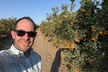
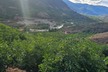
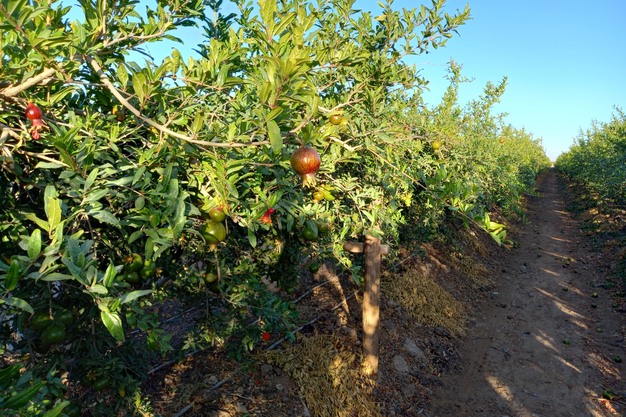 © FreshPlazaTwo years after planting, pomegranates are now ready for harvest in Santa Rita de Siguas. The photo was taken in late October; harvesting will begin by mid-January. Fundo América grows both table grapes and pomegranates and also engages in dairy farming. The dairy production not only provides income but also supplies manure, which is used as organic fertilizer for the fields.
The rising labor costs are highlighted by a statistic: "In the early 2000s, labor accounted for 20% of total costs. Today, it accounts for nearly 40% in this area," Carlos Lozada stated. "Prices respond to the supply and demand balance. It's one of the reasons we stopped growing sweet onions. However, fruit cultivation still faces significant labor pressure. Pomegranate cultivation requires many hours of work. We have to prune, thin, and wrap each fruit in paper to prevent sunburn. That task alone accounts for nearly a third of the working hours in the pomegranate orchard.
Fundo América is testing shade nets over tree rows to reduce its labor dependency. They expect to conclude this test next season. Challenges include strong winds, reduced photosynthesis, and the uncertainty that the fruit's skin color will be less intense than with the traditional method.
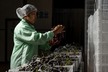
After harvesting, pomegranates are transported by truck to a nearby packing facility, where they are brushed, washed, graded, and sealed in modified-atmosphere bags before being cooled to 6°C. This entire process, from the orchard to the customer in Germany, typically takes just over 4 weeks. "In Europe, they can be stored in cold storage for a few more months. However, our clients say most are sold immediately upon arrival. From mid-February to mid-April, when European consumers enjoy Arequipa pomegranates, demand exceeds supply," Carlos stated.
"Turkey is not a direct competitor; they sell their product starting in October and store it cold until February. When the pomegranates from Arequipa arrive, the Turkish fruit appears old and poses no threat. South Africa's season partially overlaps, mainly from March onward, but its volumes and quality do not match those of the Peruvian fruit," he added.
A significant benefit of Fundo América is the secluded placement of its plots. "We have almost no neighbors; we're in the desert," Adrián notes. "This prevents pesticide drift from adjacent fields, ensuring there are no unpleasant surprises."
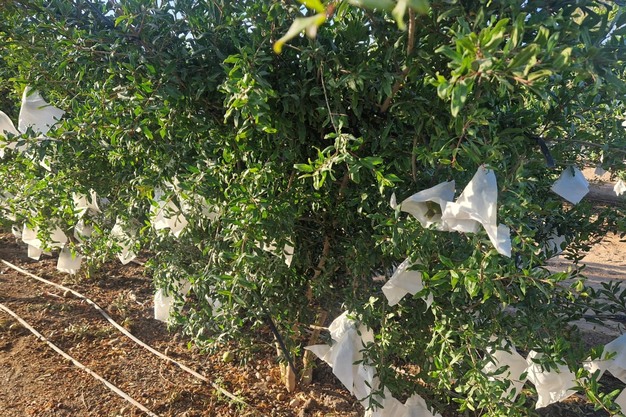 © FreshPlazaSeventy per cent of the pomegranates at Fundo América are covered with paper bags to protect them from sunburn. This process takes place in September, four months before the harvest begins.
Pomegranates generally have few pests and diseases. "There are some nematode issues, but we manage them using specific fungi like *Paecilomyces lilacinus* and *Bacillus subtilis*. Biological control of nematodes is both more effective and more affordable than chemical options," explained Carlos.
Fundo América's second major product is grapes. "In our area, we can determine the harvest time thanks to our specific climate conditions," Adrián points out. "We achieve the highest profitability in regional markets, Colombia, Bolivia, and Central America, between June and August, winter months when production is very limited in the Southern Hemisphere. We avoid high logistics costs for distant destinations, capitalize on favorable seasonal prices, and skip the strict requirements of the European market."
Grapes are especially strategic for Fundo América because of their complementary water supply with pomegranate. "Our goal is to cultivate 50 hectares of each crop. Currently, we have 30 hectares of pomegranate and 20 hectares of Red Globe grapes. Additionally, the work distribution is well balanced between the two crops."
Red Globe plants were established four years ago. "Our plan is to expand with patented varieties like Sweet Globe and Allison. Then we'll see if we can also export grapes outside South America," Adrian stated.
 For more information:
Adrián Lozada Acosta
Fundo América SAC
Calle Santa Martha 104, dpto B
Arequipa (Peru)
Tel: +51 995 883 654
Email: [email protected]
www.fundoamerica.com.pe