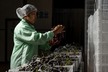
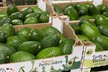
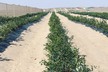
The Peruvian blueberry season is now also coming to an end in the sandy soils of Pisco, some 250 km south of Lima. That's the location where the company Valle y Pampa has been cultivating this kind of berry for 15 years, and with its portfolio of selected varieties, it guarantees work for thousands of people for several months. According to its general manager, Miguel Bentín, "agriculture generates formal employment and helps in reducing poverty and dignifying rural life."
"Valle y Pampa is an agribusiness operator with a particular set-up," says Bentín. The firm manages the production companies Agrícola San Gallán, devoted to pomegranates, and Family Farms Peru, a partner of the US-based Family Tree Farms, which is focused on blueberries.
 © Valle y Pampa
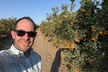
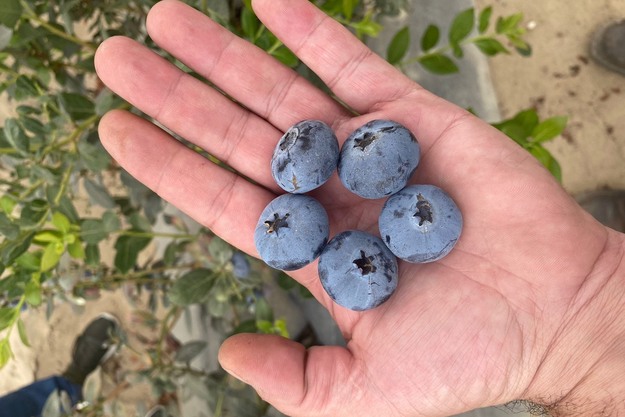
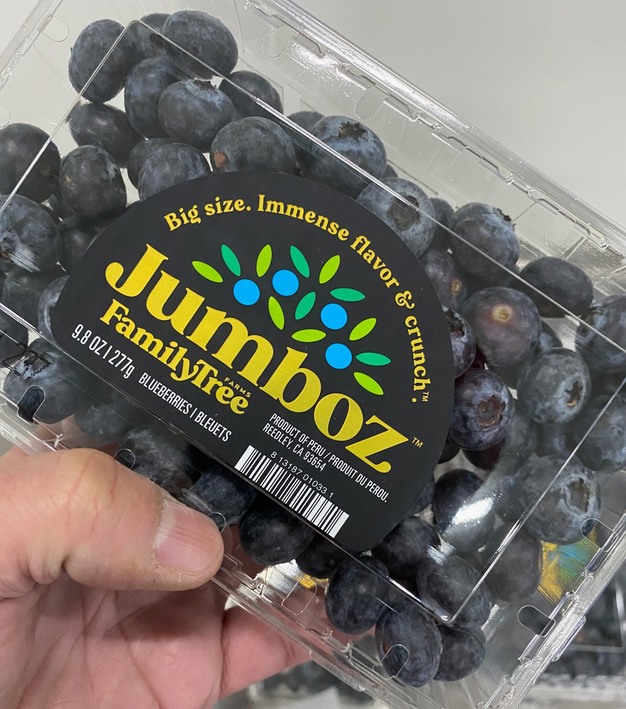
"40% of the blueberries are larger than 20 millimeters," says Miguel Bentín.
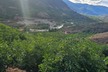
Both are based in Pisco, a region with an arid climate and sandy soils, where the company manages 700 hectares. Some 600 hectares are devoted to blueberries and 54 hectares to pomegranate, with plans to double the latter.
Blueberries in desert soils
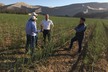
Unlike many other companies in the sector, Valle y Pampa grows blueberries in soil, and not in pots. "Our soil is made of fine, inert sand, typical of the desert. But we have developed a system where we incorporate substrate in a line, which results in something like a long pot," he says.
 © Valle y Pampa
Valle y Pampa grows blueberries in soil, and not in pots.
This approach stems from the know-how accumulated since they started more than 15 years ago, when they became pioneers in blueberry cultivation on the southern coast of Peru. The substrate is maintained with compost made from their own prunings. "When mature, yields are similar to those achieved in pots. The potted plants start producing earlier, but are not necessarily more productive." As long as varieties are not changed, plants can remain productive for at least 15 years.
Premium genetics and extended harvests
All of Family Farms Peru's blueberry production corresponds to varieties of Australian origin that are part of the Mountain Blue Orchards (MBO) portfolio. Family Tree Farms, a shareholder in the company, is its exclusive licensee in Peru. The main varieties are the Eureka, Eureka Gold, Eureka Sunset, and Eureka Sunrise.
"They are all premium varieties with a good flavor, crunch, and a superior size. 40% of the fruit is larger than 20 millimeters; in some cases, this percentage is as high as 80 percent," says Bentín. The harvest season in Pisco runs from June to December, which allows for constant activity for half a year. There are early, medium, and late season varieties, which help keep the production staggered and take advantage of opportunities in different markets.
 © Valle y Pampa
This year, Family Farms Peru expects to produce 11,000 tons of blueberries. "We have fields of different ages, from one to five years old. We expect an additional 35% in 2026 and an estimated production of 18,000 tons by 2027."
More than 60% of the blueberry production goes to the United States thanks to the commercial strength of Family Tree Farms. 10% goes to Asia, with a focus on China, and another 25% is distributed between the United Kingdom and continental Europe. The rest goes to other markets.
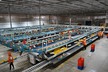
For Asia (especially China), they do field packing, taking advantage of the uniformity of their varieties. For Europe and other markets, they use automated calibration lines.
 © Valle y Pampa
Pomegranates: A strategic complement
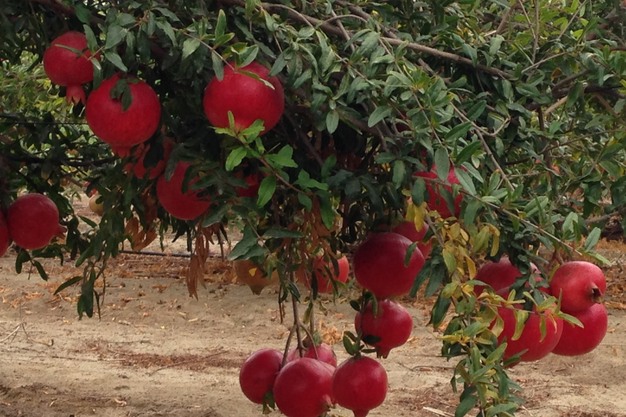
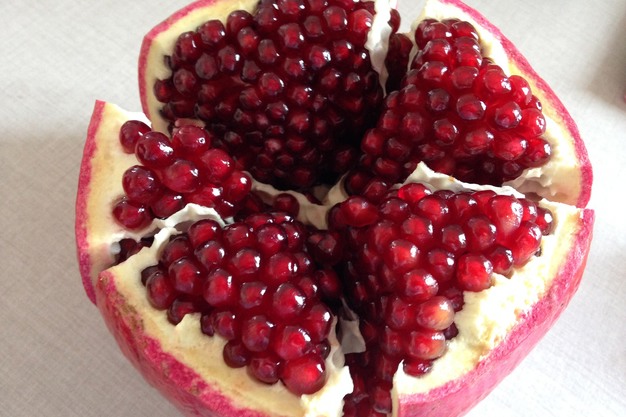
Although the pomegranate market is smaller and more mature, it is important for Valle y Pampa's strategy. The company, through its subsidiary Agrícola San Gallán, produces 2,000 tons a year, mainly of the Wonderful variety, which has proven to be the most reliable. "In total, Peru produces around 40,000 tons. If the production grew much more, it would be difficult for the market to absorb all the volumes," says Bentín.
"We start harvesting pomegranates in March, and this allows us to hire laborers who will then move on to blueberries. In this way, we are managing to extend the work calendar," says Bentín. "The pomegranate season runs from late March to early June, a very interesting window. The main destinations are the United Kingdom and continental Europe."
To be able to access demanding markets, Valle y Pampa has multiple certifications covering good agricultural practices, water management, social responsibility, and environmental sustainability. Bentín says, "Smeta is the most demanding in social matters. Others are more environmentally-oriented. They are all necessary."
 © Valle y Pampa
Decent work in the field
During the high season, up to 4,200 people are employed by the company, starting with about 400 in March and continuing to grow until December. Labor is a constant challenge, but Bentín sees it as an opportunity. "Healthy competition forces us to be better employers. The more services, the better the income, which helps improve life in rural communities."
In Ica, thanks to this agricultural dynamism, "there's zero unemployment." For Bertín, that's something to feel proud of. "One in five formal workers in Peru is employed by the agricultural sector. It is the main generator of employment. Formal agriculture transforms; it provides well-being, promotes social mobility, and facilitates development instead of neglect."
Structural obstacles: Water and logistics
Not everything is positive. Growth potential is limited, especially by infrastructure and water resources. In terms of logistics, Bentín points to problems in ports and shipping lines: lack of frequency, equipment, and adequate services. And on the water side, the situation is more critical.
"The south of Peru has no irrigation projects. All the water in Pisco comes from underground sources, and between 500 and 600 million cubic meters of fresh water from the Pisco river end up in the sea every year in the rainy months. It's a tragedy," says Bentín.
After years of accelerated expansion, Valle y Pampa is now prioritizing consolidation. "We want to optimize existing operations and maximize efficiency and quality, ensuring sustainability and traceability. We don't want to grow for growth's sake," says its general manager, who does not rule out expanding to other regions or even abroad, if opportunities arise.
 For more information:
Miguel Bentín
Valle y Pampa
Av. Alberto del Campo 409 Of. 502
Magdalena (Lima) - Peru
[email protected]
www.vallypampa.com