This November has been the first month that the labor digital card has been obligatorily implemented in all food companies in Greece. The measure was put into effect by the government on the argument that it would battle undeclared employment or undeclared additional working hours, leading to increased incomes for workers and social security services. However, the reality seems to be problematic.
Mr. Stefanos Apostolidis, owner of Tasty Fruit and president of the exports departments of the Imathia's Business Chamber, a region that gathers a crucial part of the fruit and vegetable businesses and workforce, says to FreshPlaza concerning the implementation of the labor digital card: "It's a measure that since November 1st has been in massive effect in the companies of our region. We are for it, but there are functional problems that can result in fines for the entrepreneurs, and these must be fixed."
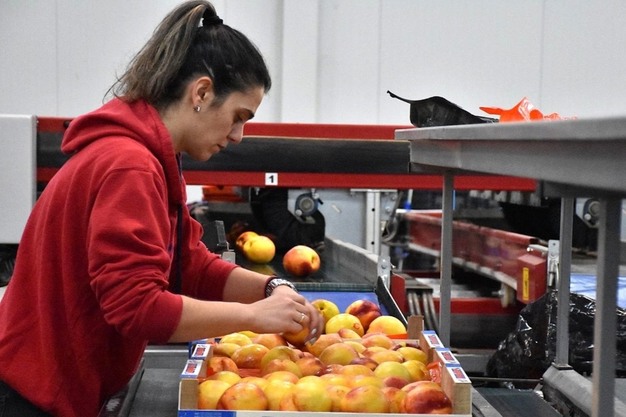 © Fotis Karabetsos | FreshPlaza.com
As Mr. Apostolidis explains, "Many workers cannot use the digital app in order to scan their digital card as they enter or exit their workplace. This is either because, due to their age, they are not familiar with modern mobile phones, or because of language difficulties. For this reason, we decided to give workers plastic cards. Yet, here problems arise if they forget the cards at home. Then, the accounting department must undertake the digital declaration of their arrival and departure, which means extra labor burden for this department and, obviously, the danger of fines if something goes wrong."
"Furthermore, there is the problem of the timely leaving of workers from the workplace. If anyone, for any random reason not related to work, happens to stay just 15 minutes more and an inspection happens to take place, then again we have a fine."
On the other side, the representative of the local food workers' union, Mr. Dimitris Digkas, describes another aspect of the labor digital card's use: "Theoretically, each worker must individually possess his own card, but this is not what actually happens in many cases. Many workers have never even seen their cards, which are kept by the employers, who are the ones that use them instead of the workers, for declaring the start and the end of their shifts, at hours different from the real ones, according to their own interests."
"Besides, there is a law provision for 'flexible arrival' — i.e., for arrival at the workplace one hour earlier than the actual shift start, which can cover up to a point the desynchronized use of the card. In simple words, that means that someone can already work for an hour before his presence is declared," explains Mr. Digkas.
"Furthermore, labor inspection agencies are understaffed. In our region, 3 to 4 inspectors are tragically few for more than 1.000 companies, many of which employ more than 100 workers in different shifts. The only thing they can do is to wait to receive formal complaints. Yet during inspections, employers hide workers who must not be seen, even inside cooling chambers. For us, the necessary steps are a collective labor agreement across the sector, clearly defining the tasks, terms, conditions, and incomes of each worker category, and proper staffing of the inspection agencies," the Greek syndicalist concludes.