Dalhousie University researchers are working with Nova Scotia's wild blueberry sector to develop technologies aimed at managing climate variability, long crop cycles, and production constraints. The work will be expanded through the university's new Atlantic Institute for Digital Agriculture, which will focus on precision and digital tools for regional crops.
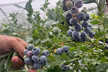
Wild blueberries grow on a two-year cycle and cannot be rapidly scaled in response to poor seasons. Growers report increasing exposure to extremes such as excessive rainfall, late frost, and drought. "The fact of the matter is, we're suffering more extremes than we ever had in the past," said grower Peter Swinkels. "To have a crop dry out like it did this year is unknown to us."
 © Dalhousie University
Nova Scotia produces more than 50 million pounds of wild blueberries annually across more than 16,000 hectares. With more than 630 growers and about US$90 million in international sales each year, the crop is a major component of the province's agricultural economy.
Because wild blueberries grow only in specific regions of northeastern North America, the sector receives limited attention from major global equipment manufacturers. Dalhousie's researchers have therefore developed an applied research program for the crop. Drs. Travis Esau, Scott White, David Percival, and Christopher Cutler have worked on machinery adaptations, digital tools, and precision agriculture approaches suited to the crop's variable terrain.
The Atlantic Institute for Digital Agriculture will expand these efforts, providing coordination across research areas. Swinkels said applied research has played an important role in supporting the sector's development.
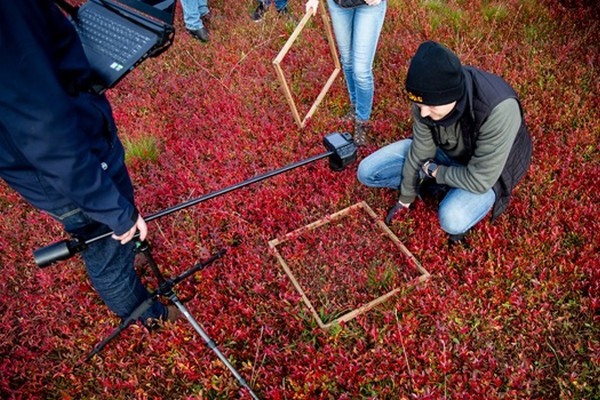
Research underway includes AI-guided weed identification tools, drone mapping, and automation upgrades for harvest equipment. Over 200 weed species occur in wild blueberry fields, and Dr. Esau's team developed a smartphone tool that identifies selected species using a neural network trained on thousands of annotated field images. "You take a picture, and right away, it tells you what the weed is and the best way to follow up," Swinkels said.
 © Dalhousie University
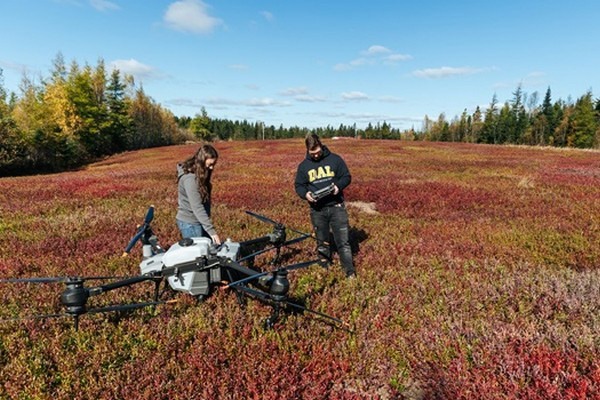
Drones are being used to collect multispectral images to identify stress zones that are not easily seen from the ground. These data feed maps that help guide targeted spraying and reduce field passes. Larger drones are being tested as alternatives to ground sprayers to avoid crop damage.
Research is also underway to improve harvesting efficiency. GPS-assisted steering is being evaluated to keep harvesters on precise rows and reduce overlap, missed fruit, and ground disturbance.
The Atlantic Institute for Digital Agriculture will bring together researchers from Dalhousie's Faculties of Agriculture, Science, and Computer Science. The institute aims to provide region-specific solutions for producers working with crops that require specialized management.
Dr. Esau's digital agriculture work, conducted in partnership with the Wild Blueberry Producers Association of Nova Scotia, has received support from Mitacs and the Natural Sciences and Engineering Research Council of Canada.
For more information:
Dalhousie University
Tel: +-902 494 2211
www.dal.ca