Peruvian garlic production has risen this season, but faces significant pressure on international prices from Chinese garlic and regulatory changes in key markets. According to Paulov Sifuentes Fernández, the commercial manager of Agroexportadora Sol de Olmos, domestic production increased by about 25% compared to last year, driven by cooler weather that enhanced crop growth.
"Prices at the start of the season, between September and October, were positive. However, things changed quickly. Between November and December, values dropped sharply due to increased supply in Argentina and Chile, which also experienced favorable weather and strong yields. This surge in volume put pressure on the regional market just as China was breaking through with extremely low prices," Sifuentes stated.
 © Agroexportadora Sol De Olmos SAC
"China's garlic has become the main factor distorting the market. While Peru, Argentina, and Chile sold the 10 kg box at $28, $23, and $22, respectively, China offered it for just $11. This huge price gap has driven down international prices, hurting Latin American competitiveness across destinations," he said.
"Brazil is one of the markets most impacted by this situation. Argentina, with approximately 17,000 hectares of cultivation, has historically considered Brazil its primary client. However, a new measure implemented by the Brazilian government this year has favored Chinese garlic by reducing tariffs and setting a reference price of approximately $17 per box. China can sell below this threshold and still keep significant margins. In contrast, Latin American garlic, which has no subsidies, is unable to compete at those cost levels," he stated.
 © Agroexportadora Sol De Olmos SAC
The immediate result is that Argentina and Chile have redirected some of their shipments to Mexico, aligning with the strong presence of Peruvian suppliers there. Over 85% of Peruvian garlic exports this year have gone to Mexico due to limited demand in the United States, Europe, and Asia, as well as competition from Chinese garlic. However, Sifuentes warns that "the Mexican market presents an additional challenge, the increase in Chinese garlic smuggling, which enters the country at even lower prices than those on the formal market, generating an additional drop in prices".
Logistics still favor Peru. "Maritime shipment to Mexico takes about seven days, arriving faster than the Chilean or Argentinean garlic and allowing the product to remain fresher. However, global oversupply creates stiff competition, making stable prices hard to sustain," he highlighted.
 © Agroexportadora Sol De Olmos SAC
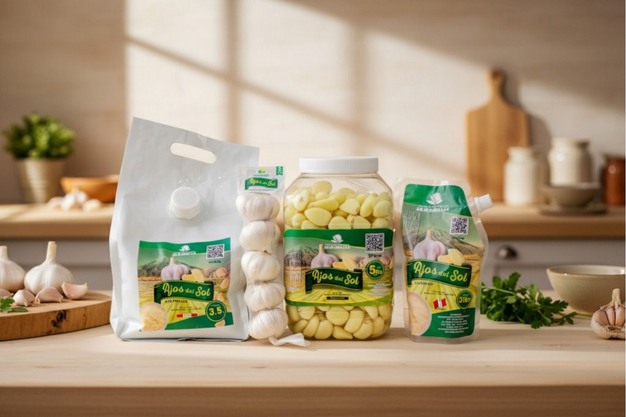
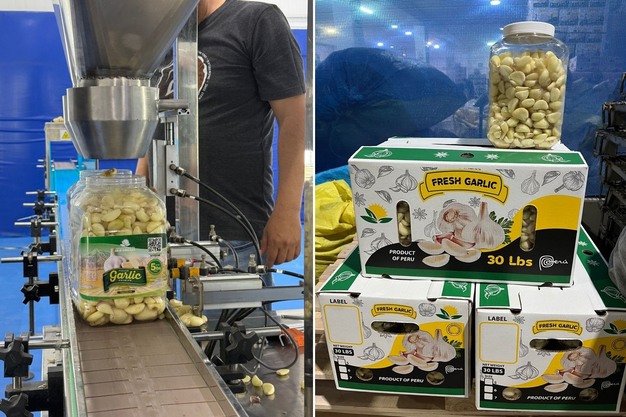
Agroexportadora Sol de Olmos has increased its volumes by about 30% compared to last year and has begun shipping peeled garlic to the United States, seeking higher-value-added options and less exposure to saturated markets.
As the Christmas season approaches, all suppliers are trying to sell their products quickly, but the manager warns that "garlic continues to fall week by week," reflecting the complex situation in a market dominated by low-priced Chinese garlic.
 For more information:
Paulov Sifuentes Fernández
Agroexportadora Sol de Olmos
Peru
Tel: +51 982 509 468
Email: [email protected]
www.soldeolmos.com