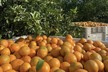
Mandarin prices in Mexico have increased more than 20 per cent during the 2025 autumn to winter season due to lower rainfall, production cost increases, transport challenges, and seasonal demand. Data from the Federal Consumer Protection Agency (PROFECO) shows that prices in Mexico City average MX$55 per kilo (US$3.05) in local markets and approach MX$65 per kilo (US$3.60) in supermarkets. In states with limited availability, such as Chiapas, prices can reach MX$120 per kilo (US$6.66) when fruit must be transported from other regions.
Lower prices were reported in Oaxaca and Veracruz at MX$30 per kilo (US$1.66) and in León, Guanajuato, at around MX$35 per kilo (US$1.94). These markets are closer to producing regions and therefore face lower transport costs. Veracruz, Puebla, and Nuevo León are the main producing states, harvesting between October and December. These regions experienced prolonged droughts and irregular rainfall during the second half of 2025, reducing blossom development and fruit set. Later concentrated rains caused additional fruit drop and disrupted harvesting, resulting in lower volumes entering the market during peak demand.
Producers and vendors reported higher costs for fuel, inputs, packaging, and logistics throughout the supply chain. Competition from imported Peruvian mandarins has also influenced the market. Ramón Gómez of the Business, Commercial and Tourism Council (CECOTUR) said that imported fruit has drawn interest due to its color, size, and flavor. He noted that Peruvian mandarins surpass Mexican ones in appearance and flavor and that the domestic fruit often appears smaller and greener. Imported mandarins are mainly received at wholesale centers and then distributed to various states. Their retail price is about MX$100 per kilo (US$5.55). Gómez said consumers are willing to pay more for a product that offers better quality, longer shelf life, and taste.
Seasonal demand from October to December, linked to holidays such as Christmas, has further supported higher prices. Vendors in Colima reported reduced profit margins. Sellers at Obregón Market said they sometimes earn only a 10 to 15 per cent margin and added, "It is almost embarrassing to say the price because sometimes it really is very high." They also reported reduced household purchases compared with previous years and said, "It is not like before. In the past, people put mandarins and tejocotes in piñatas; not anymore. Now people only buy what they need to eat."
Mandarins remain a staple seasonal fruit, with uses ranging from fresh consumption to juices, jams, preserves, and peel infusions, according to the Ministry of Agriculture and Rural Development (SADER).
Source: Mexico Business News